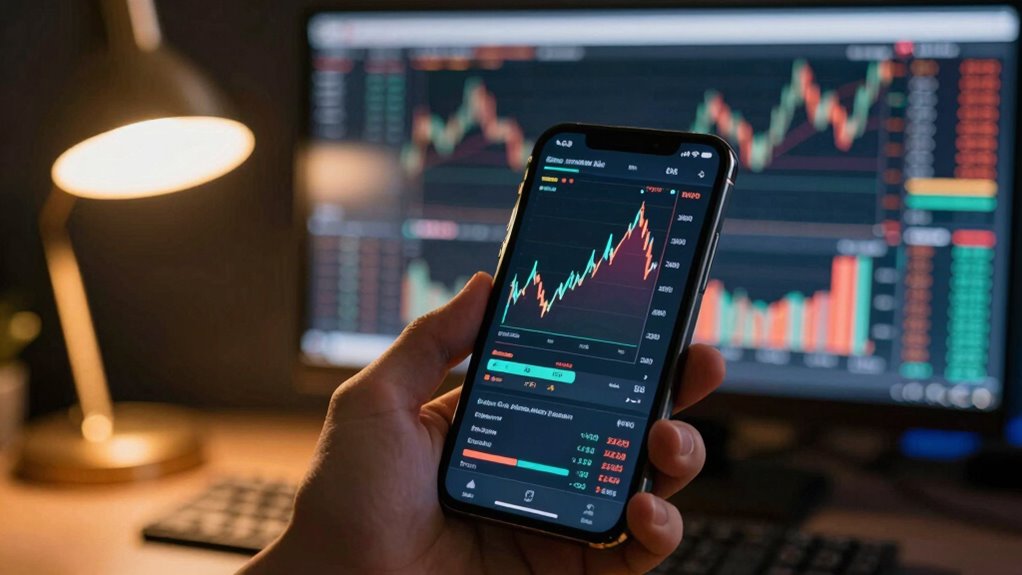

Many investors overestimate their crypto risk tolerance because they’re influenced by hype, quick gains, and stories of success that boost confidence. This enthusiasm blinds you to the true volatility and dangers, leading to overconfidence and misjudged capacity to handle market drops. Emotional responses like greed and fear can cause impulsive decisions, making you believe you’re more prepared than you really are. To understand how to better manage these biases, keep exploring these factors and their impacts.

Get smart everyday buys delivered free with Prime
- Fast, free delivery on millions of items
- Prime Video, Amazon Music and more included
- Member-only deals all year
Key Takeaways
- Investors often believe they can handle market swings due to overconfidence fueled by success stories and FOMO.
- Behavioral biases like herd mentality and loss aversion distort true risk perception and lead to overestimating resilience.
- Emotional reactions such as greed and fear cause investors to misjudge their actual capacity to withstand losses.
- Projected gains create a false sense of security, masking potential risks and encouraging overconfidence in strategies.
- Lack of awareness about subconscious biases results in poor risk management and overestimation of risk tolerance.

Despite the hype surrounding cryptocurrencies, many investors overestimate their ability to handle the inherent risks. You might believe you’re prepared for wild market swings, but the truth is, market psychology plays a significant role in how you perceive and react to these volatile assets. When you first dive into crypto investing, your confidence is often fueled by stories of rapid gains and the fear of missing out. This optimism can mask the reality of the risks involved, leading you to overestimate your risk tolerance. You may think, “I can handle a 50% drop in value,” but when the market suddenly plunges, your behavioral biases can cloud your judgment and cause you to panic or make impulsive decisions.
Understanding behavioral biases is crucial here. Cognitive biases like overconfidence, herd mentality, and loss aversion skew your perception, making you believe you’re more resilient than you really are. Overconfidence, for example, can lead you to underestimate the likelihood of losing money, convincing you that your strategies are foolproof. Herd mentality pushes you to follow the crowd, buying into hype or selling during downturns, often without thoroughly analyzing the situation. Loss aversion, on the other hand, makes you overly averse to realizing losses, which can cause you to hold onto losing positions longer than you should, hoping for a rebound that might never come. These biases distort your understanding of market risks, making you believe you’re better equipped to handle downturns than you actually are. Additionally, the influence of projected gains can create a false sense of security that clouds your judgment about potential losses. Recognizing the role of market psychology and emotional responses can help you better anticipate emotional reactions and prevent impulsive decisions. Moreover, understanding asset valuation can help you maintain perspective on whether a crypto investment is over- or undervalued, helping you avoid emotional trading based on hype rather than fundamentals.
Cognitive biases like overconfidence, herd mentality, and loss aversion distort your perception of market risks and resilience.
Market psychology influences your emotional response to market movements. During periods of high volatility, fear and greed take over, prompting behaviors that deviate from rational investing. You might see a sharp price decline and panic sell, locking in losses you could have avoided. Conversely, during bullish runs, greed can push you to invest more than you should, ignoring the signs of an overextended market. Recognizing these emotional triggers helps you stay grounded and avoid exaggerated risk-taking. It’s essential to acknowledge that your perception of risk is often skewed by these subconscious influences. By understanding how behavioral biases shape your decision-making, you can develop a more realistic view of your risk tolerance and implement strategies that help you stay disciplined, even amid chaos.
In the end, the key is to approach crypto investing with humility and awareness of your psychological biases. Don’t assume you’re immune to market psychology’s influence. Instead, create a well-thought-out plan that accounts for your emotional responses and the reality of market volatility. This way, you can better navigate the risks and avoid overestimating your capacity to withstand market shocks.
As an affiliate, we earn on qualifying purchases.
Frequently Asked Questions
How Can Investors Accurately Assess Their True Crypto Risk Tolerance?
You can accurately assess your crypto risk tolerance by recognizing your behavioral biases and emotional resilience. Reflect on past financial decisions and how you reacted to market swings, which reveals your true comfort level. Be honest about your emotional resilience—if market drops cause panic, you might overestimate your tolerance. Use this insight to set realistic investment goals, avoid impulsive decisions, and build a portfolio aligned with your genuine risk capacity.
What Psychological Biases Influence Overconfidence in Crypto Investing?
You fall prey to false confidence because behavioral biases and cognitive distortions fuel your overestimation. Optimism bias makes you believe you’ll always win, while the illusion of control convinces you that your decisions are infallible. Confirmation bias reinforces existing beliefs, blinding you to risks. Recognizing these psychological pitfalls helps you stay grounded, guiding you to make more mindful, measured crypto investments instead of succumbing to overconfidence.
Are There Specific Demographics More Prone to Overestimating Crypto Risk?
You’re more likely to overestimate your crypto risk if you belong to younger demographics, such as Millennials or Gen Z, due to their higher risk perception and familiarity with digital technology. Demographic disparities influence how you perceive crypto’s volatility. If you’re less experienced or have a higher appetite for risk, you might underestimate potential losses, leading to overconfidence. Stay aware of these biases to make more balanced investment decisions.
How Does Market Volatility Affect Investors’ Risk Perception?
Imagine standing on a boat during a storm, feeling every wave’s crash—that’s how market volatility impacts your risk perception. When prices swing wildly, market sentiment shifts quickly, fueling emotional reactions that make you believe risks are higher or lower than they truly are. This turbulence clouds judgment, causing you to overestimate your resilience or vulnerability, often leading to impulsive decisions instead of strategic ones.
What Strategies Help Align Risk Tolerance With Actual Investment Behavior?
To align your risk tolerance with your investment behavior, focus on risk management techniques like setting clear stop-loss orders and diversifying your portfolio. Cultivate emotional resilience by avoiding impulsive decisions during market swings. Regularly reassess your risk capacity and stay disciplined with your investment plan. These strategies help you stay grounded, prevent overconfidence, and guarantee your actions match your true risk tolerance, leading to more consistent and comfortable investing.
cryptocurrency risk assessment tools
As an affiliate, we earn on qualifying purchases.
As an affiliate, we earn on qualifying purchases.
Conclusion
Think of your crypto journey like sailing a ship through unpredictable waters. You might believe you can handle any storm, but when the waves hit hard, you realize your true limits. Overestimating your risk tolerance is like steering into the storm without enough supplies — it’s risky. Stay grounded, know your true capacity, and steer wisely. Only then can you enjoy the voyage without being overwhelmed by the storm’s fury.
behavioral finance investing guide
As an affiliate, we earn on qualifying purchases.
As an affiliate, we earn on qualifying purchases.
crypto volatility analysis software
As an affiliate, we earn on qualifying purchases.
As an affiliate, we earn on qualifying purchases.
Columbus Day / Indigenous Peoples' Day Picks
long weekend sales
As an affiliate, we earn on qualifying purchases.