
TL;DR
Listen free for 30 days with Audible
Thousands of audiobooks and originals — cancel anytime.
As an affiliate, we earn on qualifying purchases.
Thorsten Meyer AI has described IdeaClyst as a local-first, AI-powered workspace for founders testing startup ideas before they build. The source says the tool combines an AI council, demand-signal discovery and a founder workspace, but release timing, pricing and independent testing are not stated.
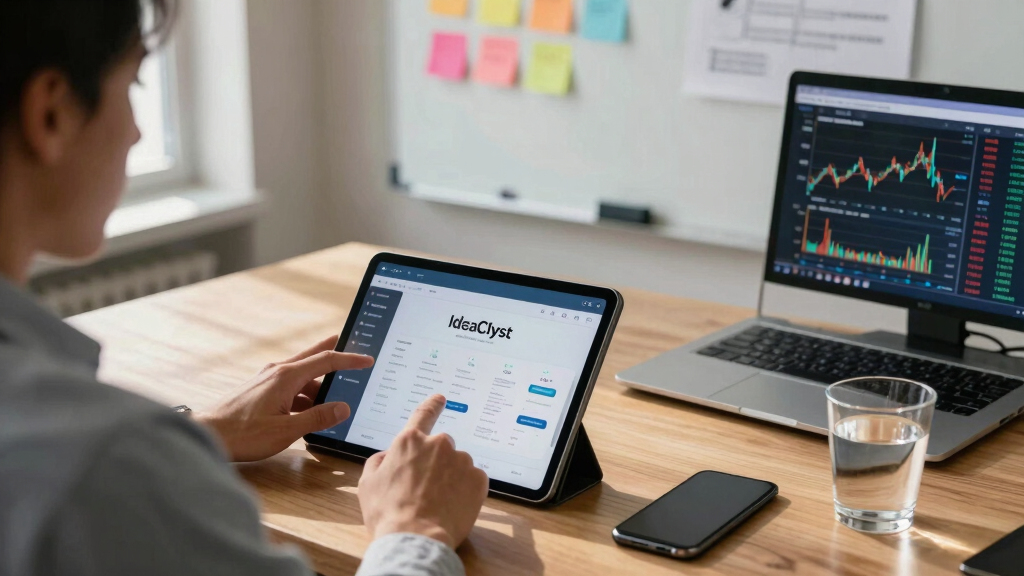
Thorsten Meyer AI has detailed IdeaClyst, a local-first AI workspace designed to help founders pressure-test software ideas before committing months of work, a pitch aimed at a common startup failure point: building products without proven market need.
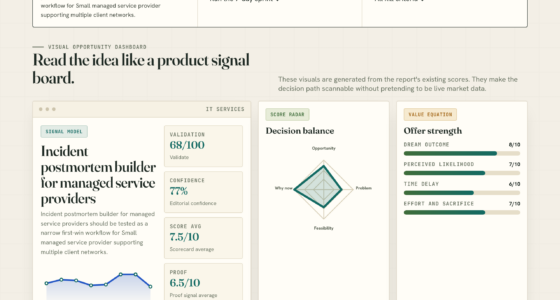
The source describes IdeaClyst as three tools in one: an AI council that challenges a founder’s idea, a discovery engine that looks for demand signals and a workspace that carries selected ideas toward a build plan. Thorsten Meyer AI says the product runs locally, stores output as plain files on the user’s disk and is MIT-licensed.
The reported workflow starts with market research, then moves through a five-step council process: product strategy, technical architecture, critique, a second independent critique and final synthesis. The output is described as a sectioned founder packet covering research, strategy, architecture, critiques, validation tests and a plan, written to Markdown rather than left as a chat transcript.
Thorsten Meyer AI also claims IdeaClyst uses a real-data-only research mode. According to the source, the system fetches pages, reads competitor sites, scans discussions and adds clickable sources when it can; if it cannot gather evidence, it is meant to say so rather than invent support.
Why It Matters
The product is being framed around a costly early-stage decision: what to build. The source cites CB Insights for the claim that about 42% of startups fail because there is no market need, and it cites 2026 industry estimates that a solo founder or small team can waste $35,000 to $150,000 building the wrong product over six to 12 months.
If the claims hold up in use, IdeaClyst could appeal to founders who want more than a general chatbot response when testing an idea. Its local-first stance may also matter for users who are reluctant to upload early product concepts, competitor notes or market research to cloud tools. Those privacy and evidence claims remain dependent on the actual implementation and user setup.
local-first AI startup idea testing software
As an affiliate, we earn on qualifying purchases.
As an affiliate, we earn on qualifying purchases.
Background
The source positions IdeaClyst against a pattern common in AI-assisted startup research: asking a general chatbot whether an idea has promise and receiving a confident but weakly sourced answer. IdeaClyst is described as trying to replace that with adversarial review, evidence gathering and structured decision material.
The project is also presented as sharing a local-first stance with Threlmark, described in the source as a sibling product. The material says the goal is to keep both failed ideas and promising ideas under the founder’s control as files on their own machine.
“The build isn’t the hard part anymore — conviction is.”
— Thorsten Meyer AI source material
“The single most valuable thing a tool can do is talk you out of the wrong six months.”
— Thorsten Meyer AI source material
“That’s not validation — that’s getting approval from something that can’t say no.”
— Founder quoted in the source from r/SaaS
“Local-first is the whole point for a founder.”
— Thorsten Meyer AI source material
market research tools for startups
As an affiliate, we earn on qualifying purchases.
As an affiliate, we earn on qualifying purchases.
What Remains Unclear
The source material does not state a launch date, supported operating systems, pricing, model requirements, installation process or whether all AI processing is fully local. It also does not provide independent benchmarks or outside user testing. Claims about privacy, research quality and citation handling should be treated as product claims until they can be verified in use.
privacy-focused AI research workspace
As an affiliate, we earn on qualifying purchases.
As an affiliate, we earn on qualifying purchases.
What’s Next
The next key details to watch are release availability, installation instructions, supported AI models, how web research is handled, and whether independent users can confirm the local-first and source-backed workflow described by Thorsten Meyer AI.
Markdown documentation tools for founders
As an affiliate, we earn on qualifying purchases.
As an affiliate, we earn on qualifying purchases.
Key Questions
What is IdeaClyst?
IdeaClyst is described by Thorsten Meyer AI as a local-first AI workspace for founders who want to test startup ideas through structured debate, market research and planning before they build.
What is confirmed from the source material?
The source confirms the product positioning: an AI council, discovery engine and founder workspace, with Markdown output, local file storage and an MIT license. Other points, including real-world performance and release details, are not independently verified in the supplied material.
How is IdeaClyst different from asking a chatbot?
Thorsten Meyer AI says IdeaClyst is designed to challenge ideas through multiple critique passes and source-backed research, rather than giving a single agreeable answer. That is a product claim based on the supplied source.
Why does local-first matter here?
Early product ideas, research notes and market assumptions can be commercially sensitive. The source says IdeaClyst keeps those materials on the founder’s own machine, but the exact technical setup is not fully detailed.
What remains unknown?
Availability, pricing, supported models, installation steps, system requirements and independent verification of the research workflow remain unclear from the source material.
Source: Thorsten Meyer AI
NFL season / tailgating Picks
team gear
As an affiliate, we earn on qualifying purchases.