
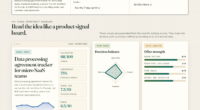
📊 Full opportunity report: Software engineering. The canonical case. on ThorstenMeyerAI.com — validation score, market gap, and execution plan.
Listen free for 30 days with Audible
Thousands of audiobooks and originals — cancel anytime.
Start your free trialAs an affiliate, we earn on qualifying purchases.
TL;DR
Recent empirical data confirms that AI has significantly displaced junior developers while augmenting senior engineers. A mid-level pipeline crisis is projected for 2027-2029, with macroeconomic factors also influencing hiring trends.
Recent empirical evidence confirms that AI-driven displacement of junior software developers is substantial, with a 40% drop in entry-level hiring since 2022, while senior engineers experience augmentation rather than displacement, according to multiple industry studies and analyses.
Data from sources including the Anthropic Economic Index, METR study, GitHub Copilot research, and industry surveys consistently show a 40% decline in junior developer hiring compared to pre-2022 levels, persisting through 2025-2026. Major tech companies, such as Salesforce, have announced no new engineering hires for 2025, signaling sector-wide shifts. Meanwhile, senior engineers leveraging codebases outperform AI in deep work tasks, indicating augmentation rather than displacement at higher levels. The evidence also points to a structural mid-level pipeline crisis forecasted for 2027-2029, driven by reduced entry-level intake and macroeconomic factors. Overall, the data supports a heterogeneous impact: substantial displacement at the junior level, augmentation at the senior level, and a looming gap in mid-level talent.
Software
engineering.
The canonical case.
~40% junior hiring drop · 57/43 Anthropic Economic Index split · METR senior-codebase advantage · 2027-2029 pipeline crisis emerging. The most-documented sector for AI-driven labor displacement — and the canonical empirical case the Atlas operates on.
This is Atlas Essay 02 — the first Dimension 1 sector forensic in the Post-Labor Transition Atlas. Software engineering is the canonical case because the empirical evidence base is substantial AND the exposure-vs-displacement distinction is most rigorously testable here. Junior cohort: 40% hiring drop · 25% top-15 tech entry-level decline · 20-35% global junior+QA decline · 37% employers prefer AI over new grads. Senior cohort: METR shows senior+codebase outperforms AI for deep work · 57/43 augmentation/automation Anthropic Economic Index · 5-10× productivity top 20%. Pipeline: 2-5 year mid-level crisis 2027-2029 forecast · the juniors not hired today are the mid-levels missing tomorrow. Attribution rigor required: macroeconomic + AI-driven + cohort-specific factors compounding. Interpretation 2 (transition arriving slowly with heterogeneous effects) empirically dominant.
Five findings. Multi-source convergence.
Software engineering has the most-documented empirical evidence base of any sector for AI-driven labor displacement. Multiple data sources — Anthropic Economic Index, METR, Stanford AI Index 2026, GitHub, Stack Overflow, Levels.fyi, hiring-data analyses — converge on consistent findings. The cohort-bifurcation pattern is what the cross-validation crystallizes.
Second Talent
SolidAITech
BLS
Stanford AI Index
Economic Index
2026
Cross-validated
BDTechJobs
Frontend Highlights
Stack Overflow
Three cohorts. Three trajectories.
Software-engineering displacement is not uniform — it is bifurcated by cohort, and the cohort-bifurcation IS the displacement story. Junior cohort faces structural displacement at scale · senior cohort faces augmentation not displacement · mid-level pipeline faces emerging structural crisis 2027-2029. This is the empirical signature Interpretation 2 from Essay 01 produces.
Three factors. Compounding.
The analytically rigorous framework the empirical literature operates on. The 40% junior hiring drop is structurally driven by three converging factors — naming each component rather than conflating them is the editorial discipline the Atlas operates on through all four phases.
Pipeline collapse. 2027-2029.
The structural emerging risk the empirical evidence surfaces. The cohort-bifurcated displacement is not a stable equilibrium — the junior cohort displacement today produces the mid-level shortage tomorrow. The 2-5 year mid-level pipeline gap is the structurally distinct second-order effect the discourse around AI-driven displacement underweights.
Software engineering is the canonical empirical case the Atlas operates on. Junior cohort displacement at scale (~40% hiring drop) is real and substantial. Senior cohort augmentation (METR + Anthropic Economic Index 57/43) is real and substantial. The mid-level pipeline crisis (2027-2029) is the structural emerging risk. The attribution-rigor framework — macroeconomic + AI-tool maturation + cohort-specific factors — is the analytical discipline the Atlas operates on through all four phases. Interpretation 2 from Essay 01 — transition arriving slowly with heterogeneous effects — is empirically dominant in software engineering. The cohort-bifurcation pattern is the structural-empirical hypothesis the Phase 1 synthesis essay will test across the other three sector forensics.
Implications of AI-Driven Displacement and Augmentation in Software Engineering
This evidence underscores a bifurcated labor market where AI displaces entry-level roles but enhances senior engineers’ productivity. The projected pipeline crisis could exacerbate talent shortages, affecting innovation and project delivery in the sector. Understanding these dynamics helps policymakers, companies, and workers adapt strategies for the evolving labor landscape, emphasizing the need for reskilling and pipeline support at mid-levels.AI coding assistant for software developers
As an affiliate, we earn on qualifying purchases.
As an affiliate, we earn on qualifying purchases.
Empirical Foundations and Sector-Wide Data on AI Impact
The analysis is grounded in multiple data sources from 2025-2026, including hiring statistics from the Fortune 2026 report, industry surveys like Stack Overflow Developer Survey 2025, and specialized studies such as the METR and Anthropic Economic Index. These sources collectively demonstrate a clear pattern: entry-level hiring has declined sharply, with a 40% reduction since 2022, and a significant portion of employers prefer AI over new graduates. The Goldman Sachs cohort analysis further confirms that young workers in tech roles face higher unemployment increases, highlighting the demographic impact of AI displacement. Conversely, senior engineers, especially those with deep codebase familiarity, outperform AI on complex tasks, supporting the augmentation thesis. The macroeconomic context, including interest rate hikes, also contributed to hiring freezes, complicating attribution solely to AI.
“The empirical evidence confirms a bifurcated impact of AI: substantial displacement at the junior level and augmentation at the senior level, with a looming pipeline crisis.”
— Thorsten Meyer
entry-level programming books for beginners
As an affiliate, we earn on qualifying purchases.
As an affiliate, we earn on qualifying purchases.
Unresolved Questions About Long-Term Sector Impact
While current data confirms displacement at the junior level and augmentation at the senior level, the long-term effects of AI on overall employment, job quality, and sector innovation remain uncertain. The precise timeline and scale of the mid-level pipeline crisis are projections, not certainties, and macroeconomic influences complicate attribution solely to AI. Further research is needed to understand how these dynamics evolve beyond 2026 and how policy interventions might alter outcomes.
professional IDEs for senior software engineers
As an affiliate, we earn on qualifying purchases.
As an affiliate, we earn on qualifying purchases.
Monitoring Sector Trends and Preparing for the Mid-Level Gap
Industry analysts and policymakers will closely observe hiring patterns and pipeline health through 2026 and into 2027, focusing on mid-level talent development. Companies may need to adjust recruitment and training strategies, while researchers will seek to refine forecasts of the pipeline crisis. Continued data collection and analysis will be crucial to understanding whether the current bifurcated pattern persists and how macroeconomic factors influence the sector’s evolution.
software developer productivity tools
As an affiliate, we earn on qualifying purchases.
As an affiliate, we earn on qualifying purchases.
Key Questions
How exactly has AI displaced junior developers?
Multiple studies show a 40% decline in entry-level hiring since 2022, with some companies hiring only a few juniors or none at all, favoring AI tools like Copilot for code generation instead of new hires.
Are senior engineers being replaced by AI?
No. Evidence indicates senior engineers outperform AI in deep work tasks, and AI is mainly augmenting their productivity rather than replacing them, as shown in METR study findings.
What is causing the mid-level pipeline crisis?
The crisis is projected due to reduced entry-level hiring, demographic shifts, and macroeconomic factors, leading to a potential talent gap between junior and senior roles by 2027-2029.
Is the impact of AI on employment uniform across the tech sector?
No. Data shows a bifurcated impact: significant displacement at the entry level, augmentation at the senior level, and uncertainty around mid-level roles.
What should companies do to prepare for these changes?
Companies should invest in reskilling programs, support mid-level talent development, and adapt hiring strategies to address the projected pipeline gaps and sector shifts.
Source: ThorstenMeyerAI.com
NFL season / tailgating Picks
team gear
As an affiliate, we earn on qualifying purchases.