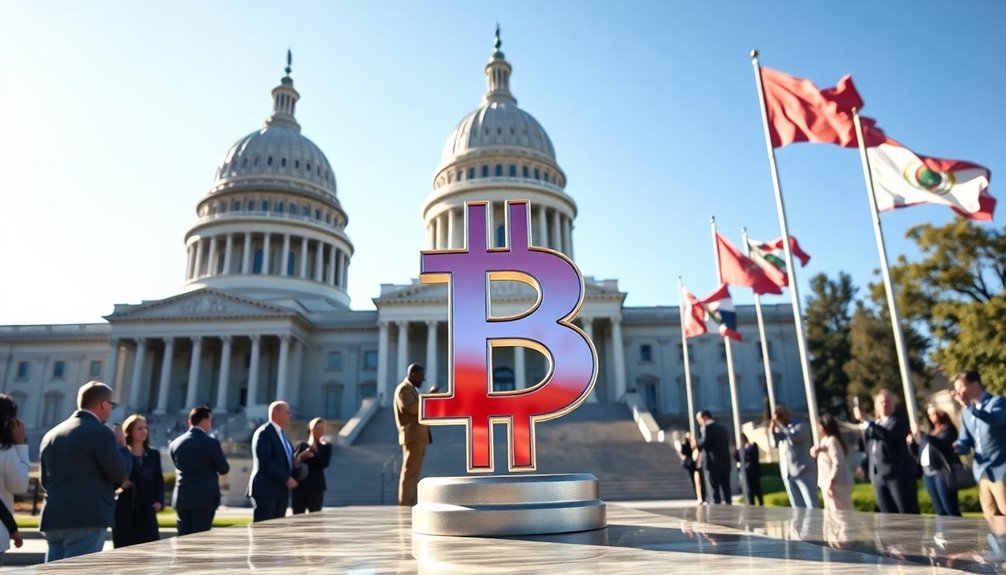

You might have noticed a shift in how state governments view Bitcoin recently. With 44 states proposing cryptocurrency legislation in 2024, it's clear they're starting to embrace its potential. From Pennsylvania's Strategic Bitcoin Reserve to Arizona's focus on taxation, these initiatives indicate a broader trend toward innovation. But what does this mean for the future of digital assets in America? The implications could be far-reaching, and they might surprise you.

Get smart everyday buys delivered free with Prime
- Fast, free delivery on millions of items
- Prime Video, Amazon Music and more included
- Member-only deals all year

How are U.S. state governments embracing Bitcoin and other cryptocurrencies? It's fascinating to see how at least 44 states are diving into legislative proposals regarding cryptocurrencies in 2024. Pennsylvania, for instance, is making waves with its HB 2664, which aims to establish a Strategic Bitcoin Reserve, allowing the state to invest in Bitcoin directly.
Meanwhile, Texas lawmakers are already having preliminary discussions about strategic legislation surrounding Bitcoin. This proactive approach signals a shift in how states view digital assets.
Texas lawmakers are initiating strategic discussions on Bitcoin, reflecting a significant shift in state perspectives on digital assets.
In Wyoming, the introduction of the Wyoming Stable Coin (WYST) showcases the state's commitment to leading in the digital finance space. By creating a state-backed cryptocurrency, Wyoming isn't only diversifying its economy but also positioning itself as a hub for blockchain innovation.
Arizona isn't far behind, proposing several bills that tackle cryptocurrency taxation and even its status as legal tender. These legislative moves reflect a growing recognition of the economic potential that Bitcoin and other cryptocurrencies can bring, especially as the SEC approved spot bitcoin ETFs in January 2024, creating a new asset class.
The economic impact of adopting Bitcoin reserves is significant. You might see these reserves as a hedge against inflation and a means for long-term growth. If state governments start purchasing Bitcoin, it could drive the price upward, creating a ripple effect in the market.
Companies like MicroStrategy have already shown the influence of institutional buying, which can sway market trends and further legitimize cryptocurrency as an investment option.
Blockchain technology also plays a pivotal role in these developments. States are exploring its potential for public service delivery and automated transactions through smart contracts. Delaware's comprehensive blockchain initiative is just one example of how states are engaging with this transformative technology.
However, to fully leverage blockchain's benefits, states need to adapt their regulatory frameworks, ensuring clarity in cryptocurrency exchange regulations and taxation.
Many states are also embracing cryptocurrencies as payment options for taxes and fees. Arizona is even considering allowing state employees to be paid in virtual currency. This kind of acceptance not only empowers consumers by giving them more financial choices but also enhances financial inclusion.
With discussions around making Bitcoin legal tender gaining traction in various states, it's clear that the tide is turning.
As these initiatives unfold, it's evident that U.S. state governments aren't just observing the cryptocurrency landscape; they're actively shaping it. This growing acceptance could lead to a new era of financial innovation and stability across the nation.
Halloween Picks
halloween
As an affiliate, we earn on qualifying purchases.