
Bitcoin mining uses huge amounts of energy, often from fossil fuels, causing significant environmental harm like high carbon emissions and air pollution that can impact public health. This environmental footprint poses risks such as stricter regulations and rising operational costs, affecting your investments. While efforts are underway to switch to renewable energy, challenges remain. Staying aware of these issues helps you understand how they might influence Bitcoin’s future value and sustainability. Keep exploring to learn more about the evolving landscape.

Get smart everyday buys delivered free — and shop member deals
- Fast, free delivery on millions of items
- Access to Prime Big Deal Days deals on October 6–7
- Prime Video, Amazon Music and more included
Key Takeaways
- Bitcoin mining consumes significant energy, mainly from fossil fuels, increasing environmental footprint and carbon emissions.
- The industry’s reliance on non-renewable energy sources raises regulatory risks and potential costs for investors.
- Growing environmental concerns could lead to stricter regulations, affecting mining profitability and market stability.
- Transitioning to renewable energy sources can mitigate environmental impact and support sustainable investment strategies.
- Investors should consider environmental risks and the shift toward greener practices when assessing Bitcoin mining opportunities.
Bitcoin mining energy efficient hardware
As an affiliate, we earn on qualifying purchases.
As an affiliate, we earn on qualifying purchases.
The Energy Intensity of Bitcoin Mining and Its Environmental Consequences
Bitcoin mining is incredibly energy-intensive, requiring vast amounts of electricity to power specialized hardware that solves complex algorithms. As you participate in or observe the network, you should realize that the energy consumption rivals or exceeds many countries’ total usage. Much of this electricity still comes from fossil fuels, which considerably increases the network’s carbon footprint. Although efforts are underway to incorporate renewable energy sources like wind and solar, many mining operations rely heavily on coal and natural gas. This dependency intensifies environmental concerns, especially since the growing demand for mining power could lead to increased emissions and resource depletion. If not managed responsibly, Bitcoin’s energy consumption could contribute substantially to environmental degradation, affecting climate stability and ecological health worldwide. Additionally, the rise in AI security technologies can help monitor and optimize energy use in mining operations, potentially reducing their environmental impact.
renewable energy Bitcoin mining equipment
As an affiliate, we earn on qualifying purchases.
As an affiliate, we earn on qualifying purchases.
Air Pollution and Public Health Concerns Linked to Mining Operations
The heavy reliance on fossil fuels for powering mining operations directly impacts air quality, posing serious health risks to nearby communities. Pollutants like PM2.5 from combustion fumes can cause respiratory issues, cardiovascular problems, and worsen asthma. These emissions often drift beyond mining sites, affecting populations far away due to interconnected energy grids. The table below highlights key pollutants, their sources, and health effects:
| Pollutant | Source | Health Impact |
|---|---|---|
| PM2.5 | Fossil fuel combustion | Lung and heart diseases |
| NOx | Power plants | Respiratory problems, smog formation |
| SOx | Burning coal | Acid rain, respiratory issues |
Reducing fossil fuel dependence is vital to protect public health and address air pollution linked to Bitcoin mining. Energy sources play a crucial role in determining the extent of these environmental impacts.
air quality monitors for communities near mining sites
As an affiliate, we earn on qualifying purchases.
As an affiliate, we earn on qualifying purchases.
Carbon Emissions and the Global Climate Footprint of Cryptocurrency
How much do cryptocurrency operations contribute to the world’s carbon emissions? Currently, Bitcoin mining accounts for roughly 0.7% of global CO₂ emissions, a significant share given its scale. Each transaction generates a substantial carbon footprint, comparable to long-distance car travel. As demand grows, projections suggest that crypto and AI could contribute up to 1% of global emissions by 2027. Much of this impact stems from reliance on fossil fuels, especially in regions where electricity generation is carbon-intensive. While efforts are underway to switch to renewable sources, the industry’s overall footprint remains substantial. This environmental burden not only worsens climate change but also poses risks for investors, as evolving regulations and public pressure could lead to increased costs and reduced market demand. Additionally, adopting sustainable practices in creative pursuits—such as integrating eco-friendly materials or mindful resource management—can serve as a creative response to environmental concerns, encouraging innovation that aligns with global climate goals.
solar power systems for cryptocurrency mining
As an affiliate, we earn on qualifying purchases.
As an affiliate, we earn on qualifying purchases.
Transitioning to Renewable Energy: Progress and Challenges in Sustainable Mining
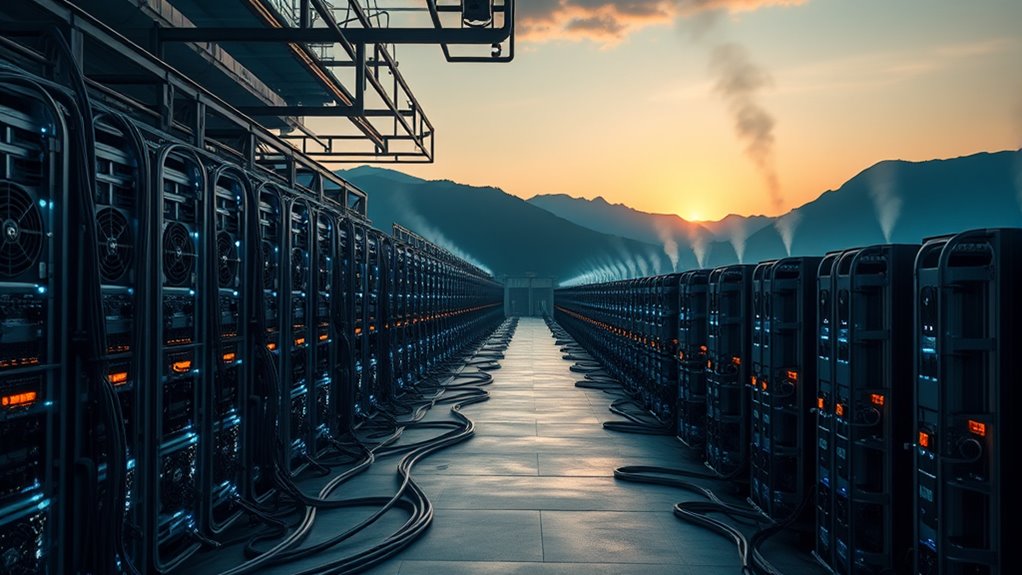
Efforts to shift Bitcoin mining toward renewable energy sources have gained momentum as industry stakeholders recognize the environmental benefits. You’ll find that many miners are now investing in cleaner energy to reduce their carbon footprint and improve sustainability. Progress includes increasing use of hydropower, wind, and solar, with over 52% of mining energy coming from renewables in 2025. However, challenges remain, such as high upfront costs, limited access to renewable sites, and grid stability issues. Some companies are using flare gas capture or locating near renewable sources to cut emissions. Despite these advances, fully switching is complex, requiring technological innovation, infrastructure upgrades, and supportive policies. Managing these hurdles is essential for a sustainable future in Bitcoin mining. Renewable energy adoption continues to be a critical factor in reducing the sector’s environmental impact.
Financial Risks and Policy Changes Shaping the Future of Bitcoin Investment
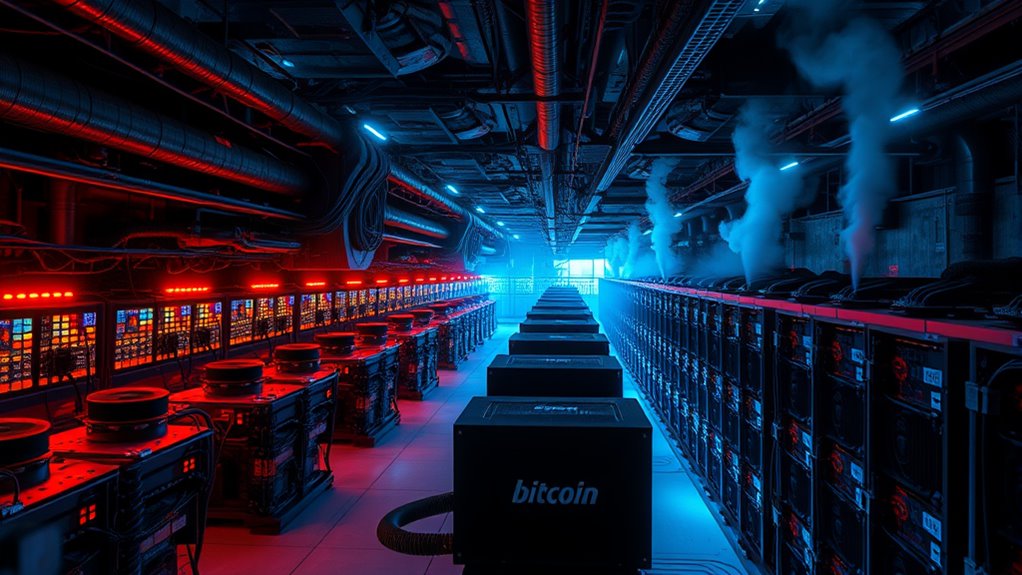
As Bitcoin mining’s environmental impact becomes more evident, investors face increasing financial risks due to potential regulatory crackdowns and changing policies. Governments worldwide are considering stricter regulations to limit energy consumption and reduce carbon emissions, which could increase operational costs or restrict mining activities altogether. Such policies might also impose taxes or penalties on miners, impacting profitability. Additionally, evolving regulations could lead to market uncertainty, affecting Bitcoin’s value and investor confidence. You should stay alert to policy developments and consider how regulatory risks could influence your investments. Moving to environmentally sustainable practices may become a requirement, potentially raising costs. Moreover, the adoption of green energy solutions by miners could alter the competitive landscape and influence regulatory decisions. Being proactive and diversifying your portfolio can help manage these risks as the regulatory landscape continues to evolve.
Frequently Asked Questions
How Does Bitcoin Mining Impact Local Water Resources and Water Pollution?
You might not realize it, but bitcoin mining can strain local water resources because of the cooling processes needed for mining equipment. As miners use water to keep hardware from overheating, this can deplete water supplies, especially in dry areas. Sometimes, mining operations release heated water back into local ecosystems, causing pollution and affecting aquatic life. This added water demand and potential pollution pose environmental risks for nearby communities.
What Are the Social and Community Effects of Large-Scale Mining Operations?
You might notice large-scale mining operations affecting your community by increasing noise, traffic, and energy demands. These operations can strain local infrastructure, leading to power outages or water shortages. They may also cause social tensions, as residents worry about environmental degradation, health impacts, and property values. While some communities benefit from job creation, others face disruption and inequality, making it essential to balance economic gains with social well-being.
How Does Bitcoin Mining Influence Energy Prices for Surrounding Communities?
You might notice energy prices in your community creeping upward when Bitcoin mining ramps up. Mining operations demand vast amounts of electricity, often straining local grids and leading utilities to increase rates to meet this surge. As a result, residents and businesses may face higher costs, and energy shortages could become more common. This dynamic underscores how large-scale mining can subtly influence your community’s energy affordability and availability.
Are There Technological Innovations Reducing Bitcoin’s Environmental Footprint?
Technological innovations are actively reducing Bitcoin’s environmental footprint. You’ll see efforts like using renewable energy sources, such as wind and solar, to power mining operations. Companies are developing more energy-efficient hardware that consumes less electricity and generates less heat. Additionally, some miners are capturing flare gas or locating near renewable energy plants. These advancements help lower emissions, making Bitcoin mining more sustainable and appealing to environmentally conscious investors.
What Role Do Government Policies Play in Promoting Sustainable Cryptocurrency Mining?
Government policies pave the path for greener, greater crypto mining. They promote renewable energy use, push for stricter standards, and provide subsidies, sparking sustainable shifts. By setting smart, supportive statutes, authorities can encourage environmentally friendly practices, energize eco-conscious investments, and eliminate excess emissions. Policy powerfully propels progress, pushing miners toward cleaner choices, curbing carbon costs, and cultivating a climate-conscious crypto community that champions conservation and champions change.
Conclusion
Just like a wildfire’s unstoppable spread, Bitcoin mining’s environmental impact grows if we don’t act. With global electricity consumption for mining surpassing that of entire countries, your investments could be fueling a green crisis. But by supporting renewable energy solutions and staying informed on policy shifts, you can help turn this digital wildfire into a sustainable growth story. Every choice you make can be a spark for positive change, guiding crypto’s future toward greener horizons.
Fall Picks
fall essentials
As an affiliate, we earn on qualifying purchases.