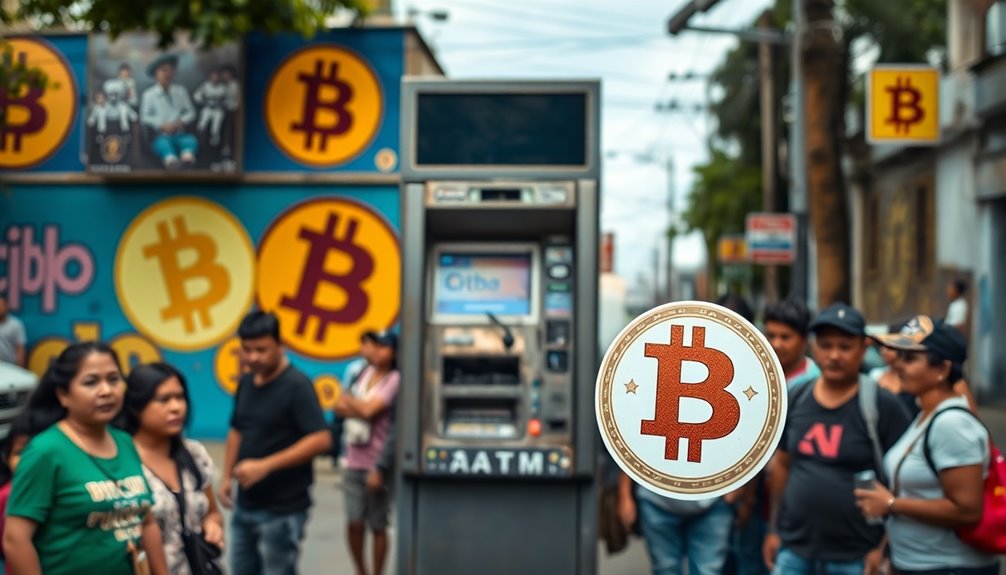

El Salvador's decision to drop Bitcoin's legal tender status has raised eyebrows in the cryptocurrency community. You might wonder how this shift reflects broader concerns about financial stability and regulatory hurdles. As businesses prepare for the change in 2025, the implications for digital assets could be far-reaching. What does this mean for the future of Bitcoin and its place in global finance? The answer might surprise you.

Get smart everyday buys delivered free — and shop member deals
- Fast, free delivery on millions of items
- Access to Prime Big Deal Days deals on October 6–7
- Prime Video, Amazon Music and more included
El Salvador's recent decision to discontinue Bitcoin's status as legal tender marks a significant shift in its financial landscape. This change comes after the country became the first to adopt Bitcoin as legal tender in September 2021, which mandated that all businesses and public institutions accept the cryptocurrency.
While President Nayib Bukele championed this bold move, it faced skepticism from international bodies like the IMF and was largely unpopular among the Salvadoran population, with over 70% opposing its adoption.
The decision to reverse Bitcoin's legal tender status stems from several pressing concerns. The IMF urged El Salvador to reduce Bitcoin-related financial risks in exchange for a $1.4 billion loan, highlighting the volatile nature of cryptocurrency and the lack of regulatory frameworks. Recent reforms eliminated the mandatory Bitcoin acceptance, reflecting the government's shift towards a more cautious approach.
By 2024, only about 8% of Salvadorans had used Bitcoin for payments, illustrating limited public take-up and practical utility. Additionally, allegations of corruption and theft involving government-managed Bitcoin wallets further fueled doubts about the initiative's viability.
In late January 2025, El Salvador's parliament approved reforms that removed the mandatory acceptance of Bitcoin. Businesses are no longer required to accept it as payment, and it can't be used for tax payments or settling state bills.
These legislative changes will take effect on May 1, 2025, reflecting a significant shift in the country's legal framework concerning cryptocurrency. The government's decision aligns with maintaining economic stability and fostering positive trade relations, especially with the US, which remains the dominant currency in El Salvador.
Despite the discontinuation, the Salvadoran government maintains a vested interest in Bitcoin, holding over 6,000 Bitcoins valued at approximately $577 million. Even after the legal changes, the government continues to purchase Bitcoin, indicating that it still considers digital assets part of its financial strategy, albeit in a reduced capacity.
Public sentiment remains skeptical towards Bitcoin's use, driven by concerns over its volatility and the broader implications for financial stability. The global market perceives this move as a setback for Bitcoin and digital assets, affecting investor confidence.
Top picks for "salvador discontinu bitcoin"
As an affiliate, we earn on qualifying purchases.
Halloween Picks
halloween
As an affiliate, we earn on qualifying purchases.