
TL;DR
Brussels is trying to narrow Europe’s AI gap through InvestAI and digital-rule changes, including cookie-consent reform. The confirmed policy push comes as EU and industry data cited in the source material show heavy dependence on non-EU digital infrastructure, high power costs and limited frontier-model capacity in Europe.
Brussels is trying to regain ground in artificial intelligence through its InvestAI program and digital-rule changes, including planned cookie-consent simplification, after Commission figures and industry analyses cited by Thorsten Meyer AI show Europe remains heavily dependent on non-EU digital infrastructure.
The European Commission says InvestAI is meant to mobilize €200 billion for AI, including €50 billion in public funding and an expected €150 billion from private sources. The source material says €20 billion is ring-fenced for AI gigafactories, with major compute capacity expected in 2027-28.
The same analysis points to a large mismatch in scale. It cites Commission figures showing about €264 billion a year spent on imported non-EU digital products, more than 80% reliance on non-EU digital stack components, and about 70% of EU cloud held by Amazon Web Services, Google and Microsoft.
Brussels is also seeking to reduce cookie-banner friction through one-click choices and browser-level preferences in its Digital Omnibus proposal. The Commission says the change could save businesses €800 million a year. Separately, Legiscope, a consent-management vendor, estimates EU users spend around 575 million hours a year dismissing cookie banners; that estimate should be treated as a rough scale claim from an interested party, not a settled measurement.
Europe regulated the interface and forgot the engine
The cookie banner is the most-used European software of the decade. While Brussels perfected the consent pop-up, the frontier was built elsewhere — and now, in H2 2026, Europe wants to buy back in without changing what put it on the outside.
This isn’t about whether privacy or safety matter — they do. It’s that Europe mistook regulating the interface for having a seat at the table. You can’t grant your way out of a structural problem while keeping the structure — the laws, the capital gaps, the energy costs, the talent drain all left untouched. The fix isn’t another framework: it’s open weights as a product, sovereign compute on affordable power, real capital plumbing — and to stop mistaking a check for a strategy.
Europe’s AI Dependence Has Costs
The policy question is no longer only whether Europe can write rules for digital markets. It is whether it can build, power and finance the infrastructure behind AI systems that are becoming central to business, public services and national policy.
The source material contrasts Europe’s €20 billion gigafactory envelope with FT-compiled estimates that the four largest U.S. hyperscalers may spend about $700 billion on capital expenditure in 2026 alone. It also cites ACER data showing EU industrial electricity prices at roughly twice U.S. levels, a major issue for large AI data centers.
Model capability is another gap. The analysis identifies Mistral as Europe’s main large-language-model contender, while saying U.S. and Chinese labs remain stronger on frontier capability, open-weight releases or both. Benchmark rankings and usage figures move quickly, so those comparisons are snapshots rather than guarantees of future performance.
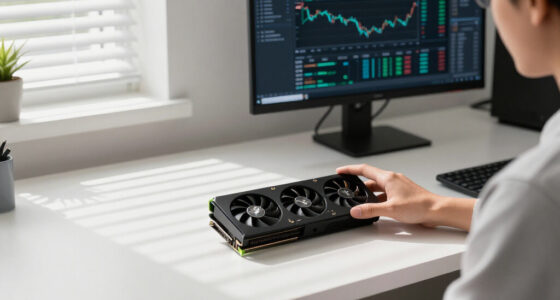
AI compute capacity expansion hardware
As an affiliate, we earn on qualifying purchases.
As an affiliate, we earn on qualifying purchases.
The cookie banner became the symbol in the Thorsten Meyer AI analysis because it represents a highly visible European digital rule interface that users encounter daily. The source notes that the consent banner is tied mainly to the older ePrivacy Directive’s Article 5(3), rather than only to the GDPR.
Studies cited in the source material found widespread problems in real-world banners, including dark patterns, unclear purposes and missing choices. One analysis of about 400 banners found roughly 89% breached rules in some way, though the result reflects that sample and methodology.
The broader argument draws on the EU AI Act, the Draghi 2024 report, CEPS analysis and market data to describe a structural problem: Europe has regulated digital interfaces and market behavior, but has not yet matched the United States or China in large-scale AI compute, capital depth, energy pricing or model deployment.
“InvestAI is intended to mobilize €200 billion for AI, including funding for AI gigafactories.”
— European Commission
cookie consent management software
As an affiliate, we earn on qualifying purchases.
As an affiliate, we earn on qualifying purchases.
Funding Gap Still Unresolved
It is not yet clear whether the expected private funding behind InvestAI will materialize at the advertised scale, whether gigafactories will arrive on schedule, or whether power costs and grid constraints can be reduced enough to support competitive AI infrastructure.
It is also uncertain how far cookie-consent reform will go after EU legislative and implementation steps. The benchmark position of European models may change, and the source material’s estimates on banner time, cloud share and model rank should be read as current indicators rather than final measurements.
As an affiliate, we earn on qualifying purchases.
Brussels Faces Build-Or-Buy Test
The next milestones are legislative progress on the Digital Omnibus, firm commitments under InvestAI, gigafactory site and procurement decisions, and evidence that Europe can secure affordable power for AI compute.
Readers should watch whether Europe produces stronger open-weight models, whether Mistral or other European labs gain usage share, and whether cloud dependence on U.S. providers begins to fall. Until then, the EU’s AI plan remains a test of whether policy money can turn into working infrastructure.
As an affiliate, we earn on qualifying purchases.
Key Questions
What happened?
Brussels is advancing AI funding and digital-rule changes in 2026, including InvestAI and proposed cookie-consent simplification, while analysts point to Europe’s continued dependence on non-EU digital infrastructure.
How much AI funding is Europe proposing?
The European Commission says InvestAI is designed to mobilize €200 billion, including €50 billion in public funding and an expected €150 billion from private sources. The source material says €20 billion is aimed at AI gigafactories.
Is Europe removing cookie banners?
Not outright. The Commission is seeking simpler consent choices, including one-click options and browser-level preferences. The final shape depends on the EU policy process.
Why does electricity matter for AI?
Large AI systems require major data-center capacity, and power is one of the biggest operating costs. ACER data cited in the source material says EU industrial electricity prices are about twice U.S. levels.
Is this financial advice?
No. This article reports policy, market and benchmark figures attributed to cited sources. Historical spending, valuations and model scores do not guarantee future performance.
Source: Thorsten Meyer AI