
TL;DR

Get smart everyday buys delivered free with Prime
- Fast, free delivery on millions of items
- Prime Video, Amazon Music and more included
- Member-only deals all year
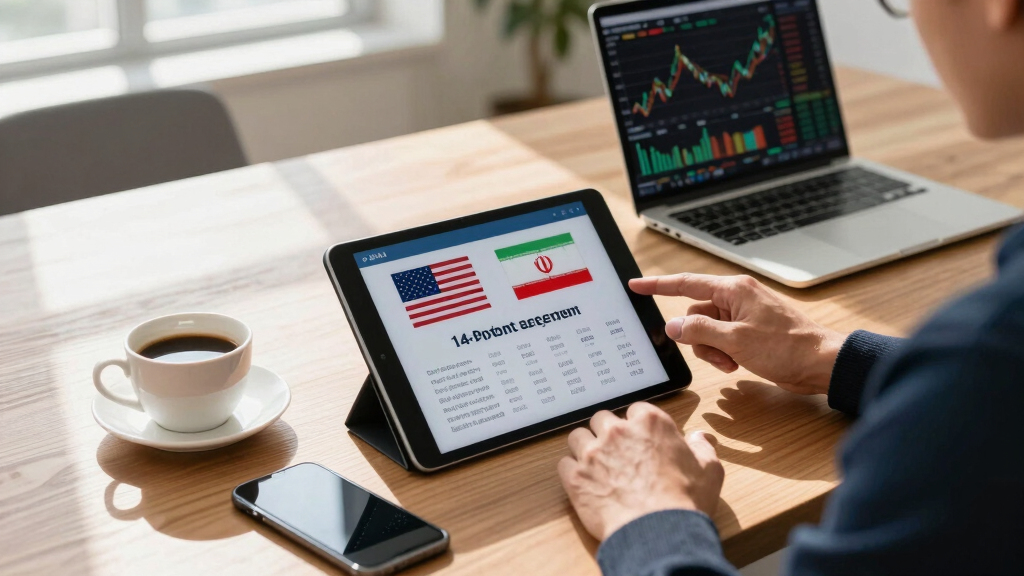
The US has officially released a 14-point memorandum with Iran, detailing steps to end military hostilities, reopen key maritime routes, and negotiate Iran’s nuclear program. The agreement sets a 60-day window for final negotiations, with formal signing scheduled for Friday in Switzerland.
The United States has publicly released the full text of a 14-point memorandum of understanding with Iran, outlining steps to end hostilities, reopen the Strait of Hormuz, and negotiate Iran’s nuclear program. The agreement, set to be formally signed in Switzerland on Friday, initiates a 60-day window for final negotiations on a comprehensive deal. This development marks a significant diplomatic move amid ongoing tensions and negotiations over Iran’s nuclear activities and regional security.
The memorandum, titled the “Islamabad Memorandum of Understanding between the United States of America and the Islamic Republic of Iran,” was released after widespread calls for transparency. It commits both nations to a series of actions, including the immediate and permanent termination of military operations on all fronts, notably in Lebanon, and a pledge to refrain from threats or use of force. The US will begin removing its naval blockade against Iran within 30 days of signing, with full removal expected within that period. Iran, for its part, will facilitate the safe passage of commercial vessels through the Strait of Hormuz for 60 days and engage in discussions with regional partners on maritime governance.
Key provisions include a framework for the phased removal of US sanctions, a plan for Iran to address its nuclear stockpile, and commitments to respect sovereignty and territorial integrity. The agreement also includes a financial reconstruction plan worth at least USD 300 billion, to be finalized within the 60-day negotiation window. The final deal aims to resolve issues related to Iran’s nuclear enrichment and stockpiled materials through mutually agreed mechanisms, including on-site blending supervised by the IAEA.
Implications for US-Iran Relations and Regional Stability
This agreement represents a major step in de-escalating tensions between the US and Iran, potentially paving the way for renewed diplomatic engagement. Reopening the Strait of Hormuz could ease regional maritime tensions and facilitate international trade. The phased sanctions relief and nuclear negotiations could influence Iran’s economic prospects and regional policies. However, the deal’s success depends on the final negotiations over sanctions, nuclear compliance, and regional security guarantees, which remain uncertain at this stage.
naval maritime security equipment
As an affiliate, we earn on qualifying purchases.
As an affiliate, we earn on qualifying purchases.
Background of US-Iran Diplomatic Efforts and Recent Developments
The US and Iran have a long history of tense relations, punctuated by nuclear negotiations, sanctions, and regional conflicts. Previous efforts, including the JCPOA agreement, faced setbacks amid political changes and disagreements over compliance and regional issues. The current memorandum follows recent diplomatic overtures and a shift toward dialogue, with the US seeking to reduce military tensions and Iran aiming to improve its economic situation. The formal release of the agreement’s text responds to international calls for transparency and clarity amid ongoing negotiations.
“This is fundamentally an agreement that allows us to open the Strait of Hormuz immediately, commit the Iranians to destroying the nuclear dust, and then gives us a dial where if the Iranians dial up their good behavior, we respond by dialing up the kind of economic and sanctions relief that can make them a more prosperous country.”
— US senior official
marine navigation and communication devices
As an affiliate, we earn on qualifying purchases.
As an affiliate, we earn on qualifying purchases.
Unresolved Questions About Final Deal Details
It remains unclear whether all parties will agree on the specific mechanisms for sanctions removal, nuclear compliance, and regional security guarantees. The final terms of the nuclear stockpile disposal, enforcement measures, and regional security arrangements are still under negotiation, and the actual implementation could face delays or disagreements. Additionally, the political climate in both countries may influence the final outcome.
portable satellite communication device
As an affiliate, we earn on qualifying purchases.
As an affiliate, we earn on qualifying purchases.
Next Steps in Finalizing the US-Iran Agreement
The formal signing of the memorandum is scheduled for Friday in Switzerland, after which negotiators will work intensively over the next 60 days to finalize the comprehensive deal. Key issues include sanctions lifting, nuclear compliance verification, and regional security arrangements. Both sides will also engage regional partners and international bodies such as the IAEA to oversee nuclear compliance and maritime arrangements. The success of these negotiations will determine the future trajectory of US-Iran relations and regional stability.
international shipping safety gear
As an affiliate, we earn on qualifying purchases.
As an affiliate, we earn on qualifying purchases.
Key Questions
What are the main points of the US-Iran memorandum?
The memorandum includes commitments to end hostilities, reopen the Strait of Hormuz, remove US sanctions in phases, address Iran’s nuclear stockpile, and respect sovereignty. It also sets a 60-day window for final negotiations.
When will the final deal be negotiated and signed?
The final negotiations are scheduled to occur over the next 60 days, with the agreement to be formally signed on Friday in Switzerland.
What are the potential regional impacts of this agreement?
If successful, the deal could reduce military tensions, reopen vital maritime routes, and foster regional stability. However, regional actors remain cautious, and implementation challenges are possible.
What remains uncertain about the agreement?
Details about sanctions removal, nuclear compliance mechanisms, and regional security guarantees are still under negotiation and could face delays or disagreements.
How might this affect Iran’s economy?
The phased removal of sanctions could lead to economic improvements for Iran, especially through increased trade and investment, contingent on final agreement implementation.
Source: Google Trends
Columbus Day / Indigenous Peoples' Day Picks
long weekend sales
As an affiliate, we earn on qualifying purchases.