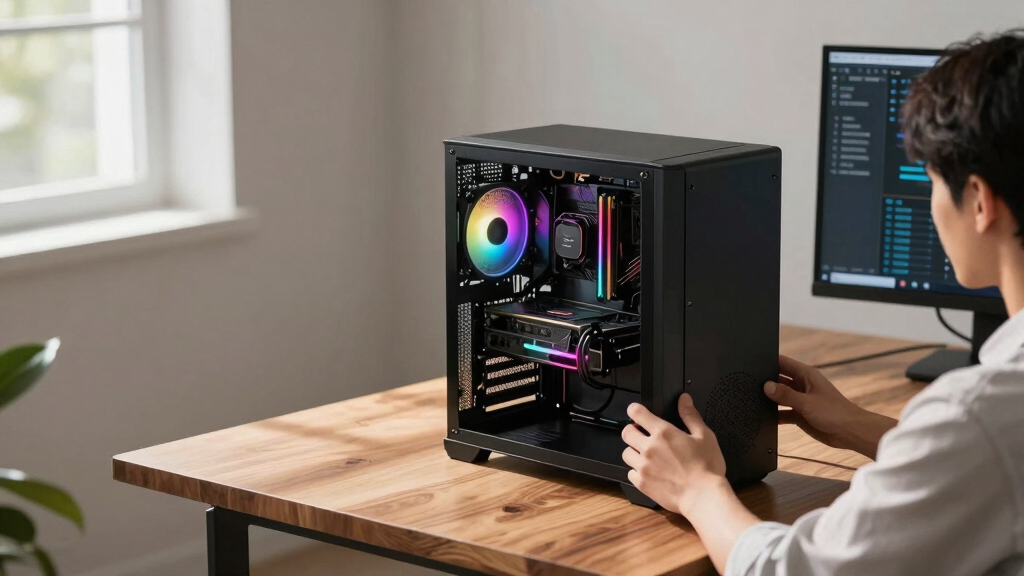

TL;DR

Get smart everyday buys delivered free with Prime
- Fast, free delivery on millions of items
- Prime Video, Amazon Music and more included
- Member-only deals all year
Thorsten Meyer AI reports that 2026 component shortages have weakened the old assumption that building an AI workstation is always cheaper than buying one. The decision now depends on current part pricing, thermal setup, warranty coverage, workload needs and how much control the buyer wants.
Thorsten Meyer AI says the cost case for building a local AI workstation has changed in 2026, with shortages and price increases for GPUs, DDR5 memory and SSDs making some prebuilt systems competitive with, or harder to beat than, comparable DIY builds.
The guide frames the decision around one confirmed buying problem: local AI workloads put sustained load on high-power hardware, so buyers are not only choosing parts. They are choosing who handles thermals, fan noise, stress testing, warranty support and troubleshooting.
According to Thorsten Meyer AI, a DIY AI workstation that previously could come in below $1,000 may now cost $1,250 or more before an operating-system license, depending on configuration and live component prices. The report says the price shift is tied to the same AI boom driving demand for GPUs, RAM and storage.
The report does not say prebuilt systems are always cheaper. Its central finding is narrower: buyers should price both routes for the same configuration at the time of purchase. Vendor pricing may benefit from bulk component purchases, while DIY pricing can expose buyers to spot-market increases across several parts at once.
Why It Matters
The change matters because many local AI users are choosing between consumer-grade GPU towers, professional prebuilt workstations and Mac Studio systems for running local language models, training jobs, inference workloads and creative AI tools.
For buyers, the older rule of thumb was simple: build to save money, buy prebuilt to save time. Thorsten Meyer AI argues that rule is no longer reliable in 2026. The trade now spans price, delivery time, thermal performance, acoustic performance, support, warranty coverage and the buyer’s willingness to tune hardware.
The report also points to a practical risk for sustained AI workloads: a machine that looks powerful on a spec sheet can still throttle, run loudly or require tuning if cooling, airflow and fan curves are not matched to long GPU loads.
high performance AI workstation prebuilt
As an affiliate, we earn on qualifying purchases.
As an affiliate, we earn on qualifying purchases.
Background
The guide is part of a Thorsten Meyer AI series focused on reducing heat and noise in high-power AI workstations. It follows a consistent framework: undervolt the GPU, match the cooler, improve case airflow, tune fans and place the machine well.
In the build path, the buyer performs that work directly and gains more control over parts, layout and future upgrades. In the buy path, the report says specialist workstation vendors may handle thermal validation, burn-in testing, fan curves, water-cooling options and support before the system ships.
The guide names Puget Systems, BIZON and Lambda as examples of prebuilt AI workstation vendors, while also describing Apple’s Mac Studio as a low-noise prebuilt alternative for buyers whose workloads fit Apple’s hardware and software limits.
“Building is no longer automatically cheaper.”
— Thorsten Meyer AI
“You can no longer assume DIY is the bargain.”
— Thorsten Meyer AI
“The build-vs-buy question is really: do you pull those levers, or does the vendor?”
— Thorsten Meyer AI
“up to 30% lower noise and temperature”
— BIZON, as cited by Thorsten Meyer AI
As an affiliate, we earn on qualifying purchases.
What Remains Unclear
Several details remain unclear from the supplied material. The report does not provide a universal price table, independent benchmark results or a fixed configuration where every vendor and DIY build is compared line by line. Component prices also change frequently, so the cost advantage may vary by GPU, memory capacity, storage, cooling choice and region.
Vendor claims about lower noise, lower temperatures and no throttling are attributed to vendor materials in the guide. Buyers would still need current quotes, workload-specific benchmarks and warranty terms before making a final purchase.
professional AI workstation cooling system
As an affiliate, we earn on qualifying purchases.
As an affiliate, we earn on qualifying purchases.
What’s Next
The next step for buyers is to price an exact configuration both ways: DIY parts list versus a quoted prebuilt system with the same GPU class, memory, storage, cooling and warranty needs. For sustained AI workloads, the report says the comparison should include thermals, burn-in testing, support and noise, not only the headline hardware price.
noise reduction for AI workstations
As an affiliate, we earn on qualifying purchases.
As an affiliate, we earn on qualifying purchases.
Key Questions
Is building an AI workstation still cheaper in 2026?
Not always, according to Thorsten Meyer AI. The report says shortages and price increases for GPUs, DDR5 RAM and SSDs mean some prebuilt systems may now be close to, or cheaper than, a comparable DIY parts list.
What is the main reason to buy a prebuilt AI workstation?
The main advantage is that the vendor may handle assembly, thermal validation, burn-in testing, fan tuning, warranty support and, in some cases, quieter water-cooling options.
What is the main reason to build the system yourself?
DIY still gives the buyer more control over every component, upgrade path and tuning choice. It can also be cheaper for some configurations, but the guide says that must be checked against current prices.
Which vendors does the report mention?
The guide mentions Puget Systems, BIZON and Lambda as specialist AI workstation vendors. It also describes Apple’s Mac Studio as a quiet prebuilt option for workloads that fit its hardware and software limits.
What should buyers compare before deciding?
Buyers should compare the same configuration across both paths, including GPU, RAM, storage, cooling, noise targets, stress testing, warranty length, support access and total delivery cost.
Source: Thorsten Meyer AI
Halloween Picks
halloween
As an affiliate, we earn on qualifying purchases.