
📊 Full opportunity report: Private AI prompt workspace for sensitive teams on IdeaNavigator AI — validation score, market gap, and execution plan.

Get smart everyday buys delivered free with Prime
- Fast, free delivery on millions of items
- Prime Video, Amazon Music and more included
- Member-only deals all year
TL;DR
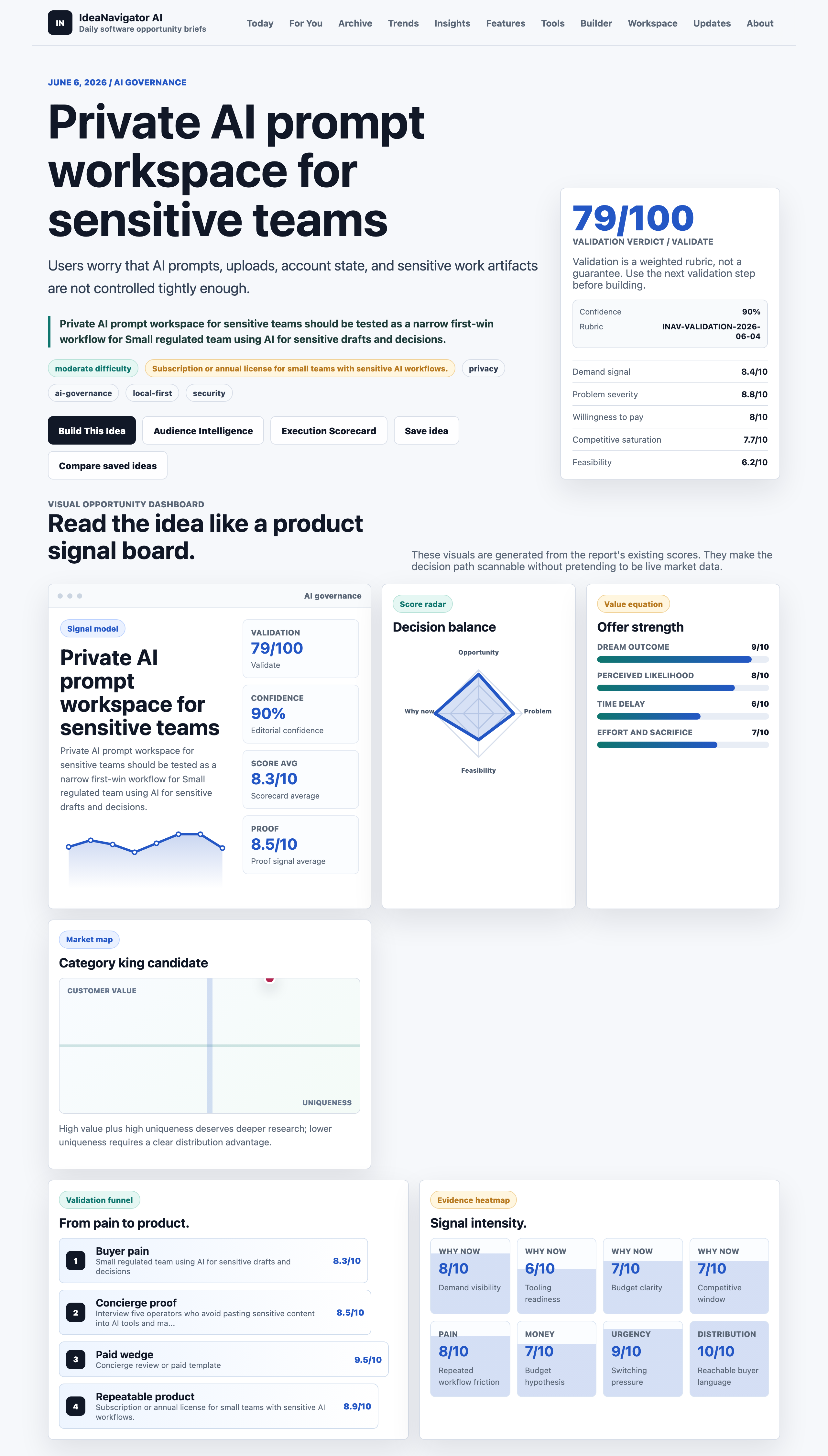
A pilot program is launching for a private AI prompt workspace designed for small, regulated teams handling sensitive information. The tool aims to improve data control, security, and auditability in AI workflows. The initiative is in early testing, with validation through operator interviews.
A new private AI prompt workspace tailored for small, regulated teams handling sensitive information is entering its initial testing phase, aiming to address concerns over data control and security in AI workflows.
The initiative focuses on creating a local-first prompt environment that incorporates features such as redaction checklists, source notes, review status indicators, and exportable audit logs. It is designed specifically for small teams working with sensitive drafts and decisions, who currently face challenges in controlling AI prompts, uploads, and artifacts. The project is being validated through interviews with five operators who have experience avoiding pasting sensitive content into AI tools and are testing a pilot workflow with redactions. The solution is intended to be offered as a subscription or annual license, targeting the AI governance market. The initial testing aims to determine whether this approach can effectively meet the data control needs of regulated teams while enabling AI-driven workflows.Why It Matters
This development matters because it addresses a growing concern among regulated and sensitive teams about maintaining control over confidential information when using AI tools. As more organizations incorporate AI into their workflows, ensuring data privacy, auditability, and compliance becomes critical. If successful, this private workspace could set a new standard for secure AI collaboration for small teams, potentially influencing broader adoption of controlled AI environments across industries that handle sensitive data.Products Worth Considering

Apple MacBook Pro 16.2-inch with M5 Max, 18-core CPU, 32-core GPU, 36GB Memory, 2TB SSD, Wi-Fi 7, Space Black

LG 27GR83Q-B 27-inch Ultragear QHD IPS Gaming Monitor

Ledger Stax Crypto Wallet with Touchscreen
As an affiliate, we earn on qualifying purchases.
Background
The rise of AI adoption in regulated sectors has increased the need for secure, controlled workflows that protect sensitive information. Currently, many teams avoid pasting confidential data into AI platforms due to security concerns, often resorting to manual redactions and offline processes. This initiative responds to these challenges by developing a local-first prompt environment designed specifically for small teams, a segment that often lacks tailored solutions. The concept aligns with broader trends in AI governance and data privacy, emphasizing the importance of auditability and control in AI-assisted decision-making. The pilot program is part of ongoing efforts to improve AI security and compliance in sensitive workflows.“This private workspace aims to give small teams a controlled environment to handle sensitive AI prompts without risking data leaks.”
— an anonymous researcher
“If the pilot proves successful, it could lead to broader adoption of secure, audit-ready AI environments for regulated sectors.”
— an industry analyst
What Remains Unclear
It is not yet clear how widely the private workspace will be adopted beyond the initial pilot, or how effectively it will address all security concerns in diverse regulatory environments. Details about the full feature set and long-term scalability remain to be seen.What’s Next
Next steps include completing the pilot interviews, analyzing feedback from initial users, and refining the workspace features. If validated, the developers plan to launch a broader beta and prepare for commercial rollout, with ongoing monitoring of security and usability metrics.
Key Questions
How does the private AI prompt workspace improve data security?
The workspace is designed to run locally on users’ systems, include redaction checklists, and generate exportable audit logs, reducing the risk of data leaks and ensuring better control over sensitive information.
Who is the target user for this workspace?
Small, regulated teams that use AI for sensitive drafts and decisions are the primary target, especially those concerned about data privacy and compliance.
When will the workspace be available for wider use?
The initial testing phase is ongoing, with a broader release planned after pilot validation and feature refinement, likely within the next few months.
What are the main features of this private workspace?
Key features include a local-first prompt environment, redaction checklists, source notes, review status indicators, and exportable audit logs to ensure security and compliance.
Source: IdeaNavigator AI