
A house by the sea, an 18-storey timber tower, a hospital extension with a helipad, a valley bridge replaced while the traffic keeps moving: GewerkTon, which keeps the spoken word on site and turns it into checkable evidence, has released “Where GewerkTon works”, a three-minute film through 64 sample buildings. None of them is real. Every building, plan and model was made by GewerkTon as a 3D model, and the film says so on screen.

Get smart everyday buys delivered free with Prime
- Fast, free delivery on millions of items
- Prime Video, Amazon Music and more included
- Member-only deals all year
“German permit drawings have a simple code: grey stays, yellow comes out, red is new. It explains a renovation faster than a paragraph,” says Thorsten Meyer, founder of GewerkTon.
What the film shows
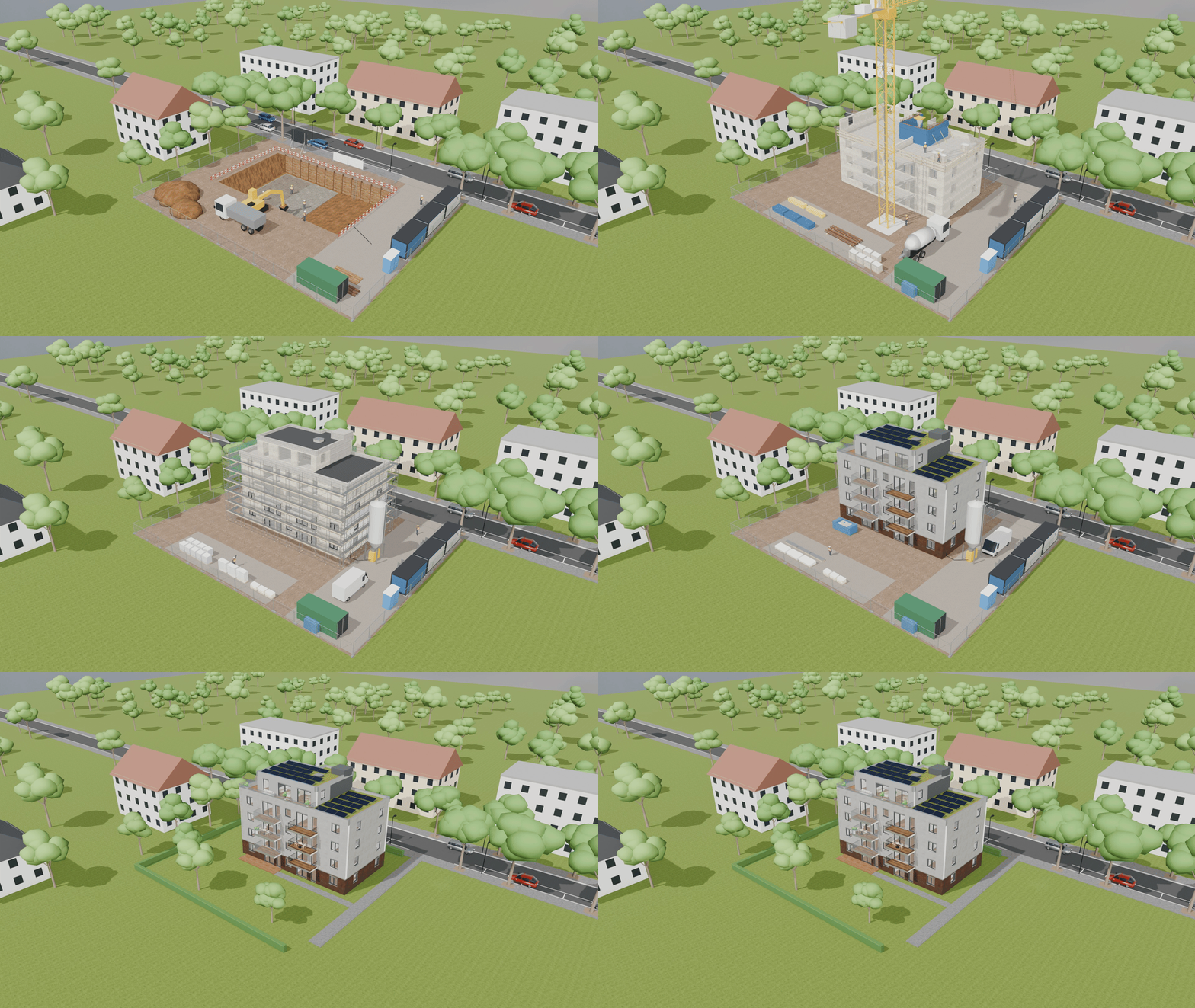
The film opens on a single building site seen from the air: excavation pit, shell with tower crane, scaffolding and roof, interior fit-out, finished house. From there it moves chapter by chapter through the kinds of buildings that construction teams deal with every day:
- Homes: a house by the sea, a row of six terraced houses, an 18-storey timber tower and a settlement of small houses set down by crane.
- Existing buildings: renovations shown before and after from the same camera position.
- Public buildings: a school sports hall, an indoor pool seen from the 5-metre board, a fire station and a stadium stand at night.
- Health, research and industry: a hospital extension with a helipad, laboratories, a cleanroom, an industrial bakery, a high-bay warehouse, an aircraft maintenance hangar and a dairy barn.
- Energy, water and transport: a wind turbine under construction, a solar park, a hydrogen plant, a flood pumping station, a valley bridge, a sewer, a railway stop, an airport pier and an inland port.
- Data: a data centre and the cold aisle between its server racks.
Bread at four in the morning. Aircraft in for the night. And two hundred cows that don’t care about your schedule.
Narration, “Where GewerkTon works”
Made by GewerkTon, and openly fictional
All 64 sample buildings were built by GewerkTon as 3D models, and every image in the film is rendered from those models. Projects, companies and addresses are invented, and the film says so on screen before the credits. The point is not to present a portfolio of real jobs. It is to show where GewerkTon can be used: across trades and across project types, from a single family home to infrastructure. The film shows models, plans and construction phases – no app screens.
Why phases, colours and cuts make a project easier to follow
Construction is hard to explain with words alone, and not everyone involved in a project reads technical drawings. The film leans on a few simple ways a 3D model can make a building understandable:
- Phases from one viewpoint. Showing the same site as pit, shell, scaffolding, fit-out and finished building makes the order of the work visible at a glance.
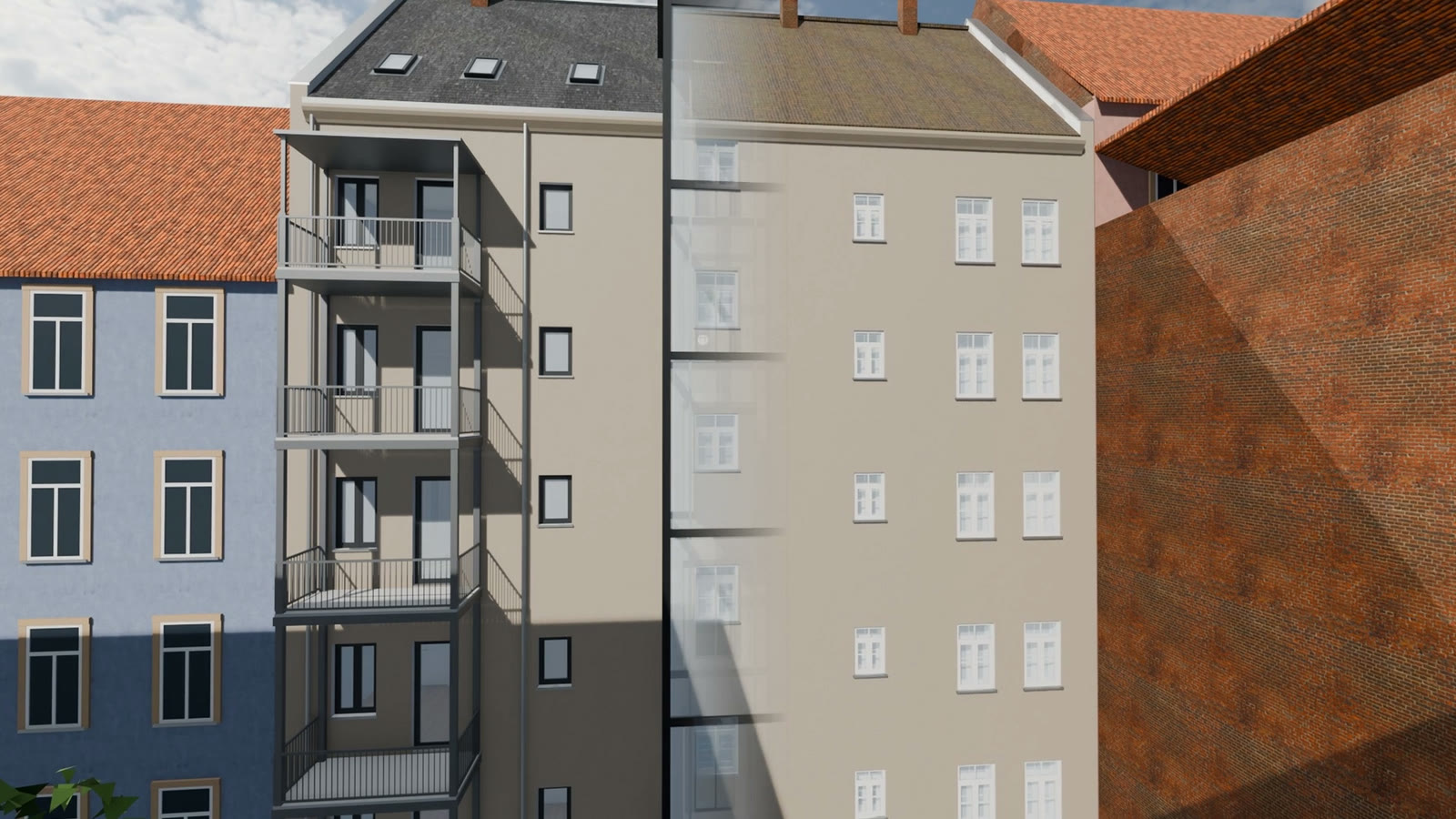
- Before and after from the same camera. “Most of the work isn’t new. It’s what is already there.” Comparing two states of one view shows exactly what a renovation changes.
- Colours that mean something. German building-permit and renovation drawings use a fixed convention: grey for what stays, yellow for what is demolished, red for what is new. In the film’s words: “Grey is what stands. Yellow comes out. Red is new.”
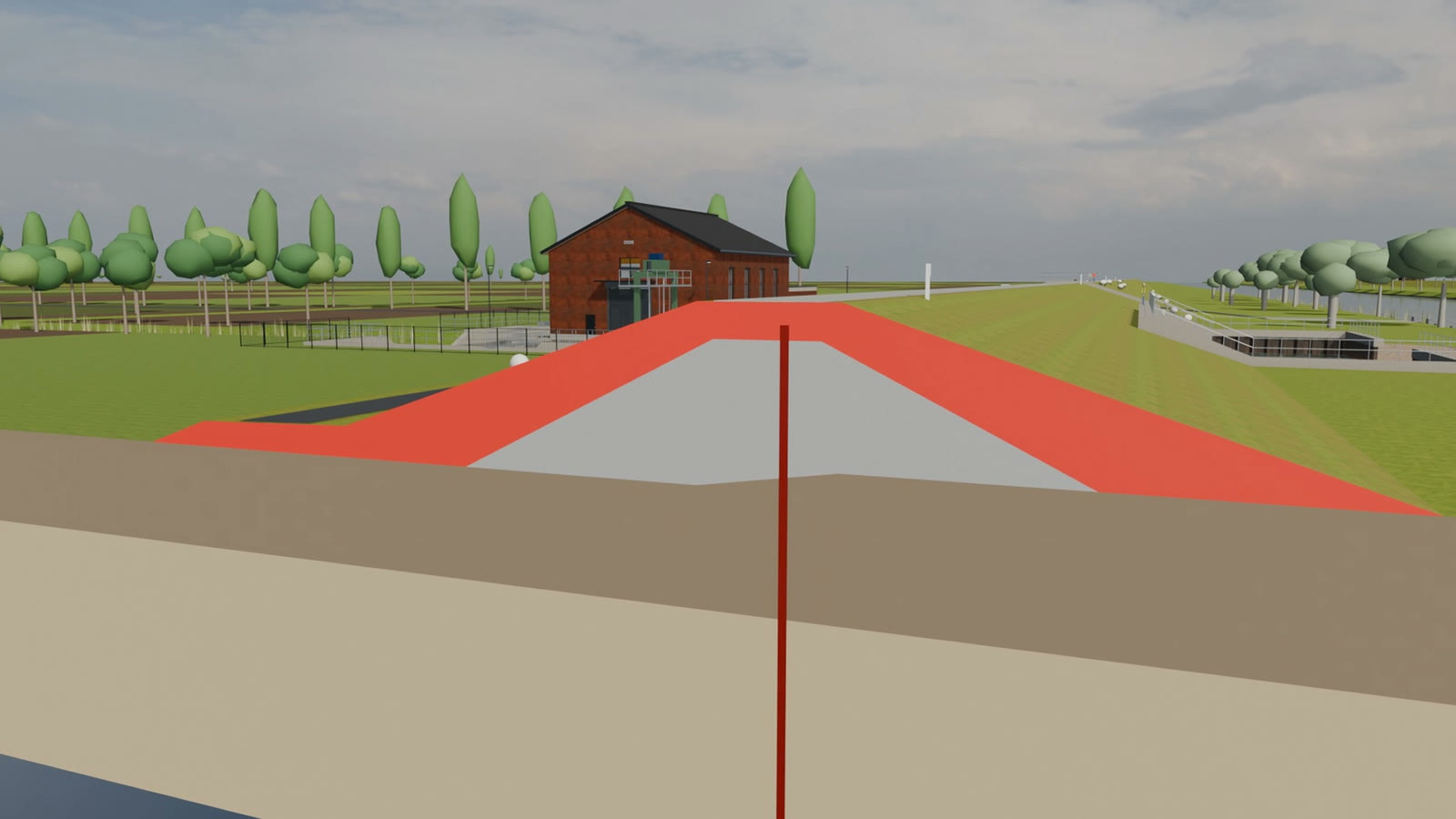
- Cuts through the model. A section through a dike, a sewer or a laboratory shows layers and routes that no photo of a finished building can show.
GewerkTon describes itself on its website in one line: “Gewerkton keeps the spoken word on site and turns it into checkable evidence. One brand, five lines: Field, Studio, Cloud, Archive, Operations.” Its claim is “On site, only what’s proven counts.” The website also states that 2026 is the beta year. For a closer look at the model idea, the interactive example From plan to house starts with a floor plan that is a cut through a fictional 3D model and lets the reader scroll from the plan to the front door and through the house.
Watch it
The full film runs three minutes: Where GewerkTon works on YouTube. A 60-second version is here: Where GewerkTon works in 60 seconds. New films appear on the GewerkTon YouTube channel and on GewerkTon on X.

Disclosure: Gewerkton is built by our publisher — we build it ourselves and write down what we learn.
Transparency note: narration, sound effects and music in the film are AI-generated (ElevenLabs). All imagery is rendered from GewerkTon’s own 3D models. The buildings, projects, companies and addresses are fictional.
Powered by Thorsten Meyer AI
Fall Picks
fall essentials
As an affiliate, we earn on qualifying purchases.