

In a gold IRA, bullion coins prioritize liquidity, stability, and lower premiums, making them ideal for straightforward investment and quick resale. Proof coins, however, are collector’s items with intricate finishes, higher premiums, and lower liquidity, aiming for potential appreciation. Your choice depends on whether you seek reliable wealth preservation or potential collector-driven growth. To understand how each fits your goals and IRA rules, explore further details below.
Key Takeaways
- Bullion coins are preferred for IRAs due to their high liquidity, lower premiums, and straightforward valuation based on metal content.
- Proof coins, while IRS-approved, typically have higher premiums and lower liquidity, making them less ideal for short-term IRA investments.
- IRS standards require IRA-eligible coins to meet purity and origin criteria; both bullion and proof coins qualify if they meet these standards.
- Proper storage and documentation in IRS-approved depositories are essential for including both coin types in a Gold IRA.
- Investors should consider their goals—wealth preservation favors bullion coins, while potential appreciation may justify including proof coins in their IRA.
Defining Bullion and Proof Coins: What Sets Them Apart
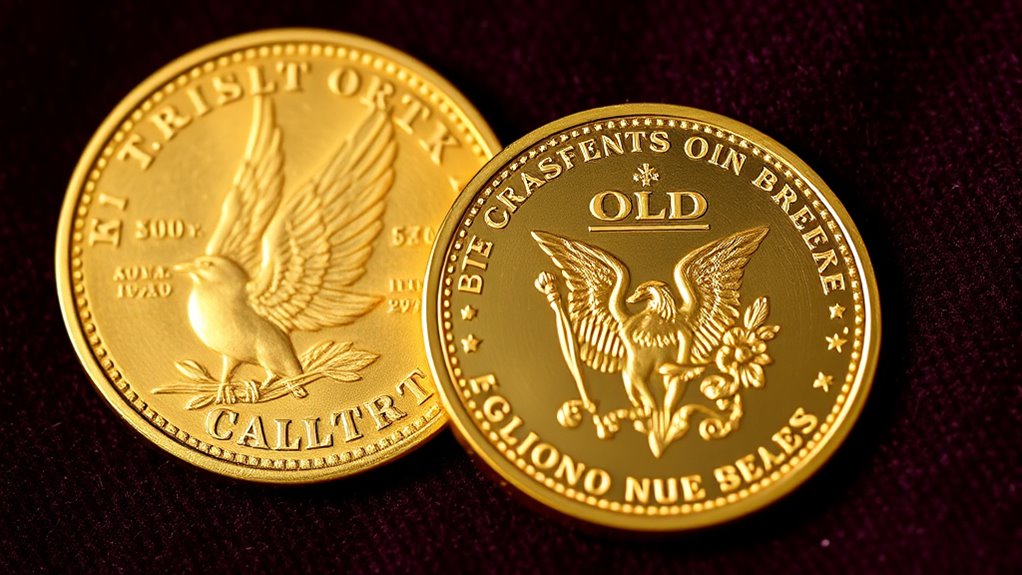
Bullion and proof coins serve different purposes in the precious metals market, and understanding their distinctions is key for investors. Bullion coins are designed mainly for investment, with a focus on metal content and liquidity. They typically have minimal premiums over spot prices and are produced in large quantities. Proof coins, on the other hand, are created for collectors. They feature intricate finishes, multiple strikes, and limited mintage, which markedly increase their premiums. Proof coins are crafted with artistic detail and are often housed in protective cases with certificates. While bullion coins emphasize straightforward metal value and easy trading, proof coins highlight craftsmanship, rarity, and aesthetic appeal. Recognizing these differences helps you decide which type aligns with your investment goals and portfolio strategy. Additionally, the quality of minting in proof coins often results in a higher resale value compared to bullion coins.
Visual and Production Characteristics of Each Coin Type
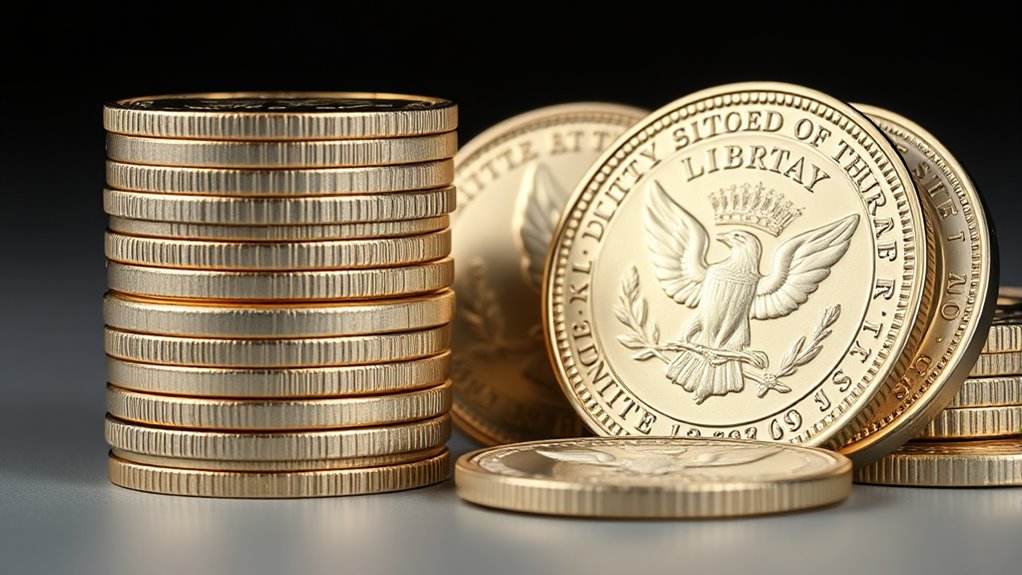
The visual and production qualities of bullion and proof coins differ markedly, reflecting their distinct purposes. Bullion coins are struck once using standard dies, resulting in a matte or satin finish with minor surface variations. They are produced in large quantities, making them straightforward and durable for investment. In contrast, proof coins undergo multiple strikes with polished dies, producing highly detailed, crisp images. They feature mirror-like fields and frosted designs, creating a cameo effect that emphasizes craftsmanship. Proof coins are limited in mintage and require careful handling, often sold in protective cases with certificates. These differences in finish, detail, and packaging highlight their roles: bullion for liquidity and simplicity, proof for artistry and collector appeal. Additionally, the production process for proof coins involves meticulous quality control, ensuring each coin meets high aesthetic standards.
Pricing Structures and Premium Factors

Pricing for bullion and proof coins varies considerably due to their distinct qualities and market demand. Bullion coins typically carry low premiums of about 3-8% over spot price, reflecting their metal content and high liquidity. They’re produced in large quantities, keeping costs relatively low and prices stable. In contrast, proof coins command much higher premiums—often 30% to over 150%—because of their craftsmanship, limited mintage, and collector appeal. Their prices are driven by factors like rarity, condition, and design, rather than metal value alone. Proof coins tend to be more volatile, with premiums bolstered by collector enthusiasm. When including these coins in a Gold IRA, understand that higher premiums on proof coins mean greater initial costs but potential for appreciation through collector interest. Additionally, the market demand for proof coins can significantly influence their premiums and resale value.
Market Liquidity and Investment Suitability
Market liquidity considerably influences how easily you can buy or sell precious metal coins, making it a key factor in investment choice. Bullion coins are highly liquid because they’re widely recognized, traded globally, and in constant demand. They can be quickly converted to cash, making them ideal for short-term needs or quick sales. In contrast, proof coins are less liquid since their value depends heavily on collector interest, rarity, and condition. Trusted custodians play a vital role in safeguarding these assets within a Gold IRA. For IRAs, IRS-approved proof coins are eligible, but their resale value may not be as predictable or swift as bullion.
IRS Compliance and Eligibility for Gold IRAs
To include gold coins in your IRA, you need to guarantee they meet IRS standards for eligibility. This means verifying their purity levels and that they are approved types, like certain bullion or proof coins. Additionally, you’ll want to work with a qualified custodian and store your coins in IRS-approved depositories to stay compliant. Ensuring the trustworthiness of AI security measures helps safeguard your investment information and prevent fraud.
Eligible Coin Standards
When investing in precious metals within a Gold IRA, ensuring your coins meet IRS standards is essential for maintaining tax advantages and compliance. The IRS sets strict guidelines to determine which coins qualify. First, coins must be produced by a certified mint and meet specific purity standards. Second, only certain types of coins are accepted, such as:
- Coins with a minimum purity of .995 fine for bullion, like the American Gold Eagle bullion (.9167 fine) as an exception.
- Approved proof coins, including American Gold Eagle Proof (.9167 fine) and American Silver Eagle Proof (.999 fine).
- Coins stored in IRS-qualified depositories through authorized custodians.
Always verify the coin’s certification, origin, and purity before including it in your IRA to ensure compliance and avoid penalties. Proper documentation and certification are crucial to confirm the coins meet all IRS requirements.
Purity Requirements
Ensuring your coins meet specific purity standards is vital for maintaining IRS compliance and eligibility for inclusion in a Gold IRA. The IRS mandates that bullion coins must have a minimum purity of .995 fine gold, silver, or other precious metals. However, some exceptions, like American Gold Eagles, are accepted at .9167 fine gold. Proof coins must also meet strict standards; for example, American Gold Eagle Proofs are acceptable at .9167 fine, while Silver Eagles require .999 fine silver. Additionally, platinum and palladium coins must reach .9995 purity. Always verify the purity and authenticity of your coins before purchasing or transferring them into your IRA. Proper documentation and certification are essential to ensure your coins qualify under IRS guidelines and avoid penalties or disqualification. Precise purity standards are crucial for IRS compliance and successful IRA inclusion.
Custodian and Storage
Custodian and storage arrangements are critical for maintaining IRS compliance and ensuring your Gold IRA remains protected. You must work with an IRS-approved custodian to handle purchasing, reporting, and legal requirements. Additionally, your coins need to be stored in an IRS-qualified depository to meet regulations. To ensure proper compliance, consider these key points:
- Choose a custodian experienced with precious metals IRAs to navigate IRS rules effectively.
- Confirm that storage facilities are IRS-certified, maintaining security and proper segregation of assets.
- Keep detailed records of all transactions, purchases, and storage arrangements for IRS audits and verification.
- Ensure that your projectors have high-quality calibration to meet the standards required for IRS reporting and optimal asset protection.
Following these steps helps safeguard your investment, preserves tax advantages, and ensures your IRA remains fully compliant with IRS regulations.
Strategic Roles in Diversified Investment Portfolios
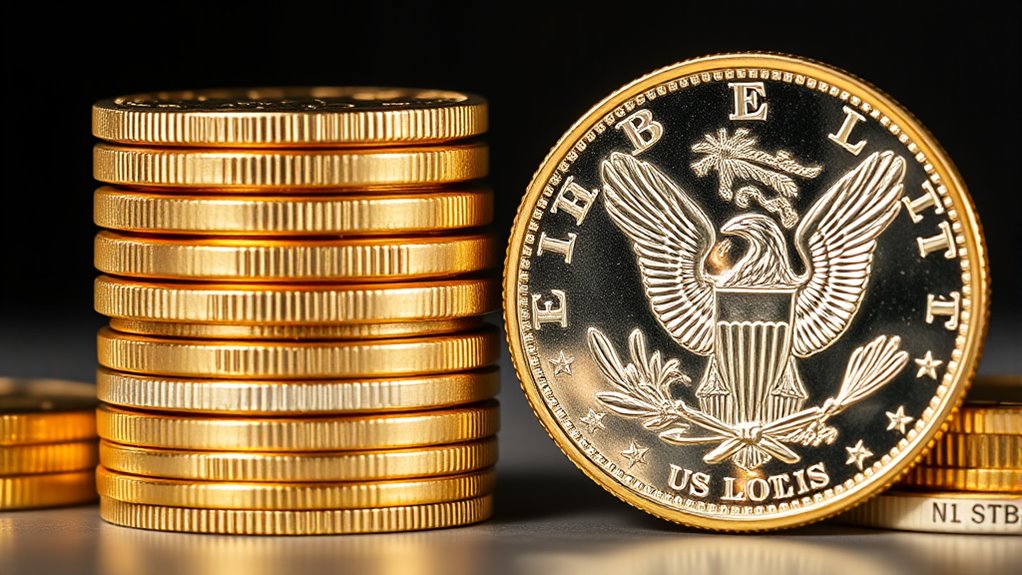
In a well-rounded investment portfolio, incorporating both bullion and proof coins can enhance diversification by balancing liquidity with growth potential. Bullion coins serve as a stable, liquid core, protecting against inflation and market swings. Proof coins add collector value, offering upside through rarity and aesthetic appeal. Combining both allows you to manage risk while seeking appreciation opportunities. Use bullion for steady long-term preservation, and include proof coins to pursue higher returns driven by collector demand. Here’s a quick comparison:
| Aspect | Bullion Coins | Proof Coins |
|---|---|---|
| Liquidity | High, easily tradable | Lower, niche market |
| Price Premiums | Low (3-8%) | High (30-150%) |
| Market Focus | Metal content, inflation hedge | Rarity, collector demand |
| Investment Horizon | Long-term stability | Potential for short-term gains |
This approach helps you build a resilient, diversified portfolio tailored to your goals. Additionally, understanding the market dynamics of precious metals can further inform your investment strategy.
Considerations for Choosing Between Bullion and Proof Coins
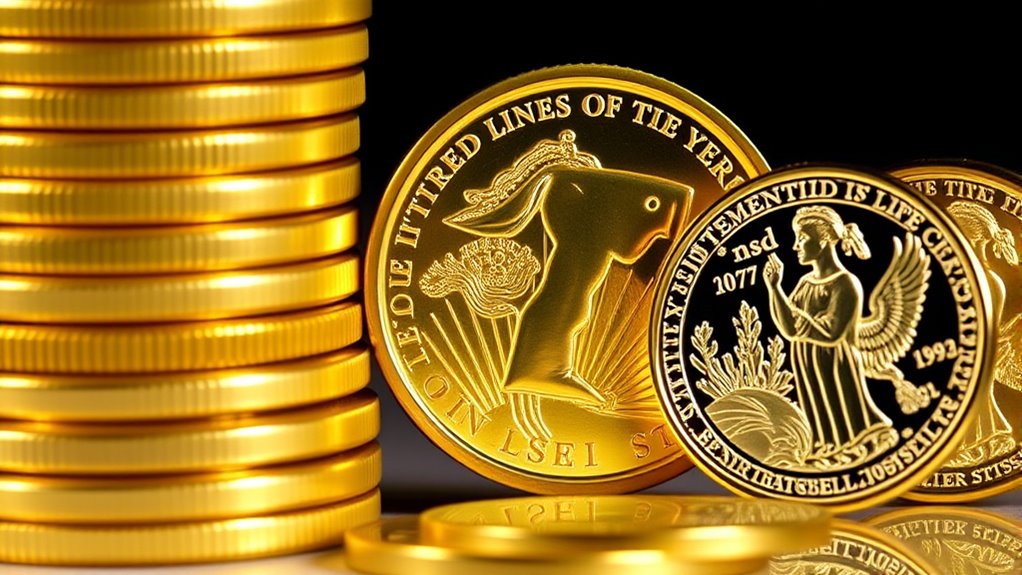
When choosing between bullion and proof coins, you should consider how your investment goals align with each option. Premiums and costs vary widely, impacting the overall value and affordability, especially in a Gold IRA. Additionally, liquidity and marketability influence how easily you can buy or sell these coins when needed. Understanding the key components and market trends can help you make informed decisions.
Investment Goals Alignment
Your investment goals play a crucial role in determining whether bullion or proof coins are the right choice for you. If your primary aim is straightforward wealth preservation and liquidity, bullion coins are ideal because of their low premiums and market ease. Conversely, if you seek potential appreciation through rarity, artistic value, and collector demand, proof coins align better with your objectives.
Consider these factors:
- Time Horizon: Long-term wealth preservation favors bullion, while proof coins may appreciate over time with collector interest.
- Risk Tolerance: Conservative investors prefer bullion’s stability; collectors willing to accept market fluctuations may find proof coins appealing.
- Return Expectations: If you aim for steady growth, bullion provides predictable value; for higher upside potential, proof coins offer added collector premiums.
Premiums and Costs
Choosing between bullion and proof coins involves carefully considering their premiums and overall costs, as these factors considerably impact your investment’s value. Bullion coins typically carry low premiums of about 3-8% over spot price, reflecting their high liquidity and metal content. Proof coins, however, command much higher premiums—ranging from 30% to over 150%—due to their craftsmanship, limited mintage, and collector demand. While bullion coins offer stability and lower initial costs, proof coins can appreciate more through collector interest. Keep in mind that higher premiums on proof coins mean a larger upfront investment, which could pay off if their rarity and condition boost their value over time. Your choice should align with your risk tolerance, investment goals, and preference for potential numismatic appreciation.
Liquidity and Marketability
Liquidity and marketability are crucial factors to contemplate when deciding between bullion and proof coins. Bullion coins are highly liquid, easily bought and sold through global dealers, making them ideal for quick transactions and straightforward portfolio management. Proof coins, however, tend to be less liquid due to their collector market dependence, with sales often driven by rarity and condition.
Consider these points:
- Bullion coins offer near-instant liquidity, appealing for immediate needs or rebalancing.
- Proof coins may require longer timeframes to sell at desired prices, especially if demand wanes.
- IRS-approved proof coins can be included in a Gold IRA but might be harder to liquidate quickly at fair value.
Your choice impacts how easily you can access your investment when needed.
Frequently Asked Questions
How Do Storage Requirements Differ Between Bullion and Proof Coins in a Gold IRA?
You need to store both bullion and proof coins in IRS-approved depositories for a Gold IRA. Proof coins, with their delicate finishes and protective cases, require extra careful handling and specialized storage to prevent damage. Bullion coins are more durable and can be stored in standard secure vaults or safe deposit boxes. Regardless, verify your chosen storage meets IRS guidelines to maintain your IRA’s tax-deferred status.
Are There Specific Tax Implications for Holding Proof Coins in an IRA?
Holding proof coins in your IRA can have tax implications because they often carry higher premiums and may appreciate more due to collectability. While the IRS allows certain proof coins, their premiums aren’t tax-deductible but can increase your overall investment value. Be aware that if you sell or distribute them, gains could be taxed, and improper handling might jeopardize IRA tax advantages, so always consult a tax professional before investing.
Can Proof Coins Be Sold Quickly Compared to Bullion Coins During Market Downturns?
During market downturns, you can sell bullion coins more quickly than proof coins because they have a larger, more active global market. Bullion coins are highly liquid and widely accepted, making transactions faster. In contrast, proof coins are less liquid due to their limited collector market. Selling proofs may take longer and require more effort, especially if you need to find the right buyer or wait for collector demand to increase.
What Factors Influence the Long-Term Appreciation Potential of Proof Coins?
You can boost proof coins’ long-term appreciation based on rarity, condition, and demand among collectors. Limited mintage and high-quality finishes make them more attractive over time, especially if they’re well-preserved and in original packaging. Popular designs or series also increase value. Keeping these coins in excellent condition and understanding collector trends can help maximize their potential for appreciation, making them a strategic addition to your portfolio.
Are There Additional Costs Associated With Maintaining Proof Coins in an IRA?
You’ll face more than just the purchase price when maintaining proof coins in your IRA; expect costs that could seem astronomical. Handling fees, specialized storage, and insurance to protect those delicate, mirror-like surfaces can add up faster than you think. Plus, you might need expert appraisals and certified grading, which can be costly. Overall, these extras make managing proof coins a more expensive, intricate process compared to holding bullion, but they might boost your investment’s prestige.
Conclusion
Ultimately, choosing between bullion and proof coins for your gold IRA is like selecting the perfect piece of jewelry—each offers its own unique charm and appeal. By understanding their differences and how they align with your goals, you can make a confident, well-informed decision. Embrace the journey with an open mind, knowing that the right choice can add a touch of elegance and stability to your investment portfolio.