

IRA-approved gold coins and bars must come from government mints like the U.S. Mint or Royal Canadian Mint, or from accredited private refineries. They need to be certified for authenticity and meet strict purity standards—at least 99.5% for gold, with some exceptions like the American Gold Eagle. Storage must be in IRS-approved depositories, and personal possession isn’t allowed. To guarantee your gold qualifies, it’s important to check these requirements—staying compliant can be straightforward if you know the details.

Get smart everyday buys delivered free — and shop member deals
- Fast, free delivery on millions of items
- Access to Prime Big Deal Days deals on October 6–7
- Prime Video, Amazon Music and more included
Key Takeaways
- Must originate from government mints like U.S. Mint, Royal Canadian Mint, or Perth Mint, or be from accredited private refineries.
- Gold products must have a minimum purity of 99.5%, except for American Gold Eagles, which are 91.67%.
- Coins and bars must be certified authentic and meet IRS standards for quality and fineness.
- Only bullion coins, bars, and rounds approved by authorities qualify; collectible or numismatic items do not qualify.
- Gold must be stored in an IRS-approved depository or custodial storage; personal possession disqualifies eligibility.
As an affiliate, we earn on qualifying purchases.
Authorized Mints and Certification Standards

When it comes to IRA-eligible gold coins and bars, only products produced by authorized mints or those certified by recognized organizations qualify. You must confirm that the gold comes from a government mint, such as the U.S. Mint, Royal Canadian Mint, or Perth Mint, which meet strict standards. Private refineries or mints need specific accreditation or certification from trusted organizations like NYMEX, COMEX, LBMA, LPPM, or TOCOM to be eligible. Unapproved private mints or unverified rounds won’t meet IRA standards. Additionally, the gold must be in the form of bullion bars, coins, or rounds approved by these authorities. This guarantees the gold’s authenticity, quality, and compliance with IRS regulations, which is essential for maintaining your IRA’s integrity. Proper certification ensures that the gold adheres to industry standards and maintains its value over time.
As an affiliate, we earn on qualifying purchases.
Purity Requirements for Gold Products

Gold products must meet strict purity standards to qualify for IRA inclusion, ensuring each piece is high-quality and investment-grade. Generally, gold must be at least 99.5% pure (0.995 fineness) for bars and most coins. The American Gold Eagle is an exception, with a fineness of 91.67% (0.9167). Silver, platinum, and palladium also have minimum purity requirements—99.9% for silver and 99.95% for platinum and palladium. Fractional coins or bars below these standards are ineligible. Damaged, altered, or impure items are excluded from IRA eligibility. These standards guarantee you’re investing in liquid, reputable assets that meet IRS criteria, maintaining the integrity and value of your retirement account. Additionally, adherence to AI Entertainment advancements ensures that these standards evolve in tandem with industry innovations. Always verify purity before purchasing for your IRA.
As an affiliate, we earn on qualifying purchases.
Eligible Types of Gold Coins and Bars

To qualify for an IRA, your gold must fall into specific approved categories, including bullion bars, bullion coins, proof coins, and rounds. These products must come from government mints or accredited private refineries. Authenticity and purity are essential, with a minimum fineness of 99.5%. The American Gold Eagle is an exception, with 91.67% purity. Ensuring compliance with IRS regulations is crucial for maintaining your IRA eligibility.
IRS approved depository gold storage
As an affiliate, we earn on qualifying purchases.
As an affiliate, we earn on qualifying purchases.
Storage and Custodial Regulations

Ensuring your IRA-approved gold is stored properly is vital to maintaining its eligibility and protecting your investment. You must keep your gold in an IRS-approved depository or custodial storage facility; personal possession isn’t allowed. A qualified IRA custodian manages your account, verifying that all assets meet IRS standards. They handle the purchase, storage, and ongoing compliance, guaranteeing your gold remains eligible for tax advantages. If you take physical possession without authorization, you risk early withdrawal penalties and disqualification of your IRA. Custodians also oversee contribution limits and proper reporting. It’s essential to work with a reputable custodian experienced in precious metals to guarantee your gold stays within IRS guidelines and remains protected under your retirement plan. Proper storage safeguards your investment’s integrity and tax-advantaged status. Safe storage practices are critical to ensure your assets retain their IRS eligibility and avoid costly penalties.
Common Disqualifications and Mistakes
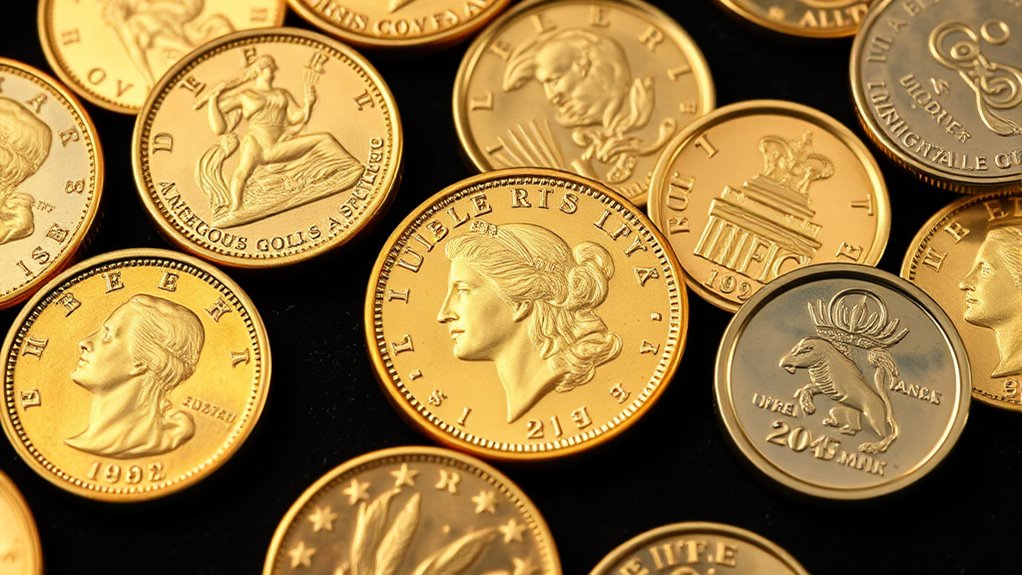
Failing to adhere to IRS guidelines can quickly disqualify your IRA gold investments. One common mistake is including coins or bars from non-approved mints or private refiners lacking proper certification. Remember, only government mints or accredited private entities qualify. Using coins that don’t meet purity standards—such as gold below 99.5% or the American Gold Eagle’s 91.67%—can disqualify your holdings. Avoid investing in collectible coins, jewelry, or numismatic items, as these are explicitly excluded. Fractional coins or bars that don’t meet weight or purity requirements also disqualify your investment. Additionally, holding physical gold personally, instead of through an IRS-approved depository, violates regulations and risks disqualification. Always verify that your gold products meet all IRS criteria before including them in your IRA. Proper gold purity standards are crucial for maintaining qualification status.
Frequently Asked Questions
Can I Include Collectible or Rare Coins in My IRA?
You can’t include collectible or rare coins in your IRA because they aren’t approved for IRA investment. The IRS only allows certain bullion coins and bars that meet strict purity and minting standards, produced by recognized government mints or accredited private refineries. Collectible and numismatic coins, even if made of gold, don’t meet these criteria. To stay compliant, stick with approved bullion products and avoid including rare or collectible coins.
Are There Specific Size or Weight Restrictions for Gold Bars?
Think of gold bars as sturdy pillars supporting your retirement fortress. You must stick to specific size and weight standards—bars typically come in exact weights like 1 oz, 10 oz, or 100 oz, with strict minimum fineness of 99.5%. They should be produced by approved mints or accredited refiners, and the dimensions must meet IRS guidelines. Damaged or fractional bars below these standards won’t stand firm in your IRA’s foundation.
Is It Possible to Hold IRA Gold at Home?
You can’t hold IRA gold at home. IRS rules require all IRA-approved gold to be stored in an IRS-approved depository managed by a qualified custodian. This prevents direct physical possession, which could lead to penalties or disqualification of your IRA. You’ll need to work with a custodian who guarantees your gold is securely stored and complies with all regulations, maintaining the integrity of your retirement investment.
What Documentation Is Needed to Verify Gold Eligibility?
You need to gather a mountain of documentation to prove your gold’s eligibility. This includes a certificate of authenticity, assay card, or appraisal confirming the coin or bar’s origin, purity, and minting details. Make certain you have proof that the gold comes from an approved government mint or certified refiner. Keep records of purchase receipts and any certification that verifies the product’s standards, so your IRA custodian can confirm it’s qualified without a hiccup.
Do I Need to Buy Directly From the Mint to Qualify?
No, you don’t need to buy directly from the mint to qualify. You can purchase IRA-approved gold coins or bars through reputable precious metals dealers or brokers who specialize in IRS-compliant products. Just make certain that the seller provides proper documentation verifying the product’s authenticity, origin, and certification. The key is to buy from an accredited source that offers IRS-approved, certified gold products, regardless of whether it’s directly from the mint or a trusted dealer.
Conclusion
Navigating IRA-approved gold is like walking a tightrope—balance is key. By understanding the standards and avoiding common pitfalls, you can turn your investment into a shining beacon of financial security. Stick to authorized mints, ensure purity, and follow storage rules, so your gold stays as pristine as a sunrise. With the right knowledge, you’ll keep your gold’s glow bright and your retirement future crystal clear.
Fall Picks
fall essentials
As an affiliate, we earn on qualifying purchases.