To qualify for a Gold IRA, you need to choose metals that meet IRS standards. This includes gold, silver, platinum, and palladium from approved sources. Gold must be at least 99.5% pure, silver 99.9%, and platinum and palladium 99.95%. Recognized coins like American Gold Eagles and Silver Maple Leafs are permitted, but collectibles or jewelry are not. Ensuring your metals meet these standards and are stored properly keeps your IRA compliant—continue to explore for more details.
Key Takeaways
- IRS permits gold, silver, platinum, and palladium in IRAs, with specific purity requirements for each metal.
- Eligible gold must be at least 99.5% pure, silver 99.9%, and platinum/palladium 99.95%.
- Coins and bars must originate from approved mints or refineries and meet recognized standards.
- Collectible or proof coins and jewelry are not permitted in IRAs due to non-compliance.
- Metals must be certified, properly stored in IRS-approved depositories, and meet strict authenticity standards.
Eligible Precious Metals for IRA Inclusion

If you’re considering adding precious metals to your IRA, it’s important to know which metals are eligible. The IRS allows gold, silver, platinum, and palladium in your account, but each must meet specific purity standards. Gold must be at least 99.5% pure, while silver requires a minimum of 99.9%. Platinum and palladium need to be 99.95% pure. Not all forms of these metals qualify—coins and bars must come from approved mints or refineries. For gold, popular choices include American Gold Eagles, Gold Buffaloes, and Canadian Gold Maple Leafs. Silver options include American Silver Eagles and other recognized coins. Remember, only recognized and certified metals meet IRS standards for inclusion in your IRA, ensuring the investment’s legitimacy and security. Recognition and certification are crucial aspects that guarantee compliance with IRS regulations.
Purity Standards for Gold and Silver

To qualify for inclusion in an IRA, precious metals must meet specific purity standards set by the IRS. Gold must be at least 99.5% pure, and silver requires a minimum purity of 99.9%. These standards guarantee the metals’ quality and authenticity. The table below highlights the purity thresholds for each eligible metal:
| Metal | Minimum Purity | Notes |
|---|---|---|
| Gold | 99.5% | Includes American Gold Eagles, Buffaloes, etc. |
| Silver | 99.9% | Commonly in coins like Maple Leafs |
| Platinum | 99.95% | Used in bars and coins |
| Palladium | 99.95% | Approved for IRAs |
Metals below these standards aren’t eligible. Always verify purity before including metals in your IRA. Purity standards ensure the metals’ quality and eligibility for IRA inclusion.
Approved Platinum and Palladium Specifications
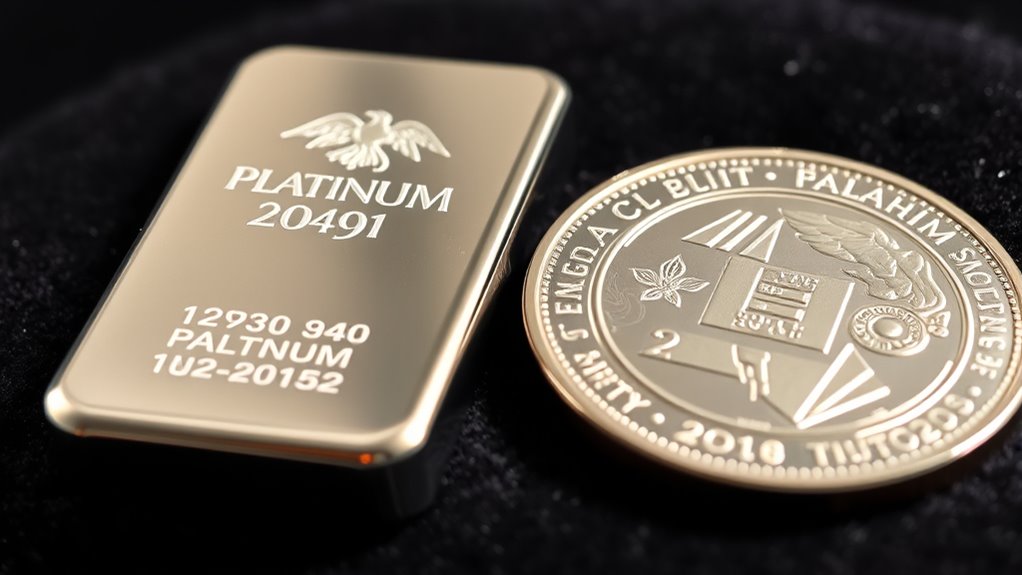
Platinum and palladium are approved metals for IRAs only when they meet strict purity standards. To qualify, they must reach specific benchmarks.
Platinum and palladium must meet strict purity standards to qualify for IRAs.
- Platinum must be 99.95% pure, guaranteeing high-quality investment-grade metal.
- Palladium also requires a purity of 99.95%, matching platinum standards.
- The metals should come from reputable refiners with proper assay reports.
- Investment-grade bars or coins must display hallmark stamps verifying their purity and origin.
- Ensuring that these metals meet the purity standards helps maintain the integrity and compliance of your IRA holdings.
These standards guarantee that your IRA holds genuine, high-purity platinum or palladium. Anything below these purity levels isn’t eligible. Always confirm that your metals are from IRS-approved sources and meet the exact specifications to ensure compliance with IRS regulations.
Recognized Gold Coins for Retirement Accounts

Are you wondering which gold coins qualify for IRAs? The IRS recognizes several bullion coins that meet purity standards and are suitable for retirement accounts. American Gold Eagles are allowed, even though they are 22-karat, because they meet purity requirements. American Gold Buffalo coins qualify as they are 24-karat, ensuring high purity. Canadian Gold Maple Leafs are accepted, along with Austrian Gold Philharmonics and Chinese Gold Pandas. These coins must be produced by approved mints and meet the minimum purity standards of 99.5%. Remember, collectible or proof coins are not eligible, so stick to standard bullion coins. Ensuring your coins are recognized by the IRS is essential for maintaining the tax advantages of your Gold IRA. Additionally, understanding metal purity standards is crucial to selecting compliant coins for your retirement investments.
Storage Requirements for IRA Metals
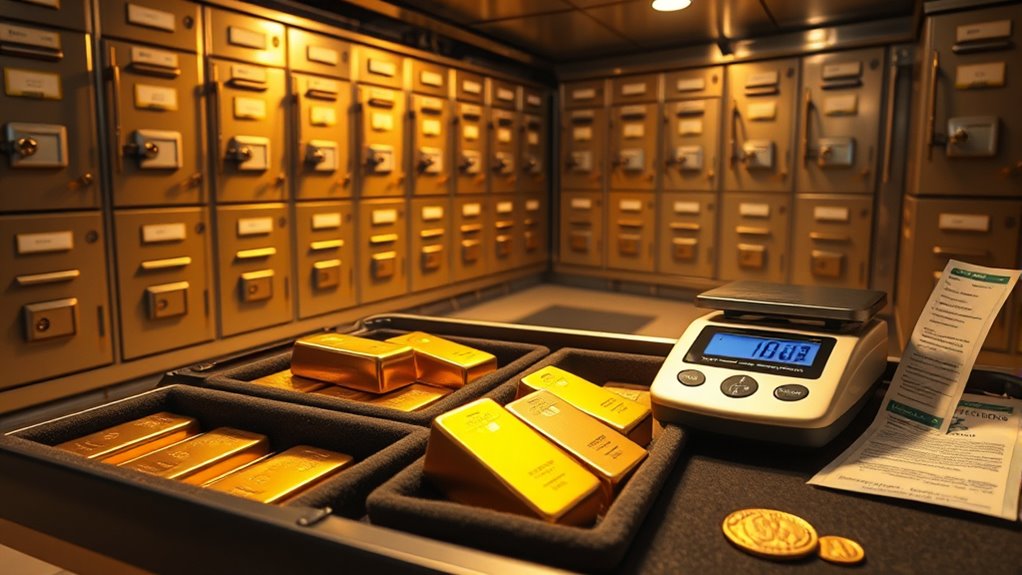
You can’t store your IRA metals at home; they must be kept in an IRS-approved depository. These secure locations charge storage fees, which usually range from $100 to $300 annually, and prioritize security and insurance. Choosing a reputable depository guarantees your metals are protected and meet IRS requirements. Additionally, understanding storage requirements helps ensure compliance and long-term preservation of your assets.
Secure Storage Locations
Since IRA-owned metals must be stored securely, the IRS mandates that these assets be kept in an approved depository rather than at home. You’ll need to choose a custodian that partners with IRS-approved storage facilities. Here’s what that entails:
- The metals are stored in a secure, insured depository to prevent theft or damage.
- The facility must be approved by the IRS to ensure compliance with regulations.
- You won’t have direct access; only the custodian can handle the metals.
- Storage fees are charged annually, varying by depository and location.
- Ensuring proper storage standards is crucial for maintaining IRS compliance and safeguarding your assets.
This setup guarantees your metals are protected, properly insured, and compliant with IRS rules, giving you peace of mind about your investment’s safety.
Storage Fees and Security
Storage fees for IRA metals typically range from $100 to $300 annually, depending on the depository and its location. These fees cover secure storage, insurance, and handling. You must store your metals in an IRS-approved depository; storing them at home is not permitted. The depository’s security measures are vital, so verify they have advanced security systems, insurance coverage, and regular audits. Some depositories charge flat fees, while others base costs on the metal’s value or weight. It’s essential to compare options and understand what’s included. Remember, secure storage not only protects your investment but also guarantees compliance with IRS rules. Additionally, choosing a depository with proper security measures is crucial to safeguard your assets. Always verify that your chosen depository is approved and transparent about their fees and security standards.
Criteria for Gold Bars and Rounds

Gold bars and rounds intended for IRAs must come from recognized mints or qualified refiners, guaranteeing their legitimacy and quality. To meet criteria, consider these points:
- They must have a purity of at least 99.5%, verified by a hallmark from a reputable refiner.
- The weight should be clearly marked, with specific standards for smaller bars.
- Bars and rounds require certification or assay cards confirming authenticity.
- They must be free from any markings or features that suggest they’re collectibles or jewelry.
Additionally, ensuring the gold’s market authenticity can help protect your investment and meet IRS standards. These standards help ensure your IRA holds only compliant, genuine gold assets. Avoid unverified or unmarked items, as they won’t meet IRS requirements. Always purchase from trusted sources that provide proper documentation.
Items Not Permitted in Gold IRAs

You can’t include jewelry or plated items in your Gold IRA, as they don’t meet IRS standards. Collectible coins, like proof or numismatic pieces, are also not permitted because they’re considered collectibles, not investments. Additionally, non-standard bullion bars that don’t come from recognized mints or meet purity and hallmark requirements are not allowed.
Jewelry and Plated Items
While jewelry and plated gold items may seem valuable, they are not permitted in IRAs because they do not meet the IRS’s standards for investment-grade precious metals. These items are primarily decorative and contain alloy metals that lower their purity, making them unsuitable for your retirement account. The IRS specifically excludes jewelry and plated items for the following reasons:
- They lack the necessary purity standards required for IRA-eligible metals.
- They often contain alloy metals that dilute gold content.
- Their value is based on craftsmanship or rarity, not bullion value.
- They are considered collectibles rather than investment-grade assets.
- Creativity can be applied to designing or selecting jewelry that meets purity standards, but such items are not suitable for IRAs.
This restriction helps guarantee your IRA contains only metals that meet strict purity and authenticity criteria, supporting the integrity of your retirement investments.
Collectible Coins Excluded
Although collectible coins may hold sentimental or artistic value, they are not allowed in IRAs because they do not meet the IRS’s strict purity and investment standards. The IRS excludes coins primarily valued for their rarity, age, or artistic design—such as proof coins, numismatic coins, and limited-edition commemoratives. These items are considered collectibles, not standard bullion, and lack the purity and weight requirements necessary for IRA inclusion. Including such coins could jeopardize your IRA’s tax-advantaged status. To keep your retirement investment compliant, stick with eligible bullion coins and bars that meet purity standards and are produced by recognized mints. Remember, the focus is on investment-grade metals, not collectibles or artistic pieces. Additionally, to ensure compliance, it is important to verify that the metals you choose meet all IRS purity standards before adding them to your IRA.
Non-Standard Bullion Bars
Non-standard bullion bars are not permitted in Gold IRAs because they do not meet the strict IRS requirements for purity, origin, or authenticity. These bars often lack proper certification or come from unrecognized sources, making them ineligible. To clarify, avoid these types:
- Bars from unknown or unapproved mints that lack a hallmark or certification.
- Bars with irregular shapes or dimensions that don’t meet standard weight or purity standards.
- Bars with questionable purity levels below 99.5%, failing IRS standards.
- Bars that lack third-party verification or proper documentation, risking disqualification.
Sticking to recognized, certified bullion bars ensures compliance. If a bar doesn’t have documented purity, origin, or certification from an approved refiner, it’s not suitable for your Gold IRA.
Choosing a Custodian for Your Gold IRA

Choosing a custodian for your Gold IRA is a crucial step to guarantee your precious metals are managed securely and in compliance with IRS regulations. You need to select an IRS-approved custodian to handle your account, ensure proper documentation, and oversee transactions. Look for a custodian with a solid reputation, transparent fees, and experience with precious metals IRAs. They should provide clear guidance on purchasing eligible metals, maintaining proper storage, and reporting IRS-required documentation. Some custodians also offer additional services like account management and customer support. Remember, the custodian doesn’t hold the metals themselves but manages the account and ensures your assets meet IRS standards. Making an informed choice helps protect your investment and keeps your IRA compliant.
Understanding IRS-Approved Depositories

You need to store your IRA-approved metals in a depository that meets IRS standards. These approved facilities prioritize security and typically carry insurance to safeguard your investment. Choosing the right storage option helps ensure your metals stay safe and compliant with IRS rules.
Approved Storage Facilities
An IRS-approved depository is essential for securely storing your precious metals in a Gold IRA. These facilities ensure your assets are protected and compliant with IRS regulations. When choosing a depository, consider these key aspects:
- They are fully licensed and insured, providing security and peace of mind.
- They maintain strict security measures like surveillance, access controls, and vaults.
- They offer transparent fee structures, typically including storage and insurance costs.
- They provide regular reporting and audit access to verify your holdings.
Security and Insurance
Understanding security and insurance is crucial when selecting an IRS-approved depository for your Gold IRA. You need a facility with robust security measures, including 24/7 surveillance, alarms, and restricted access, to protect your valuable metals. Confirm the depository is insured against theft, damage, or loss through reputable insurance providers. This coverage provides peace of mind, knowing your assets are protected beyond physical security. Verify that the depository complies with IRS regulations and maintains proper documentation and auditing standards. Additionally, review their insurance policies to understand what’s covered and any exclusions. Choosing a secure, insured depository minimizes risks and safeguards your investment, ensuring your metals remain protected until you decide to take distributions or convert them.
Tips for Ensuring Metal Authenticity and Compliance
To guarantee your Gold IRA holdings stay compliant and authentic, start by verifying the source of your metals. First, verify your metals come from an IRS-approved dealer or mint. Second, check that the metals meet the required purity standards: at least 99.5% for gold and 99.9% for silver. Third, confirm that the coins or bars have official hallmarks or certificates of authenticity from recognized refineries. Fourth, always request third-party assay reports to verify metal purity and authenticity. By following these steps, you reduce the risk of purchasing non-compliant or counterfeit metals. This diligence helps ensure your investment remains IRS compliant and maintains its value over time. Proper verification is key to a secure and compliant Gold IRA.
Frequently Asked Questions
Can I Personally Store My Gold IRA Metals at Home Legally?
You cannot store your Gold IRA metals at home legally. The IRS requires that all IRA-owned metals be stored in an IRS-approved depository. This rule guarantees your assets are secure and properly maintained. Attempting to keep your metals at home can lead to penalties and disqualification of your IRA. So, always choose a reputable, IRS-approved storage facility to stay compliant and protect your investment.
Are There Specific Brands or Mints That Are Automatically Approved for IRAS?
You’ll find that certain reputable mints are favored when choosing gold for your IRA. Recognizable brands like the U.S. Mint, Canadian Mint, and Austrian Mint are well-regarded for their quality and compliance. Opting for coins from these trusted sources helps *guarantee* your investment meets IRS standards. Just remember, your custodian must approve the specific coins or bars you select, so always double-check before making a purchase.
How Often Do IRS Regulations Regarding Precious Metals in IRAS Change?
IRS regulations on precious metals in IRAs rarely change, typically updating every few years or when new legislation passes. You should stay informed by checking the IRS website or consulting your financial advisor regularly. These updates may involve purity standards, eligible metals, or storage rules. By keeping up, you guarantee your IRA investments remain compliant and avoid potential penalties or disqualifications.
What Documentation Is Needed to Verify the Purity of Ira-Approved Metals?
You need to provide documentation like assay certificates or third-party verification reports to confirm the purity of your IRA-approved metals. These documents, issued by recognized refineries or assayers, detail the metal’s purity level and authenticity. When you buy or transfer metals into your IRA, your custodian will require this proof to verify the metals meet IRS standards before storing or holding them in your account.
Are There Tax Implications if I Withdraw Metals Before Retirement Age?
If you withdraw metals before reaching retirement age, you’ll face taxes on the distribution, and possibly a 10% early withdrawal penalty. The IRS considers these withdrawals as taxable events, so you’ll need to report the fair market value of the metals on your income tax return. To avoid penalties, plan your withdrawals carefully, ideally after retirement age, or consult a tax professional for personalized advice.
Conclusion
Steering IRS rules for gold IRAs might seem tricky, but with the right knowledge, you can steer clear of pitfalls. Stick to approved metals, verify purity standards, and choose reputable custodians and depositories. Don’t let the grass grow under your feet—stay proactive and informed. By doing so, you’ll keep your retirement savings on solid ground and avoid costly missteps. Remember, a wise investor keeps their eyes open and their wits about them.