For beginners choosing a financial planning book, the real question is whether they need a firm plan to get out of debt or a broad guide for organizing their whole financial life. The Total Money Makeover by Dave Ramsey is built around a strict sequence of steps, with debt payoff as its central priority. Get Good with Money by Tiffany Aliche takes a wider approach, covering day-to-day money habits alongside credit, savings, protection, and investing.

Personal Finance For Dummies
- ✔ ASIN: 1394207549
- ✔ Category: Personal finance
- ✔ Intended level: Beginners, based on roundup fit
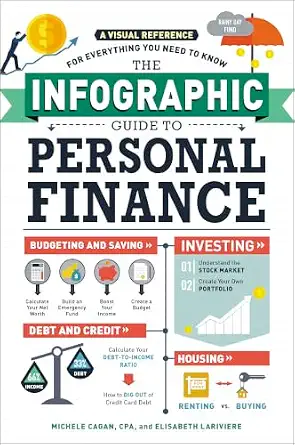
The Infographic Guide to Personal Finance: A Visual Reference for Everything You Need to Know
- ✔ ASIN: 1507204663
- ✔ Category: Personal finance
- ✔ Intended level: Beginners, based on roundup fit

Financial Literacy for Young Adults Simplified
- ✔ ASIN: B0C9SHJZS9
- ✔ Category: Financial literacy
- ✔ Intended level: Beginners, based on roundup fit
That difference matters more than which book has the more memorable advice. Ramsey’s method can give readers who feel overwhelmed a clear order of operations, but its rules may feel rigid and its debt strategy may not suit every situation. Aliche’s framework covers more of the decisions beginners face, though readers seeking a single, forceful payoff system may find it less prescriptive. Choose Ramsey for structure and debt focus; choose Aliche for a broader, more adaptable introduction to personal finance.
At a Glance
| Criteria | The Total Money Makeover by Dave Ramsey | Get Good with Money by Tiffany Aliche | Winner |
|---|---|---|---|
| Main goal | Pay off debt through a defined sequence and build savings habits | Build a broad foundation for financial stability | Depends |
| Approach and flexibility | Highly prescriptive steps and rules | Guided framework with room to adapt | B |
| Topics covered | Strongest on budgeting, debt payoff, and behavioral change | Budgeting, savings, credit, debt, insurance, and investing | B |
| Debt guidance | Central focus, with a step-by-step payoff approach | One part of a wider financial wellness plan | A |
| Beginner usability | Simple sequence can reduce decision overload | Organized framework covers more beginner questions | Depends |
| Investing and long-term planning | Less broad coverage of investing and financial protection | Broader orientation to investing and financial protection | B |
| Best fit | Readers who want firm direction and prioritize debt payoff | Readers who want a whole-picture plan and flexible guidance | Depends |
Personal Finance For Dummies
For beginners who want one general entry point, Personal Finance For Dummies is the most straightforward first pick in this group. Its title signals a broad personal finance introduction instead of a specific age group or a visual-reference format. That makes it the most natural option for readers who are still deciding which money topics they need to learn. The limitation is that the supplied description offers no chapter list or explanation of its approach, so we cannot confirm how much space it gives to budgeting, debt, saving, investing, or longer-term planning.Compared with The Infographic Guide, this is the better match if we want a general book rather than a format-specific reference. Compared with Financial Literacy for Young Adults Simplified, it appears less tied to a particular life stage, but the young-adult guide has more explicit information about its subject areas. So this is our broadest recommendation by positioning, not a guaranteed one-book financial plan. We should check the contents first if we need help with a concrete decision, such as organizing debt repayment or choosing an investing approach.Its strength is accessible, general positioning; its weakness is uncertainty about what the book actually covers. It makes the most sense when we want to begin with personal finance as a whole and are comfortable verifying that the edition addresses our priorities. Readers who need a visually organized reference or specifically young-adult guidance may find one of the other two more clearly matched to their learning preferences.
Pros:
- Broad personal finance positioning suits readers still choosing a learning path.
- The title presents it as an introductory option.
- Less explicitly age-targeted than the young-adult guide.
- Can serve as a general starting point if its contents match our needs.
Cons:
- The provided description does not identify specific topics or planning methods.
- No format details are supplied to show whether it suits visual or hands-on learners.
- We cannot confirm from the supplied information how deeply it treats any single topic.
Best for: Beginners seeking a general personal finance book without a stated age-specific focus.
Not ideal for: Readers who need a confirmed chapter-by-chapter planning resource or strongly prefer visual explanations.
Bottom line: Choose this as the broadest first stop in the lineup, after checking that its contents cover the money questions we want to answer.
“Choose this as the broadest first stop in the lineup, after checking that its contents cover the money questions we want to answer.”
The Infographic Guide to Personal Finance: A Visual Reference for Everything You Need to Know
When dense explanations make money topics harder to approach, The Infographic Guide to Personal Finance offers a distinct reason to consider it: it is described as a visual reference. That separates it from Personal Finance For Dummies, whose supplied information does not specify a visual approach, and from the young-adult title, which is distinguished by its audience and named topics. A visual format may help us scan and revisit concepts, especially when we are new to personal finance and want a quick orientation.We should treat “reference” as a clue to format, not proof that the book gives a complete step-by-step plan. The provided description does not list its topics, examples, or level of detail, despite the subtitle’s broad promise. That leaves an important tradeoff: it may be easier to browse than a conventional introduction, but we cannot verify whether it covers the particular beginner decisions we face. Readers looking for sustained explanations or specific guidance should compare a sample and contents page with the more general positioning of Personal Finance For Dummies.This pick fits us best when presentation matters as much as subject matter. It may be less suitable if we want a confirmed sequence of lessons or need detailed guidance on saving and investing, which are explicitly named for Financial Literacy for Young Adults Simplified. Its distinctive role is a visual companion or accessible first look; its main drawback is how little topic-level detail the available product information supplies.
Pros:
- Explicitly described as a visual reference.
- Offers a different learning format from the two titles with no visual approach specified.
- May suit readers who prefer to scan and revisit information.
- Part of the Infographic Guide Series.
Cons:
- The available description does not name the financial topics covered.
- No detail confirms how much explanation or practical planning guidance it includes.
- A reference format may be less suited to readers seeking a structured course.
Best for: Readers who prefer a visual overview and want a personal finance reference they can scan.
Not ideal for: Readers who need confirmed step-by-step instruction or detailed coverage of a particular financial topic.
Bottom line: Pick this when visual presentation is your priority, and verify the contents if you need guidance on a specific money decision.
“Pick this when visual presentation is your priority, and verify the contents if you need guidance on a specific money decision.”
Financial Literacy for Young Adults Simplified
Financial Literacy for Young Adults Simplified is the clearest audience-specific choice here. Its description names young adults and identifies money management, saving, and investing as topics. For a beginner in that life stage, this gives us more to evaluate than the broad description supplied for Personal Finance For Dummies, and it provides more explicit topic clues than the visual reference guide. The age focus can make the book feel more relevant when our financial questions are tied to becoming more independent.That focus also narrows its appeal. The description does not tell us whether the book addresses budgeting, debt, financial planning tools, or how it handles investing, so we should not assume that the named areas are covered in depth. A reader outside the intended age group may prefer the general positioning of Personal Finance For Dummies; someone who learns best from diagrams may lean toward The Infographic Guide. The best reason to select this title is the fit between its stated audience and the reader, not an assumption that it is more comprehensive.Its ranking reflects that useful specificity, while its limited detail keeps it in the third position for a general beginner roundup. We would put it first for a young adult whose immediate goals involve managing money, saving, and learning investing basics, then check the contents for the next questions they need to solve. If those questions are not represented, the broader book may be a safer starting point.
Pros:
- Written specifically for young adults.
- The description names money management, saving, and investing.
- Its audience and topic cues are more specific than the other supplied descriptions.
- May connect introductory financial learning to greater independence.
Cons:
- The supplied details do not identify chapters, exercises, or a planning framework.
- The age-specific positioning may feel less relevant to other beginners.
- The depth of coverage for saving and investing is not stated.
Best for: Young adults beginning to manage their money and seeking an introduction that names saving and investing.
Not ideal for: Readers outside the young-adult audience or anyone needing verified coverage of a specific planning topic.
Bottom line: Choose this when you are a young adult and its stated topics match your goals, while checking the contents for the details you need.
“Choose this when you are a young adult and its stated topics match your goals, while checking the contents for the details you need.”
As an Amazon Associate we earn from qualifying purchases.
Key Differences
The clearest difference is the job each book is designed to do. Ramsey makes debt payoff the organizing principle: readers follow a sequence rather than weighing many financial priorities at once. That can be useful when high-interest balances and inconsistent habits dominate the reader’s situation. Aliche treats money as a set of connected areas, so a beginner can work on budgeting while also reviewing credit, savings, insurance, and investing. This breadth gives readers a more rounded starting point, although it asks them to engage with more topics.
The tradeoff is direction versus adaptability. Ramsey’s firm rules can help someone who wants a plan they can start today, but those rules do not account for every interest rate, employer benefit, family need, or financial emergency. Aliche provides a wider framework that is easier to tailor, but readers looking for one strict sequence may need to decide which steps to prioritize. For most beginners who want a general financial planning book, Aliche is the more complete fit; for readers whose immediate problem is debt and who welcome a demanding program, Ramsey is more targeted.
Detailed Comparison
Main goal (moderate difference)
The Total Money Makeover wins for readers whose central aim is to attack debt and establish a savings routine; its whole structure points toward those outcomes. Get Good with Money covers more of the financial picture, including areas that matter before and after debt payoff. The gap is moderate: pick based on whether a specific debt problem or broad financial organization is the immediate need.
Approach and flexibility (Get Good with Money by Tiffany Aliche wins — major)
Aliche wins on flexibility. Her framework allows a reader to work across different parts of their finances, while Ramsey’s step-based program makes a stronger claim about the order to follow. That difference is major for readers with unusual circumstances, such as variable income, expensive debt, or competing family obligations. The stricter structure may help readers who otherwise keep postponing action, but it leaves less room to adapt.
Topics covered (Get Good with Money by Tiffany Aliche wins — moderate)
Get Good with Money wins by covering a wider range of beginner concerns, including credit, insurance, and investing alongside budgeting and debt. Ramsey is more concentrated on spending behavior, debt payoff, and saving. The gap is moderate: Aliche is a better single starting book for readers who want to understand several parts of financial planning; Ramsey is less likely to distract readers focused on paying balances down.
Debt guidance (The Total Money Makeover by Dave Ramsey wins — moderate)
Ramsey wins for readers who want a memorable debt payoff sequence and clear behavioral rules. Aliche places debt within a broader financial wellness plan, which may make more sense when debt is only one part of the reader’s situation. The gap is moderate, not universal: a fixed payoff method can build momentum, but readers should compare interest costs and preserve room for urgent expenses before following any plan mechanically.
Beginner usability (minor difference)
This is a tie with different strengths. Ramsey’s narrow focus and ordered steps can make the next action obvious, which is useful when money feels chaotic. Aliche’s wider coverage can answer more of the questions a beginner is likely to have, but it involves more decisions. The practical difference is the reader’s preferred learning style: a single track favors Ramsey; a guided overview favors Aliche.
Investing and long-term planning (Get Good with Money by Tiffany Aliche wins — moderate)
Aliche wins because investing and protection sit within a broader view of financial stability. Ramsey’s strongest emphasis is on getting debt under control and building savings, so readers seeking an introduction across multiple planning topics are likely to get more from Aliche. The gap is moderate for beginners who want a book to cover their next several financial questions; it is minor for someone who only needs a debt payoff push right now.
Best fit (major difference)
Neither book wins for every beginner. Ramsey is the stronger fit for readers who want a demanding, clearly ordered debt payoff program and are comfortable with its rules. Aliche is the stronger fit for readers who want a broader toolkit they can adapt to their circumstances. The difference is major when the reader’s priority is clear: choose based on the financial problem to solve first, not on a general claim that one method suits everyone.
The Total Money Makeover by Dave Ramsey: Pros and Cons
Pros:
- Clear sequence gives readers a defined next step.
- Debt payoff and behavior change stay at the center.
- Direct rules may help readers who want firm accountability.
Cons:
- Prescriptive guidance can be a poor fit for complex finances.
- Its concentrated focus leaves less room for a whole-picture introduction.
- A strict payoff approach may not address every reader’s interest costs or competing needs.
Get Good with Money by Tiffany Aliche: Pros and Cons
Pros:
- Covers a broader range of personal finance topics.
- Flexible framework can accommodate different goals and circumstances.
- Connects budgeting and debt with credit, savings, protection, and investing.
Cons:
- Broader coverage can feel less focused to someone who wants one immediate debt plan.
- Readers must make more choices about what to tackle first.
- A general framework may not provide the same forceful accountability as a strict program.
Who Should Choose What
Choose The Total Money Makeover by Dave Ramsey if:
- Debt payoff is your immediate priority and you want a clear sequence to follow.
- You prefer firm behavioral rules over a flexible menu of financial tasks.
- You have tried to budget without a structured plan and want a focused reset.
Choose Get Good with Money by Tiffany Aliche if:
- You want one beginner book to cover several parts of financial planning.
- Your questions include credit, savings, insurance, and investing as well as debt.
- You need guidance you can adapt to your income, household, and changing priorities.
Skip both if: Skip both if you need advice tailored to a complex tax, legal, investment, or debt situation; use a qualified professional for decisions that depend on your specific circumstances.
Value for Money
Both books can offer good value as low-cost starting points, but the better purchase depends on how much ground you need one book to cover. Get Good with Money is usually the stronger value for a beginner seeking a broad introduction, since its subject range can reduce the need to buy several narrowly focused guides. Pay for The Total Money Makeover when its concentrated debt payoff approach matches your immediate need and you are likely to follow a structured program. Paying more for a book with a stricter method is not worthwhile if its rules conflict with your circumstances; value comes from using advice that fits your actual finances.
Final Verdict
For most beginners looking for a financial planning book, choose Get Good with Money. It gives a broader foundation across the decisions that shape financial stability, and its framework is easier to adapt as priorities change. Choose The Total Money Makeover if debt is the problem you need to address first and you want a firm sequence that keeps your attention there. The deciding factor is focus: Aliche is the better all-around starting point, while Ramsey is the more targeted choice for readers committed to a debt-first plan.
Frequently Asked Questions
Which book is better for someone completely new to personal finance?
Get Good with Money is the stronger general introduction because it covers multiple areas of financial planning. Choose The Total Money Makeover if you already know debt payoff is your main need and prefer a single, ordered program.
Which book gives clearer steps for paying off debt?
The Total Money Makeover puts debt payoff at the center and presents a defined sequence. That can make the next action easier to identify. Before applying any fixed method, account for interest rates, essential expenses, and access to emergency savings.
Is a broader financial guide worth choosing over a debt-focused book?
It is worth choosing Get Good with Money if you have questions about credit, savings, insurance, or investing as well as debt. If you mainly need a strong debt payoff routine, Ramsey’s narrower focus may serve you better.
Can I use ideas from both books?
Yes. A reader can use Aliche’s broad framework to review financial priorities and draw on Ramsey’s structured approach for motivation around debt. Check that the steps you combine suit your interest costs, cash flow, and financial obligations.