

Choosing between downsizing and aging in place depends on your priorities, finances, and health. Downsizing can free up funds, reduce maintenance, and simplify your lifestyle, making it easier to enjoy independence. Aging in place allows you to stay in a familiar environment but may require home modifications and support systems. Both options have benefits and challenges—exploring them more can help you find the best fit for your retirement needs.
Key Takeaways
- Downsizing reduces housing costs, frees up equity, and offers manageable, amenity-rich homes for retirees seeking financial security and flexibility.
- Aging in place preserves independence, community ties, and emotional comfort but may require home modifications and support systems.
- Smaller, accessible homes near services meet demographic shifts and community needs for diverse, adaptable housing options.
- Financial considerations, safety concerns, and social engagement influence whether retirees choose to downsize or stay in their current homes.
- Social connections and caregiver support are critical factors impacting decisions to age in place or move to senior living communities.
The Growing Trend of Downsizing Among Retirees

Many retirees are choosing to downsize their homes, driven by the desire for greater financial security and lifestyle flexibility. Moving to a smaller home reduces your housing costs, including mortgage payments, property taxes, and utilities. This shift often allows you to free up home equity, providing extra income for other priorities. Younger generations’ preferences for smaller, amenity-rich homes also influence this trend, creating a market shift toward more manageable properties. Downsizing is not just about cutting expenses; it’s about gaining mobility and simplifying your life. As a result, demand for smaller homes in desirable locations with accessible amenities increases. You might find that a smaller, easier-to-maintain residence offers the perfect balance of comfort, affordability, and freedom in retirement. Regularly reviewing your cost variances can help ensure your housing choices remain financially sustainable over time.
Priorities and Challenges of Aging in Place
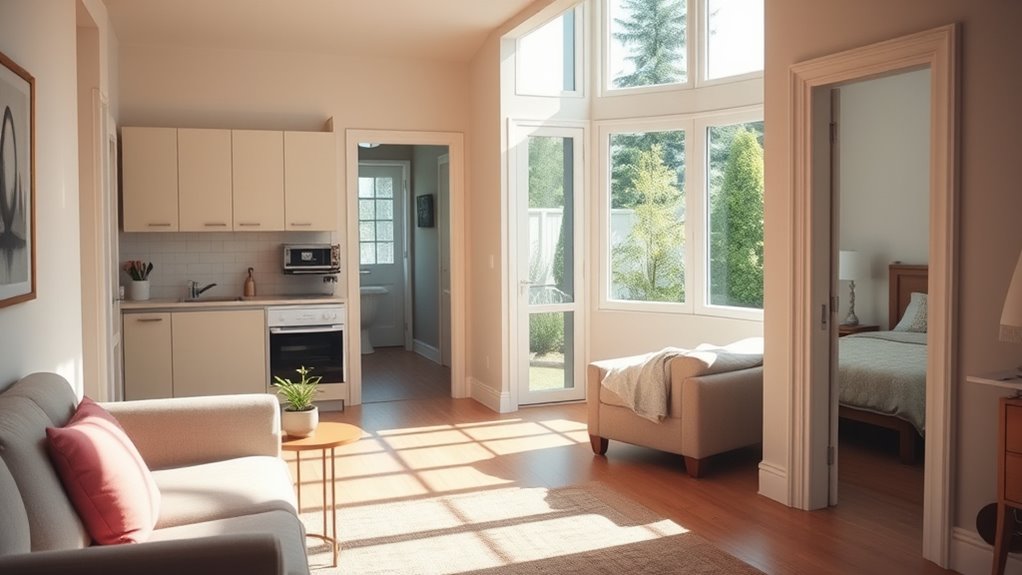
As retirees consider downsizing to smaller homes for financial relief and greater mobility, they also face the reality that aging in place remains a top priority for a large majority. You value staying in your familiar environment because it preserves your independence, community ties, and emotional comfort. However, aging in place presents challenges, such as the need for home modifications like grab bars or barrier-free entrances, which many feel unprepared to implement. Financial barriers also complicate staying at home, with maintenance, taxes, and healthcare costs adding up. Social isolation and caregiving burdens can further impact your well-being. Despite these hurdles, most seniors prioritize aging in place, seeking solutions that balance safety, affordability, and connection to maintain their quality of life in familiar surroundings. Incorporating home modifications and structured support can help address these challenges effectively.
Demographic Shifts and Their Impact on Housing Options

The rapid growth of the aging population, particularly those aged 80 and above, is reshaping the demand for housing options across communities. You’ll notice increased pressure on local infrastructure to support accessible, adaptable, and diverse housing types. As more seniors prefer to age in place, communities must develop affordable, safe, and well-connected environments that meet their needs. This demographic shift also influences real estate markets, shifting demand toward smaller, maintenance-friendly homes close to amenities. City planners and developers now prioritize creating flexible housing options that accommodate a growing middle-income senior population, often with limited savings. These changes prompt a reevaluation of existing housing stock, emphasizing the need for accessible designs and community-focused solutions that support independence and social engagement for an expanding elder demographic. Incorporating sound recording techniques into community planning can enhance the quality of life for seniors by providing accessible communication and entertainment options.
Financial Considerations and Safety Concerns in Retirement Housing
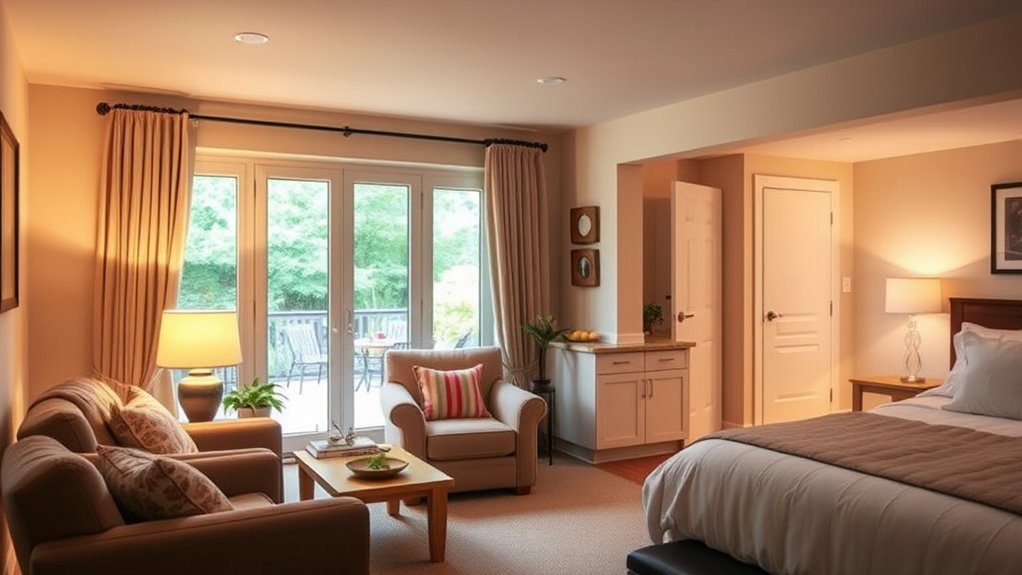
Financial considerations and safety concerns substantially influence retirement housing choices. You might find that the costs of aging in place, including home modifications, property taxes, and maintenance, create significant financial barriers. Rising expenses can strain savings and reduce your ability to stay in your current home comfortably. Assisted living facilities, while offering safety and support, often cost around $54,000 annually, making affordability a key factor. Many seniors worry about falling or accidents at home, but feel unprepared to retrofit their residences for safety. The COVID-19 pandemic highlighted how health risks and social isolation can impact your well-being if safety measures aren’t in place. The role of projector technology in creating safer, more accessible home environments is increasingly recognized, offering innovative solutions to enhance safety and comfort. Balancing financial realities with safety needs is essential when deciding whether to stay in your home or consider alternative housing options.
Social and Caregiving Dynamics in Retirement Living Choices
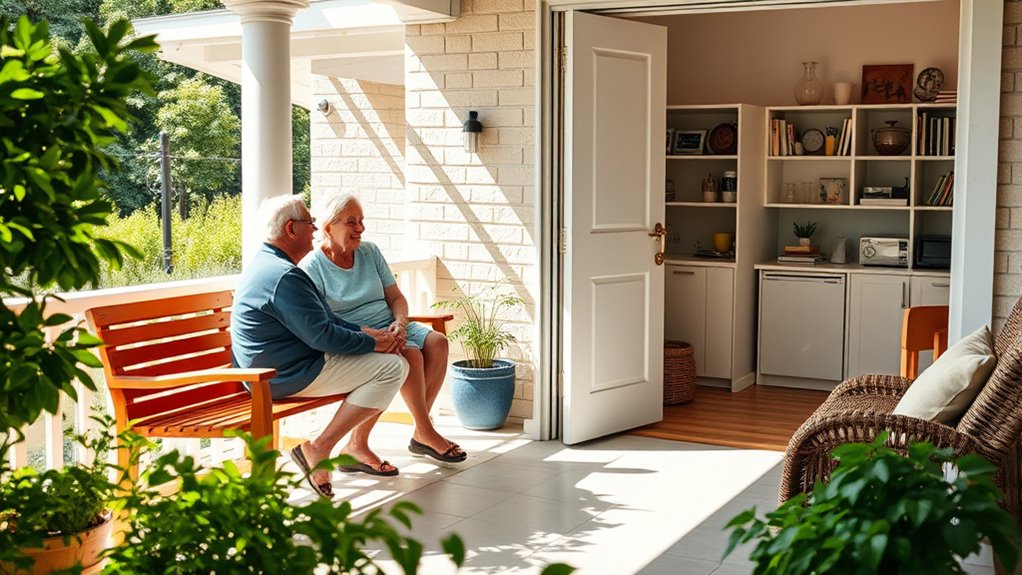
Social connections and caregiving dynamics play an essential role in your retirement living choices. Maintaining strong relationships with family, friends, and community influences whether you stay in your current home or move. Family caregivers often become central, providing emotional support and daily assistance, but caregiving can be demanding and emotionally taxing. You need to weigh the impact on caregivers’ health and finances, especially if they’re close family members. Social engagement helps prevent isolation and promotes well-being, so staying connected is indispensable. If you choose to age in place, you might rely on informal caregiving networks or community services. Conversely, moving to a senior living community can offer built-in social opportunities and professional care, easing the burden on family and enhancing your quality of life. Supporting informational content on community resources can help you explore available options for social engagement and caregiving support.
Evolving Senior Housing Solutions and Technological Support
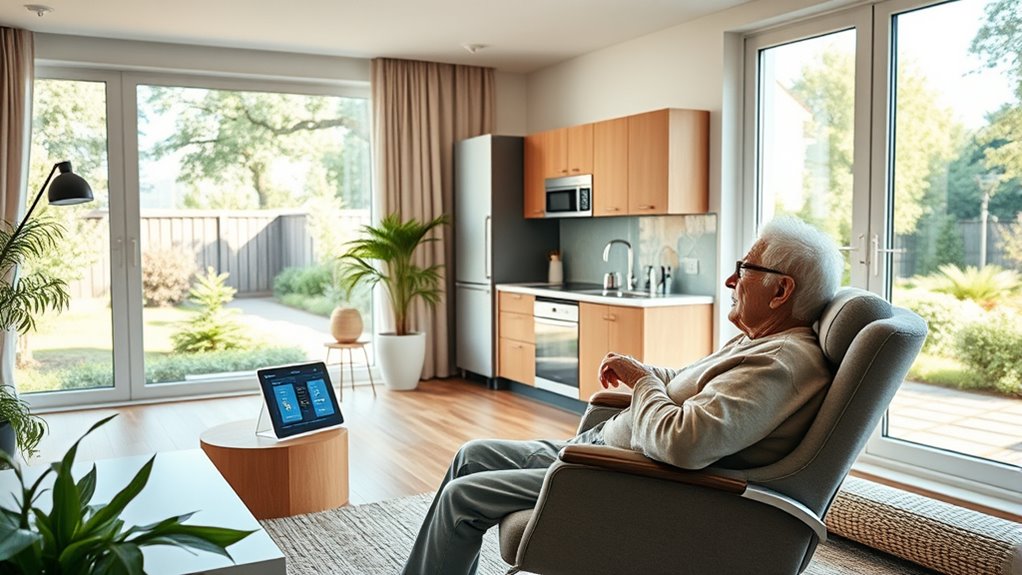
As senior housing needs evolve, providers are increasingly offering innovative solutions that combine affordability, flexibility, and accessibility. Technology plays a vital role, helping seniors stay connected and safe through telehealth, smart home devices, and remote monitoring. These tools enable you to age in place more comfortably while maintaining independence. Reliable, compassionate resources also support informed decision-making and community engagement. Virtual tours and online platforms also make finding suitable housing easier. Additionally, integrated support services, such as on-demand healthcare and community engagement apps, are becoming standard. This evolution aims to address financial, safety, and social challenges, ensuring you can choose housing that adapts to your changing needs without sacrificing quality or connection to your community.
Frequently Asked Questions
How Do Retirees Decide Between Downsizing and Aging in Place?
You decide based on your financial situation, health, and emotional ties to your home. If you value independence and community, aging in place might suit you, but it requires home modifications and support. If costs or mobility challenges rise, downsizing offers a manageable, affordable option. Consider your safety, lifestyle preferences, and available support systems to make the best choice for your retirement needs.
What Community Resources Support Seniors Aging in Place Effectively?
A stitch in time saves nine. You can support seniors aging in place by connecting them with local resources like transportation services, home modification programs, and meal delivery. Encourage community centers that offer social activities and health clinics nearby. Tech tools for safety and communication also help. By leveraging these resources, you empower seniors to maintain independence, stay connected, and enjoy a safe, comfortable life at home.
How Does Housing Market Demand Influence Senior Housing Affordability?
You’ll notice that increased demand for smaller, accessible homes pushes prices up in desirable areas, making senior housing less affordable. When more seniors seek to age in place or downsize, the housing market responds by shifting demand toward affordable, adaptable options. This drives developers to create diverse housing, but shortages and rising costs can still limit options for many seniors, impacting their ability to find affordable, suitable homes.
What Legal or Policy Changes Affect Retirement Housing Choices?
You’re affected by recent legal and policy changes like expanded Medicaid, housing affordability initiatives, and zoning reforms that support aging in place. These policies make home modifications easier and more affordable, allowing you to stay in your familiar environment longer. Additionally, new laws promoting accessible housing and telehealth services empower you to maintain independence, while also offering financial assistance options that ease housing costs and improve safety during retirement.
How Do Cultural Differences Influence Retirement Housing Preferences?
You might find that your cultural background shapes your retirement housing choices more than you realize. For example, if your culture values family and multigenerational living, you’ll likely prefer staying in your family home or close to loved ones. Conversely, some cultures prioritize independence and individual spaces, leading you to think about downsizing or senior communities. Your cultural norms influence your comfort, support systems, and expectations for aging, guiding your housing decisions naturally.
Conclusion
Think of your retirement home journey as choosing between a cozy boat and a spacious ship. Downsizing offers agility and simplicity, much like a nimble boat steering calm waters. Aging in place, on the other hand, resembles staying aboard a sturdy ship, weathering storms with familiar comforts. Whichever route you take, remember it’s about finding the vessel that keeps you steady, safe, and happy on your voyage through retirement’s vast and changing seas.