

Not all retail investing books are written for the same reader, and picking the wrong one can mean months of wasted study time. My best overall pick is The Intelligent Investor, because its value-investing framework has survived decades of market cycles and still shapes how professionals think about risk. For complete beginners, Investing for Beginners Made Simple offers the gentlest on-ramp, while The Little Book of Common Sense Investing makes the strongest case that most people should simply index. The central tradeoff in this category is depth versus accessibility: timeless classics demand patience and vocabulary, while modern beginner guides are easier to finish but thinner on strategy. There is also the question of philosophy — active stock-picking versus passive indexing — and the books on this list take firm, opposing sides. Keep reading for the full breakdown of which book fits your experience level, budget, and investing style.

Get smart everyday buys delivered free — and shop member deals
- Fast, free delivery on millions of items
- Access to Prime Big Deal Days deals on October 6–7
- Prime Video, Amazon Music and more included
Key Takeaways
- The classics (The Intelligent Investor, A Random Walk Down Wall Street) still outperform newer titles on strategy depth, but they demand more reading stamina than modern beginner guides.
- Two books in this lineup share nearly identical titles (The Retail Investor by different authors) but teach completely different skills — one covers REITs, the other general business analysis — so check the subtitle before buying.
- Two titles in the roundup are about investing in retail real estate, not retail investing as a hobby — a common search confusion that shoppers should catch before checkout.
- Books under $15 with a narrow, actionable scope (like How to Invest $50-$5,000) delivered more per-page value for small-account beginners than longer, more expensive classics.
- Every author here takes a side in the active-versus-passive debate; no single book fairly presents both, so readers benefit from pairing one title from each camp.
| Retail Investing Revolution: Your Path to Financial Empowerment |  | Best for the Self-Directed Beginner | Focus: Retail investing strategies and financial empowerment | Audience Level: Beginner to intermediate | Topics Covered: Modern investment techniques, market analysis, financial control | VIEW LATEST PRICE | See Our Full Breakdown |
| How to Invest $50-$5,000: The Small Investor’s Step-by-Step Plan for Low-Risk Investing in Today’s Economy | 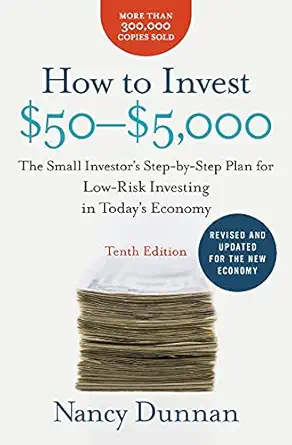 | Best for Small Budgets | Target Capital Range: $50–$5,000 | Risk Orientation: Low-risk | Structure: Step-by-step plan | VIEW LATEST PRICE | See Our Full Breakdown |
| A Random Walk Down Wall Street: The Best Investment Guide That Money Can Buy |  | Best Overall | Coverage: Stocks, bonds, funds, ETFs, real estate, market history | Core Philosophy: Efficient markets, long-term index-friendly investing | Audience Level: Beginner through advanced | VIEW LATEST PRICE | See Our Full Breakdown |
| The Retail Investor: How to Analyze REITs and Invest Your Money Like a Pro in the Stock Market |  | Best for Income-Focused REIT Investors | Focus: REIT analysis and income investing | Audience Level: Beginner to intermediate retail investors | Skills Taught: REIT evaluation, portfolio construction with real estate | VIEW LATEST PRICE | See Our Full Breakdown |
| The Little Book That Still Beats the Market |  | Best Short Read for Aspiring Stock Pickers | Focus: Value investing and a rules-based stock-picking formula | Length: Short — readable in a weekend | Core Strategy: The ‘magic formula’: good companies at cheap prices | VIEW LATEST PRICE | See Our Full Breakdown |
| Investing in Retail Properties, 3rd Edition: A Guide to Structuring Partnerships for Sharing Capital Appreciation and Cash Flow |  | Best for Commercial Real Estate Specialists | Format: Book (3rd Edition) | Primary Subject: Retail commercial real estate investing | Key Focus: Partnership structuring for capital appreciation and cash flow | VIEW LATEST PRICE | See Our Full Breakdown |
| Investing for Beginners Made Simple: A Step-by-Step Guide to the Stock Market, ETF Investing, and Building Wealth for Financial Freedom |  | Best First Book for Total Beginners | Format: Book / e-book | Primary Subject: Stock market and ETF investing fundamentals | Key Focus: Step-by-step wealth building for beginners | VIEW LATEST PRICE | See Our Full Breakdown |
| The Intelligent Investor, 3rd Edition: The Timeless Guide to Value Investing and Financial Wisdom for a Volatile Market |  | Best Classic for Long-Term Discipline | Format: Book (3rd Edition) | Primary Subject: Value investing and financial wisdom | Key Focus: Long-term discipline in volatile markets | VIEW LATEST PRICE | See Our Full Breakdown |
| Investing 101: From Stocks and Bonds to ETFs and IPOs, an Essential Primer on Building a Profitable Portfolio |  | Best Broad-Spectrum Primer | Format: Book / paperback | Primary Subject: General investing primer | Investment Types Covered: Stocks, bonds, ETFs, IPOs | VIEW LATEST PRICE | See Our Full Breakdown |
| How to Make Money in Any Market |  | Most Market-Condition-Flexible Pick | Format: Book / hardcover | Primary Subject: Market-condition-based investing and trading strategies | Key Focus: Making money across varying market trends | VIEW LATEST PRICE | See Our Full Breakdown |
| The Retail Investor: How to Analyze Businesses and Invest Your Money Like a Pro in the Stock Market |  | Best for Hands-On Stock Analysis | Format: Paperback / Kindle | Focus: Business analysis and stock valuation | Audience Level: Intermediate | VIEW LATEST PRICE | See Our Full Breakdown |
| The Little Book of Common Sense Investing: The Only Way to Guarantee Your Fair Share of Stock Market Returns |  | Best Passive Strategy Pick | Format: Hardcover / Paperback / Audiobook | Author: John C. Bogle, founder of Vanguard | Focus: Low-cost index fund investing | VIEW LATEST PRICE | See Our Full Breakdown |
| retail investing book | Audience Level | Format |
|---|---|---|
| Retail Investing Revolution: Y | Beginner to intermediate | — |
| How to Invest $50-$5,000: The | Beginner | — |
| A Random Walk Down Wall Street | Beginner through advanced | — |
| The Retail Investor: How to An | Beginner to intermediate retail investors | — |
| The Little Book That Still Bea | Beginner to intermediate | — |
| Investing in Retail Properties | — | Book (3rd Edition) |
| Investing for Beginners Made S | — | Book / e-book |
| The Intelligent Investor | — | Book (3rd Edition) |
| Investing 101: From Stocks and | — | Book / paperback |
| How to Make Money in Any Marke | — | Book / hardcover |
| The Retail Investor: How to An | Intermediate | Paperback / Kindle |
| The Little Book of Common Sens | Beginner to intermediate | Hardcover / Paperback / Audiobook |
More Details on Our Top Picks
Retail Investing Revolution: Your Path to Financial Empowerment
Retail Investing Revolution aims squarely at readers who want a broad on-ramp to managing their own money, and its main strength is tone: it frames investing as something an ordinary person can take ownership of rather than outsource. Compared with A Random Walk Down Wall Street, which builds its case through decades of market history and academic research, this book trades depth for approachability — a fair swap if you are just starting out. Where it falls short is credibility of detail. Without an established track record or widely available reviews, it reads more like a motivational primer than a reference you will return to for years. Pair it with a denser classic rather than treating it as your only shelf companion.
Pros:- Motivating, accessible framing for readers new to self-directed investing
- Covers modern investment techniques rather than only classical theory
- Broad enough to give beginners a map of the whole landscape
- Encourages an active, take-ownership mindset toward personal finance
Cons:- No detailed specifications, author track record, or substantial reader reviews to verify quality
- Less rigorous than established classics on the same shelf
- Likely too general for investors who already know the basics
Best for: First-time retail investors who want an encouraging, jargon-light overview before committing real money
Not ideal for: Readers who want authoritative, data-backed guidance — the lack of established reputation and detailed sourcing makes it a weak standalone reference
- Focus:Retail investing strategies and financial empowerment
- Audience Level:Beginner to intermediate
- Topics Covered:Modern investment techniques, market analysis, financial control
- Approach:Broad overview with motivational framing
- Style:Accessible, non-technical
- Best Use:Introductory primer, not a primary reference
Our verdict“A reasonable confidence-builder for absolute beginners, but not the book to anchor a serious investing library on its own.”
How to Invest $50-$5,000: The Small Investor’s Step-by-Step Plan for Low-Risk Investing in Today’s Economy
Most investing books quietly assume you already have a meaningful pile of capital; this one does not. How to Invest $50-$5,000 is built around a constraint — a small starting balance — and every strategy in it is filtered through that lens, which makes it unusually practical compared with the big-picture theory of A Random Walk Down Wall Street. The step-by-step, low-risk orientation suits cautious savers who want instructions, not philosophy. The tradeoff is ambition: readers with larger portfolios or an appetite for growth will find the strategies conservative and the ceiling low. It also lacks a detailed content overview, so you are buying the promise of a plan rather than a known syllabus. Still, for its narrow audience, it does a job almost nothing else in this roundup attempts.
Pros:- Directly addresses the small-capital constraint most books ignore
- Step-by-step structure that translates directly into action
- Low-risk focus suits conservative savers and risk-averse beginners
- Tailored to current economic conditions rather than timeless theory alone
Cons:- No specific edition or author information provided, limiting verifiability
- Lacks a detailed content overview before purchase
- Conservative scope may frustrate readers seeking growth strategies
Best for: Cautious first-time investors with $50 to $5,000 who want a literal, low-risk action plan rather than theory
Not ideal for: Investors with larger portfolios or long growth horizons — the low-risk framing caps potential returns and moves too slowly
- Target Capital Range:$50–$5,000
- Risk Orientation:Low-risk
- Structure:Step-by-step plan
- Audience Level:Beginner
- Economic Framing:Current-economy focus
- Approach:Practical, prescriptive
Our verdict“The rare book written for people starting with hundreds, not thousands — buy it for the plan, skip it if capital isn’t your constraint.”
A Random Walk Down Wall Street: The Best Investment Guide That Money Can Buy
This is the anchor pick, and the ranking logic is simple: no other book here combines decades of research, breadth of coverage, and a coherent investing philosophy the way Burton Malkiel’s classic does. It walks through stocks, bonds, funds, and market manias, then argues — with evidence — for a disciplined long-term approach. Compared with The Little Book That Still Beats the Market, which pitches one specific stock-picking formula, Random Walk gives you the whole terrain and lets the data make the case. The cost is density: this is a book to work through, not skim on a weekend, and some sections can feel like a college lecture. Buyers wanting quick tactical advice should start elsewhere. But if the goal is one book that will still be useful in twenty years, this is it.
Pros:- Decades of research and multiple updated editions behind it
- Covers stocks, bonds, mutual funds, ETFs, and market history in one volume
- Builds a coherent, evidence-based long-term philosophy rather than tips
- Genuinely useful to both beginners and experienced investors
Cons:- Dense, textbook-like passages that demand patient reading
- Some content on recent market trends lags behind current conditions
- Philosophy-driven, so readers wanting specific tactics may find it abstract
Best for: Readers who want a single, well-researched foundation covering all major asset classes and a defensible long-term philosophy
Not ideal for: Anyone seeking quick, tactical advice or a light weekend read — the material is dense and deliberately unhurried
- Coverage:Stocks, bonds, funds, ETFs, real estate, market history
- Core Philosophy:Efficient markets, long-term index-friendly investing
- Audience Level:Beginner through advanced
- Style:Research-backed, thorough, somewhat dense
- Longevity:Classic with multiple revised editions
- Best Use:Primary reference and investing foundation
Our verdict“If you buy only one investing book, this is the one that earns its shelf space for decades.”
The Retail Investor: How to Analyze REITs and Invest Your Money Like a Pro in the Stock Market
In a lineup of generalists, this is the specialist. The Retail Investor: How to Analyze REITs teaches a specific, teachable skill — evaluating real estate investment trusts — and that narrowness is its whole value proposition. Unlike A Random Walk Down Wall Street, which treats real estate as one chapter among many, this book gives REITs the full treatment: what to check, what to ignore, and how to judge whether a trust deserves your money. For income-focused investors, that depth matters more than breadth. The flip side is obvious — if REITs are not part of your plan, most of the book is irrelevant, and it will not help you build a balanced portfolio on its own. Think of it as a complement to a general guide, not a substitute for one.
Pros:- Focused, practical framework for analyzing REITs specifically
- Teaches concrete evaluation skills rather than vague principles
- Well suited to income and dividend-focused portfolio builders
- Written for retail investors, not institutional analysts
Cons:- Narrow scope — little coverage of other investment types
- No specific edition or publication details to verify currency of the material
- Redundant for readers who don’t intend to hold REITs
Best for: Investors building an income portfolio who want genuine analytical skill in evaluating REITs
Not ideal for: General-stock investors — the single-asset-class focus leaves equities, bonds, and allocation strategy uncovered
- Focus:REIT analysis and income investing
- Audience Level:Beginner to intermediate retail investors
- Skills Taught:REIT evaluation, portfolio construction with real estate
- Approach:Practical, hands-on analysis techniques
- Asset Classes Covered:REITs and related stock market investing
- Best Use:Specialist companion to a general investing guide
Our verdict“The clear pick if income-producing real estate belongs in your portfolio; otherwise a pass.”
The Little Book That Still Beats the Market
Joel Greenblatt’s little book occupies a clever middle ground: short enough to finish in a weekend, substantive enough to hand you an actual strategy. Its magic formula — buying good companies at bargain prices — is explained with a clarity that The Intelligent Investor-style depth never attempts, which is exactly why it earns the Best Short Read slot. Compared with A Random Walk Down Wall Street, the disagreement is fundamental: Malkiel argues most stock picking fails, while Greenblatt claims a systematic formula can beat the market. Reading both is the honest education. The tradeoffs are real, though — there is almost no technical analysis, and experienced traders will find the simplification more charming than useful. It is a gateway book, and a good one, but a gateway nonetheless.
Pros:- Genuinely short and readable without dumbing down the core strategy
- Presents one concrete, rules-based formula you can actually follow
- Accessible to beginners while still respected by experienced value investors
- Translates value-investing principles into plain language
Cons:- Almost no technical analysis for readers who want charting and valuation mechanics
- Too simplified for advanced or active traders
- Single-strategy focus with limited discussion of diversification or risk
Best for: Curious beginners and casual readers who want a complete, actionable stock-picking strategy in under 200 pages
Not ideal for: Advanced traders or readers wanting technical depth — the deliberate simplicity leaves nothing new for them
- Focus:Value investing and a rules-based stock-picking formula
- Length:Short — readable in a weekend
- Core Strategy:The ‘magic formula’: good companies at cheap prices
- Audience Level:Beginner to intermediate
- Style:Plain-language, story-driven explanations
- Best Use:Gateway book to value investing
Our verdict“The best weekend-sized introduction to beating the market — just don’t mistake it for the last book you’ll need.”
Investing in Retail Properties, 3rd Edition: A Guide to Structuring Partnerships for Sharing Capital Appreciation and Cash Flow
Despite the title overlap, this is not a retail investing book in the stock market sense — it covers commercial retail real estate, which places it at the edge of this roundup’s scope. That said, for readers who want to diversify beyond stocks, this option stands out for its unusually specific treatment of partnership structuring, a topic almost never addressed in mainstream titles like The Little Book of Common Sense Investing. Compared with The Retail Investor: How to Analyze REITs, which looks at retail property exposure through publicly traded vehicles, this book goes a level deeper into direct ownership and deal mechanics. The tradeoff: the material leans technical, and it won’t help anyone building an ordinary brokerage portfolio.
Pros:- Deep, specific coverage of partnership and capital-sharing structures
- Written for both first-time and seasoned real estate investors
- Addresses both cash flow and capital appreciation strategies
- Focused niche content you won’t find in general investing books
Cons:- Off-topic for a stock-market retail investing roundup
- Technical tone makes it inaccessible to casual readers
- Focused on partnership deals, not solo small-scale investing
Best for: Real estate investors planning direct retail property acquisitions with partners
Not ideal for: Stock market investors — this is commercial real estate, not equity investing, and the partnership math will feel irrelevant
- Format:Book (3rd Edition)
- Primary Subject:Retail commercial real estate investing
- Key Focus:Partnership structuring for capital appreciation and cash flow
- Experience Level:Beginner to advanced real estate investors
- Category:Real estate / alternative investing
- Edition:3rd
Our verdict“Skip this unless you are actively structuring a commercial real estate partnership — it belongs on a real estate shelf, not a stock investing one.”
Investing for Beginners Made Simple: A Step-by-Step Guide to the Stock Market, ETF Investing, and Building Wealth for Financial Freedom
This pick earns its spot as the gentlest on-ramp in the lineup. Where Investing 101 tries to cover everything from bonds to IPOs, this book narrows the scope to what a new investor with a small balance actually needs: stocks, ETFs, and a wealth-building plan. Its strongest angle is the small-capital focus, which overlaps with How to Invest $50-$5,000 but with a more step-by-step structure rather than a dollar-threshold plan. The tradeoff is depth — anyone past their first year of investing will find it thin, and it offers nothing on analysis or valuation. Compared with The Intelligent Investor, it trades wisdom for accessibility, which is exactly the right swap for a nervous first-timer.
Pros:- Genuinely beginner-friendly language with actionable steps
- Covers the right basics: stocks, ETFs, and wealth-building habits
- Designed around starting with limited capital
- Less intimidating than classic dense investing texts
Cons:- Shallow coverage that readers will quickly outgrow
- No advanced strategies, valuation methods, or portfolio theory
- Little market-cycle guidance for downturns
Best for: Complete beginners with small amounts to invest who want plain-English, step-by-step direction
Not ideal for: Intermediate investors — the content stops at fundamentals and offers little on strategy or security analysis
- Format:Book / e-book
- Primary Subject:Stock market and ETF investing fundamentals
- Key Focus:Step-by-step wealth building for beginners
- Experience Level:Absolute beginners
- Investment Types Covered:Stocks, ETFs
- Category:Personal finance / beginner investing
Our verdict“A sensible first book for someone opening their first brokerage account, but plan to graduate to something meatier within a year.”
The Intelligent Investor, 3rd Edition: The Timeless Guide to Value Investing and Financial Wisdom for a Volatile Market
This is the anchor title of any serious investing library, and it earns that reputation through temperament rather than tips. Compared with How to Make Money in Any Market, which promises returns across all conditions, this book argues the opposite: returns come from discipline and patience, not market timing. Its chapters on market volatility and the investor’s mindset remain the best defense against panic selling that I can point to in print. The cost of that depth is real, though — the prose is dense, the examples date back decades, and readers who want quick actionable lists will bounce off it. Pair it with Investing for Beginners Made Simple first if the language proves heavy.
Pros:- Timeless principles that hold up across market cycles
- Builds disciplined habits that protect against emotional decisions
- Directly addresses investing through volatile markets
- Enduring reference value across an investing lifetime
Cons:- Dense, dated prose that intimidates beginners
- Narrowly focused on value investing philosophy
- Few concrete, modern step-by-step instructions
Best for: Investors building a long-term value philosophy who want foundational discipline, not tactics
Not ideal for: Readers seeking quick, actionable strategies — the writing is dense and the payoff requires patience
- Format:Book (3rd Edition)
- Primary Subject:Value investing and financial wisdom
- Key Focus:Long-term discipline in volatile markets
- Experience Level:Intermediate to advanced readers
- Investment Philosophy:Value investing
- Edition:3rd
Our verdict“The book to buy when you’re ready to think like an owner rather than a trader — just don’t expect it to be a quick read.”
Investing 101: From Stocks and Bonds to ETFs and IPOs, an Essential Primer on Building a Profitable Portfolio
This option earns its place as the widest beginner survey in the roundup, spanning stocks, bonds, ETFs, and even IPOs under one cover. That breadth is its main edge over Investing for Beginners Made Simple, which deliberately skips bonds and IPOs, and it’s more approachable than A Random Walk Down Wall Street, which covers similar ground at triple the length and intellectual density. The tradeoff for breadth is retention: each topic gets a chapter, not a deep treatment, and there are few detailed case studies to anchor the concepts. Think of it as a map of the investing landscape rather than a route to any single destination — effective for orientation, insufficient on its own for execution.
Pros:- Covers a wide range of asset types: stocks, bonds, ETFs, IPOs
- Clear, accessible explanations of complex topics
- Useful as a reference to return to over time
- Serves both beginners and casual intermediate readers
Cons:- Shallow treatment of each individual topic
- Lacks detailed case studies to apply the concepts
- Quickly outgrown by readers pursuing a specific strategy
Best for: New investors who want a complete map of every investment type before choosing a direction
Not ideal for: Advanced investors or anyone wanting depth on a single strategy — the coverage is intentionally introductory
- Format:Book / paperback
- Primary Subject:General investing primer
- Investment Types Covered:Stocks, bonds, ETFs, IPOs
- Key Focus:Building a profitable portfolio from scratch
- Experience Level:Beginners and early intermediate investors
- Category:Personal finance / investing education
Our verdict“The right first purchase if you want to understand every investment type before committing — just follow it with a specialist book.”
How to Make Money in Any Market
Where most titles in this lineup — The Little Book of Common Sense Investing chief among them — tell you to buy and hold through whatever comes, this book takes the opposite premise: strategies should adapt to market conditions, whether bull, bear, or sideways. That positioning makes it the natural counterweight in the roundup, and for traders who chafe at passive advice, the practical tactic-oriented approach will feel like a fit. The honest tradeoff is credibility of detail: compared with The Intelligent Investor, which has eight decades of track record behind its ideas, this one offers few worked examples and unclear author credentials, so readers should verify claims before acting on them. Treat it as a menu of approaches, not a proven system.
Pros:- Strategies framed to work across different market conditions
- Accessible to traders across experience levels
- Practical, tactic-oriented rather than purely theoretical
- Broadens thinking beyond one market environment
Cons:- Lacks detailed worked examples to demonstrate the strategies
- No clear author credentials to establish authority
- Active-trading approach carries higher risk than passive alternatives
Best for: Active traders and hands-on investors who want tactics for varying market conditions
Not ideal for: Passive, long-term indexers — the active-trading premise contradicts a buy-and-hold philosophy
- Format:Book / hardcover
- Primary Subject:Market-condition-based investing and trading strategies
- Key Focus:Making money across varying market trends
- Experience Level:Beginner to advanced traders
- Investment Style:Active trading and tactical investing
- Category:Trading / active investing
Our verdict“Worth a look for active traders wanting condition-based tactics, but passive investors should stick with proven classics.”
The Retail Investor: How to Analyze Businesses and Invest Your Money Like a Pro in the Stock Market
Most books in this roundup either teach broad philosophy or beginner mechanics, but this one targets the reader who wants to actually analyze individual businesses before buying their stock. Where The Little Book of Common Sense Investing tells you to stop picking stocks altogether, this title takes the opposite stance: it equips you to evaluate companies with the rigor of a professional analyst. That makes it a natural companion to The Intelligent Investor for readers who found Graham’s framework dense and want something more direct and modern.
The tradeoff is real, though. The strategies demand prior investing knowledge, and the book has far less name recognition and community validation than established titles like A Random Walk Down Wall Street, so readers are trusting a newer voice without a long track record of reviews.
Pros:- Teaches practical, step-by-step business analysis rather than abstract theory
- Focused specifically on the retail investor’s perspective and constraints
- Bridges the gap between beginner primers and dense value-investing classics
- Emphasizes building wealth through informed, active decision-making
Cons:- Assumes prior investing knowledge, so true novices will struggle
- Limited reviews and track record compared to canonical titles in this space
- Active stock analysis demands ongoing time commitment that passive investors won’t want
Best for: Intermediate investors who already understand market basics and want a practical toolkit for evaluating individual companies
Not ideal for: Complete beginners or passive indexers — the business-analysis focus assumes knowledge newcomers won’t have, and buy-and-hold purists will find stock picking counterproductive
- Format:Paperback / Kindle
- Focus:Business analysis and stock valuation
- Audience Level:Intermediate
- Investing Style:Active fundamental analysis
- Core Topics:Company analysis, informed decision-making, wealth building
- Companion To:The Intelligent Investor; A Random Walk Down Wall Street
Our verdict“Choose this if you’ve outgrown beginner guides and want to sharpen your ability to judge businesses — skip it if you’d rather index and forget.”
The Little Book of Common Sense Investing: The Only Way to Guarantee Your Fair Share of Stock Market Returns
Written by Vanguard founder John Bogle, this book is the definitive case for low-cost index investing, and it sits at the opposite end of the spectrum from titles like The Retail Investor: How to Analyze Businesses. Instead of teaching you to pick winners, Bogle argues persuasively that owning the whole market at minimal cost beats most professional stock pickers over time — a philosophy directly at odds with the active-analysis approach, which is exactly why both deserve a spot on this list.
Compared with The Little Book That Still Beats the Market, this book demands far less from the reader: no formulas, no screeners, just common sense and patience. The drawback is depth. Readers wanting technical analysis or valuation techniques will find it repetitive and thin, and its heavy emphasis on US index funds means less guidance for those investing elsewhere.
Pros:- Makes a clear, evidence-backed case for low-cost index investing
- Extremely readable — short chapters with no jargon or math required
- Written by John Bogle, the creator of the first index fund, with unmatched credibility
- Focuses on long-term behavior that protects investors from costly mistakes
Cons:- Contains essentially no technical analysis or stock valuation content
- One-strategy message can feel repetitive across chapters
- Too elementary for experienced investors seeking new frameworks
Best for: Busy professionals and passive investors who want a convincing, low-effort strategy for capturing market returns without picking stocks
Not ideal for: Hands-on investors who enjoy analyzing companies, or advanced readers who will find the single-strategy argument repetitive and light on technical substance
- Format:Hardcover / Paperback / Audiobook
- Author:John C. Bogle, founder of Vanguard
- Focus:Low-cost index fund investing
- Audience Level:Beginner to intermediate
- Investing Style:Passive, long-term
- Length:Short — ‘Little Book’ series format
- Core Topics:Indexing, costs, market returns, investor behavior
Our verdict“If your goal is dependable market returns with minimal effort, this is the book to buy — active stock pickers should look elsewhere in this roundup.”

How We Picked
I evaluated these retail investing books on four factors that matter most to a self-directed investor building a library. Clarity for non-professionals came first: books that assume no finance background and define jargon as they go ranked higher than ones that write for MBA readers. Actionability was next — I favored books that leave you with a concrete process, checklist, or portfolio structure rather than pure theory. Longevity of the advice separated the classics from the disposable: guidance that holds up across market cycles beat strategies tied to one moment in the economy. Finally, I weighed price-to-substance ratio, since a $12 paperback that gets read cover to cover beats a $40 hardcover that sits unfinished.
The ranking also reflects audience fit. I ordered the list so beginners encounter approachable titles early, while deeper value-investing and specialized REIT analysis books appear later where they make sense once fundamentals are covered. Books that were misleadingly titled or narrower than their covers implied were ranked down and flagged honestly rather than excluded, because some readers genuinely want that niche content.
| retail investing book | Audience Level | Format |
|---|---|---|
| Retail Investing Revolution: Y | Beginner to intermediate | — |
| How to Invest $50-$5,000: The | Beginner | — |
| A Random Walk Down Wall Street | Beginner through advanced | — |
| The Retail Investor: How to An | Beginner to intermediate retail investors | — |
| The Little Book That Still Bea | Beginner to intermediate | — |
| Investing in Retail Properties | — | Book (3rd Edition) |
| Investing for Beginners Made S | — | Book / e-book |
| The Intelligent Investor | — | Book (3rd Edition) |
| Investing 101: From Stocks and | — | Book / paperback |
| How to Make Money in Any Marke | — | Book / hardcover |
| The Retail Investor: How to An | Intermediate | Paperback / Kindle |
| The Little Book of Common Sens | Beginner to intermediate | Hardcover / Paperback / Audiobook |
Factors to Consider When Choosing Retail Investing Books
Choosing a retail investing book is really about matching a book’s philosophy and difficulty to your situation. Before adding anything to your cart, work through these five factors — they explain most of the regret I see from buyers who grabbed the wrong title.Match the Book to Your Starting Point
The most common mistake is buying a book two levels above your current knowledge. A reader who cannot yet explain what an ETF is will abandon The Intelligent Investor within fifty pages and conclude investing is too complicated — when the real problem was a mismatch. Beginner primers exist to build vocabulary and confidence; the classics exist to build judgment. If you are unsure where you fall, skim the free sample chapter of any candidate book and count how many unfamiliar terms appear per page. More than two or three per page means you should start one level lower. There is no prize for skipping ahead, and a finished beginner book beats an abandoned advanced one every time.
Nearly every investing book is an argument, not a neutral overview. Some authors believe you can beat the market by picking stocks; others argue convincingly that you cannot and should just buy index funds. Buying without knowing the author’s camp means you may absorb a worldview that conflicts with your goals, time availability, and risk tolerance. Passive-investing books suit people with limited time and no interest in research, while active-strategy books reward readers willing to put in ongoing hours. Neither camp is wrong for everyone, but each is wrong for someone. Ideally, read one book from each side before committing real money to either approach.
Check the Publication Date and Edition
Investing principles age slowly, but examples, tax rules, and market commentary age fast. A book on ETFs written before the current fee wars will overstate costs; a book citing specific interest-rate conditions may confuse readers a few years later. Always buy the most recent edition, since serious authors revise outdated data — the newer editions of the classic titles in this roundup exist precisely for that reason. That said, do not dismiss an older book purely on age: Benjamin Graham’s margin-of-safety logic from the 1940s still applies even though his specific stock examples do not. The right question is whether the book teaches principles (age is fine) or tactics (age matters a lot).
Beware Misleading Titles and Overlapping Content
This category has a title-collision problem that trips up online shoppers. As this comparison showed, The Retail Investor is the name of two different books by different authors, and Investing in Retail Properties is about shopping-center real estate, not investing for regular people. Always verify the author name and subtitle before purchasing, because returns on digital books are not always straightforward. Overlap is another issue: many beginner guides cover the same stocks-bonds-ETFs ground, so buying three of them wastes money. Two well-chosen books with different philosophies will teach you more than five that repeat each other.
Decide Whether You Want Theory or a Playbook
Some readers want to understand why markets behave as they do; others want a numbered plan for this month’s paycheck. Both wants are legitimate, and books serve them differently. Theory-heavy books build durable judgment that adapts to new conditions, while playbook-style books get you moving quickly but can leave you stranded when circumstances change. If you have money sitting idle, a step-by-step book creates momentum that theory books cannot. If you tend to act impulsively, the reverse is true — a theory book slows you down in a healthy way. Budget-conscious readers can pair one of each for less than the cost of a single trading course.
Frequently Asked Questions
Should I start with The Intelligent Investor or a beginner book first?
For most people new to investing, a structured beginner guide is the better first purchase. The Intelligent Investor assumes familiarity with concepts like book value, market cycles, and portfolio construction, which can stall a true novice around the early chapters. A modern beginner primer builds that vocabulary in a few evenings, making the classic far more rewarding when you reach it. Readers with a business or finance background can usually go straight to Graham without a bridge book. The honest answer is that the order matters less than finishing both — but the wrong first book is the one you stop reading.
Do these books still apply if I only have a small amount to invest?
Yes, but some fit small accounts far better than others. Books built around index funds work at any dollar amount because fractional shares and low-cost ETFs have no minimum barrier. How to Invest $50-$5,000 was written specifically for this situation and addresses problems large-account books ignore, like fee drag on small balances and building the saving habit itself. Stock-picking frameworks still apply at small scale, but diversification is harder when one position costs a meaningful slice of your portfolio. If you are starting under $1,000, prioritize the low-capital titles first and move to deeper analysis books as your account grows.
Is it worth buying multiple books, or will one be enough?
One book is enough to start, but two well-chosen ones will make you a better decision-maker. The reason is philosophical: every investing author argues for a camp — active picking or passive indexing — and reading only one leaves you with conviction you have not tested. Pairing The Little Book of Common Sense Investing with a value-investing title lets you see both sides argue their case and choose based on your own time and temperament. Beyond three books, returns diminish quickly for beginners because content overlaps heavily. Spend the difference on actually investing rather than on a fourth book saying the same thing.
Are the older classic books outdated in 2026?
The examples are outdated; the frameworks are not. Graham’s margin-of-safety concept and Malkiel’s case for market efficiency still anchor how professionals think, which is why updated editions keep selling decades later. Modern editions add commentary that connects old principles to current markets, so buy the latest revision rather than the original text. What genuinely has changed is the practical layer — commission-free trading, fractional shares, and near-zero-fee index funds make some old cost assumptions obsolete. Treat the classics as judgment-building material and pair them with one current book for practical mechanics.
Which book should I buy if I specifically want to invest in REITs?
For REIT-focused readers, the decision comes down to The Retail Investor: How to Analyze REITs versus a general real estate partnership book also in this space, and they serve very different goals. The REIT analysis title teaches you to evaluate publicly traded property companies using metrics like funds from operations and payout ratios — skills you can apply with a brokerage account today. The partnership-structuring book is aimed at people doing direct property deals, which involves far more capital and legal complexity. If your goal is adding real estate exposure to a normal stock portfolio, the REIT book is the clear fit. Confirm the subtitle before checkout, since the overlapping titles in this category cause frequent mix-ups.
Conclusion
The right pick here depends less on which book is objectively best and more on where you are starting. For best overall, The Intelligent Investor remains the title I would hand most serious readers — its risk-first framework applies to every market environment, even if it demands patience. For best value, The Little Book of Common Sense Investing delivers a complete investing philosophy at a mass-market paperback price. For beginners, Investing for Beginners Made Simple or Investing 101 builds the vocabulary that makes every other book on this list readable. For small accounts, How to Invest $50-$5,000 is purpose-built for readers whose first deposit is under a hundred dollars. For specific needs, the REIT analysis edition of The Retail Investor covers property investing through a brokerage account, while Investing in Retail Properties suits readers structuring actual real estate partnerships. Whatever you choose, buy one book, finish it, and act on it — an executed plan from a modest book beats a shelf of unread classics.
Fall Picks
fall essentials
As an affiliate, we earn on qualifying purchases.