
The best personal finance books for investors connect everyday money decisions with a plan for building wealth. I name The Simple Path to Wealth my best overall pick for its clear, long-term approach, while The Psychology of Money stands out for explaining how behavior shapes financial outcomes and A Random Walk Down Wall Street for its broad view of markets. The main tradeoff is between practical steps for managing your money and detailed lessons on investment strategy; not every reader needs both in the same book. Your experience level, preferred investing style, and appetite for technical detail should guide the choice. Read on for the full breakdown and a guide to matching a book to your goals.

Get smart everyday buys delivered free with Prime
- Fast, free delivery on millions of items
- Prime Video, Amazon Music and more included
- Member-only deals all year
Key Takeaways
- The Simple Path to Wealth leads the roundup because it pairs an accessible financial-independence framework with a straightforward long-term investing approach.
- The Psychology of Money fills a different need: it focuses on behavior and decision-making rather than offering a step-by-step portfolio manual.
- A Random Walk Down Wall Street and The Intelligent Investor offer more investing-focused depth, but readers looking for a quick personal finance starter may find them less direct.
- Several books prioritize broad financial habits—such as The Index Card and I Will Teach You to Be Rich—while others target particular readers, including teens, physicians, and late starters.
- A book’s investing style matters as much as its difficulty: readers should distinguish simple, diversified long-term approaches from cash-flow investing, risk-focused guidance, and active-investing perspectives.
| The Index Card: Why Personal Finance Doesn’t Have to Be Complicated |  | Best for a Simple Starting Framework | Format: Book | Subject: Personal finance | Approach: Simple, actionable framework | VIEW LATEST PRICE | See Our Full Breakdown |
| The Beginner’s Investing Handbook: How to Start With Less Than $1,000, Grow Your Wealth, Manage Risk & Build Toward Retirement (+ Late Starter’s Catch-Up Plan) |  | Best for New Investors Starting Small | Format: Book | Topic: Personal Finance and Investing | Starting-investment focus: Less than $1,000 | VIEW LATEST PRICE | See Our Full Breakdown |
| The Wall Street Journal Complete Personal Finance Guidebook |  | Best for Broad Personal Finance Coverage | Series: Wall Street Journal Guidebooks | Format: Not specified in the supplied product data | Stated subject: Personal finance | VIEW LATEST PRICE | See Our Full Breakdown |
| I Will Teach You to Be Rich: No Guilt, No Excuses, Just a 6-Week Program That Works (Second Edition) |  | Best for a Structured Money-Management Plan | Edition: Second Edition | Program length: 6 weeks | Format: Book | VIEW LATEST PRICE | See Our Full Breakdown |
| The Simple Path to Wealth: Your Road Map to Financial Independence and a Rich, Free Life |  | Best for Long-Term Financial Independence | Format: Book | Stated focus: Financial independence | Approach: Straightforward roadmap | VIEW LATEST PRICE | See Our Full Breakdown |
| The Motley Fool Investment Guide for Teens: 8 Steps to Having More Money Than Your Parents Ever Dreamed Of |  | Best for Teen Investors | ASIN: 0743229967 | Title: The Motley Fool Investment Guide for Teens: 8 Steps to Having More Money Than Your Parents Ever Dreamed Of | Audience: Teens | VIEW LATEST PRICE | See Our Full Breakdown |
| Personal Finance 101: From Saving and Investing to Taxes and Loans |  | Best Broad Finance Primer | ASIN: 1507214359 | Series: Adams 101 Series | Format: Book | VIEW LATEST PRICE | See Our Full Breakdown |
| A Random Walk Down Wall Street: The Best Investment Guide That Money Can Buy |  | Best for Investment-Focused Readers | ASIN: 1324035439 | Title: A Random Walk Down Wall Street: The Best Investment Guide That Money Can Buy | Stated focus: Investment guide | VIEW LATEST PRICE | See Our Full Breakdown |
| The White Coat Investor: A Doctor’s Guide to Personal Finance and Investing |  | Best for Doctors | ASIN: 0991433106 | Title: The White Coat Investor: A Doctor’s Guide to Personal Finance and Investing | Audience: Doctors | VIEW LATEST PRICE | See Our Full Breakdown |
| Personal Finance and Investing: How Anyone Can Make More, Spend Less, and Invest Wisely |  | Best for Linking Everyday Money Habits With Investing | ASIN: B09484GPWT | Title: Personal Finance and Investing: How Anyone Can Make More, Spend Less, and Invest Wisely | Stated topics: Personal finance and investing | VIEW LATEST PRICE | See Our Full Breakdown |
| How to Invest $50–$5,000: The Small Investor’s Step-by-Step Plan for Low-Risk Investing in Today’s Economy |  | Best for Small Starting Amounts | Investment range: $50–$5,000 | Edition: 10th | Primary focus: Small-investor investing plan | VIEW LATEST PRICE | See Our Full Breakdown |
| The Psychology of Money: Timeless Lessons on Wealth, Greed, and Happiness |  | Best for Investor Behavior | Format: Book | Primary subject: Money psychology | Themes: Wealth, greed, and happiness | VIEW LATEST PRICE | See Our Full Breakdown |
| The Intelligent Investor: Third Edition |  | Best for Value-Investing Principles | Edition: Third Edition | Format: Book | Primary focus: Value investing | VIEW LATEST PRICE | See Our Full Breakdown |
| Financial Literacy 101: Core Principles of Personal Finance, Career Planning, and Investing | 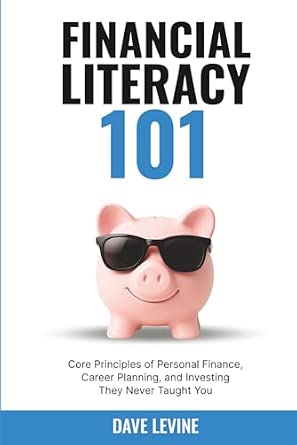 | Best for Broad Beginner Foundations | Primary level: Introductory | Coverage: Personal finance, career planning, and investing | Stated approach: Core principles | VIEW LATEST PRICE | See Our Full Breakdown |
| The Lifestyle Investor: The 10 Commandments of Cash Flow Investing for Passive Income and Financial Freedom |  | Best for Cash-Flow Investing Goals | Edition: Updated and Expanded Edition | Publication date: April 2024 | Primary focus: Cash flow investing | VIEW LATEST PRICE | See Our Full Breakdown |
| personal finance books for investor | Format | ASIN |
|---|---|---|
| The Index Card: Why Personal F | Book | — |
| The Beginner’s Investing Handb | Book | — |
| The Wall Street Journal Comple | Not specified in the supplied product data | — |
| I Will Teach You to Be Rich: N | Book | — |
| The Simple Path to Wealth: You | Book | — |
| The Motley Fool Investment Gui | — | 0743229967 |
| Personal Finance 101: From Sav | Book | 1507214359 |
| A Random Walk Down Wall Street | Not specified in supplied product data | 1324035439 |
| The White Coat Investor: A Doc | Not specified in supplied product data | 0991433106 |
| Personal Finance and Investing | Not specified in supplied product data | B09484GPWT |
| How to Invest $50–$5,000: The | — | — |
| The Psychology of Money: Timel | Book | 0857197681 |
| The Intelligent Investor: Thir | Book | 0063497476 |
| Financial Literacy 101: Core P | Not provided | B0FT1HV954 |
| The Lifestyle Investor: The 10 | — | B08RLMP6BF |
More Details on Our Top Picks
The Index Card: Why Personal Finance Doesn’t Have to Be Complicated
The Index Card is the clearest fit for readers who want personal finance principles they can act on without first learning a specialized investing vocabulary. Its straightforward framework can make decisions about saving and investing feel more manageable, while its emphasis on accessible steps contrasts with The Beginner’s Investing Handbook, which is more explicitly organized around starting to invest and planning for retirement. That simplicity is also the tradeoff: readers looking for detailed portfolio methods or advanced investing analysis may find too little depth here. The advice is presented as general guidance, so people with unusual financial circumstances may need more tailored help. I’d choose it as a low-friction foundation, not as a replacement for a book focused on investment strategy.
Pros:- Turns complex personal finance concepts into an accessible framework
- Offers actionable steps for managing money
- Can reduce intimidation around financial planning
- Provides a useful foundation before more specialized investing books
Cons:- Does not offer much depth for advanced investment strategy
- General guidance may not fit unusual or complex circumstances
Best for: Readers new to managing money who want an approachable framework before taking on more detailed investing guidance
Not ideal for: Experienced investors or readers with complex financial situations who need advanced strategies or individualized advice
- Format:Book
- Subject:Personal finance
- Approach:Simple, actionable framework
- Intended audience:Everyday readers
- Focus:Making financial concepts accessible
- Advanced investment strategy:Limited depth, according to the supplied product information
Our verdict“Choose this for a straightforward introduction to money decisions, but pair it with a more investment-specific guide if you want detailed portfolio guidance.”
The Beginner’s Investing Handbook: How to Start With Less Than $1,000, Grow Your Wealth, Manage Risk & Build Toward Retirement (+ Late Starter’s Catch-Up Plan)
The Beginner’s Investing Handbook is the most directly targeted pick here for someone ready to invest but unsure how to begin with limited capital. Its stated focus on starting with less than $1,000, managing risk, and building toward retirement gives beginners a clearer investing agenda than The Index Card, which takes a broader personal-finance approach. The included catch-up plan also addresses readers who feel behind on retirement saving, rather than assuming they started early. The tradeoff is audience: experienced investors may find the material too introductory, and broad guidance cannot account for every reader’s finances. I’d favor this over a general money guide when the immediate question is how to get started investing, but not when the goal is advanced portfolio analysis.
Pros:- Addresses beginners starting with less than $1,000
- Covers risk management alongside wealth building
- Includes retirement-planning guidance
- Offers a specific catch-up plan for late starters
Cons:- May not provide enough depth for experienced investors
- General advice may not suit every financial situation
Best for: First-time investors with limited starting capital who want introductory guidance on risk, retirement, and getting started
Not ideal for: Experienced investors seeking advanced portfolio techniques or readers who need advice tailored to a complex financial situation
- Format:Book
- Topic:Personal Finance and Investing
- Starting-investment focus:Less than $1,000
- Experience level:Beginner
- Key subjects:Wealth building, risk management, and retirement
- Additional plan:Late starter’s catch-up plan
Our verdict“Pick this if you are new to investing and want a starting plan built around modest capital, risk, and retirement goals.”
The Wall Street Journal Complete Personal Finance Guidebook
The Wall Street Journal Complete Personal Finance Guidebook earns a place for readers who want a general personal-finance reference rather than a narrow investing program. Its Wall Street Journal Guidebooks series identity signals a broad guidebook format, but the supplied product details do not specify its topics, methods, or level of investing detail. That lack of detail makes it harder to recommend over The Beginner’s Investing Handbook for someone whose main goal is getting started in the market, or over The Simple Path to Wealth for a focused financial-independence roadmap. Its potential advantage is breadth; the tradeoff is that buyers cannot tell from the available information how directly it serves investor needs. I’d choose it only if a general personal-finance guidebook is the priority.
Pros:- Presented as a complete personal finance guidebook
- Belongs to the Wall Street Journal Guidebooks series
- May suit readers seeking a broader reference rather than a single investing method
Cons:- Available product information does not describe its investing coverage
- The intended reader level and specific methods are not provided
- Harder to compare with focused investing titles based on the supplied details
Best for: Readers who want a broad personal-finance guidebook and are comfortable checking whether its coverage matches their investing questions
Not ideal for: Buyers seeking a clearly described beginner investing plan, a retirement catch-up strategy, or a focused financial-independence roadmap
- Series:Wall Street Journal Guidebooks
- Format:Not specified in the supplied product data
- Stated subject:Personal finance
- Guide type:Complete personal finance guidebook
- Investing topics:Not specified in the supplied product data
- Edition:Not specified in the supplied product data
Our verdict“Consider this for a broad personal-finance reference, but choose a more specifically described title if investing guidance is your main need.”
I Will Teach You to Be Rich: No Guilt, No Excuses, Just a 6-Week Program That Works (Second Edition)
I Will Teach You to Be Rich stands out for its defined six-week program, giving readers a sequence to follow instead of a general set of principles. That structure may appeal to someone who wants to organize money habits before making bigger investing decisions. Compared with The Beginner’s Investing Handbook, however, the supplied details emphasize practical personal finance and a program format rather than specific coverage of starting capital, risk management, or retirement catch-up planning. The title’s no-guilt framing also suggests an action-oriented approach, but the available information does not establish which investment techniques the book covers. I’d select it for a guided money-management process; investors who want clearly specified beginner investment steps may find the handbook a closer match.
Pros:- Uses a structured six-week program
- Presents a practical approach to personal finance
- Offers a defined sequence rather than only broad principles
Cons:- Supplied details do not specify its investment strategies
- A fixed program may be less suited to readers seeking open-ended reference material
- Available information does not describe how the advice handles individual financial circumstances
Best for: Readers who want a time-bound, step-by-step program for organizing personal finances before focusing more closely on investing
Not ideal for: Investors who need clearly stated portfolio methods, detailed risk guidance, or an investing plan tailored to a specific financial situation
- Edition:Second Edition
- Program length:6 weeks
- Format:Book
- Stated approach:Practical personal finance program
- Program style:Structured and time-bound
- Investment methods:Not specified in the supplied product data
Our verdict“Choose this if you want a structured six-week approach to money management, not a clearly documented advanced investing manual.”
The Simple Path to Wealth: Your Road Map to Financial Independence and a Rich, Free Life
The Simple Path to Wealth is the strongest match in this group for readers who connect investing with a longer-term goal: financial independence. Its roadmap framing and focus on actionable wealth-building steps give it a more defined destination than The Index Card, whose strength is simplifying personal finance more broadly. It also differs from The Beginner’s Investing Handbook: the handbook foregrounds starting with limited capital, risk, and a late-starter plan, while this title centers on a path toward financial freedom. The tradeoff is that simplified guidance may not answer advanced investors’ questions, and the supplied description cautions that its strategies may not suit every economic environment. I’d choose it for a long-range orientation, not as a universal formula for every market or portfolio.
Pros:- Connects investing with a clear financial-independence goal
- Simplifies complex financial concepts
- Offers an actionable long-term wealth-building roadmap
- Frames wealth in terms of greater freedom as well as accumulation
Cons:- May not offer enough detail for advanced investors
- Its strategies may not suit every economic environment
Best for: Long-term investors who want an accessible wealth-building roadmap tied to financial independence
Not ideal for: Advanced investors seeking detailed technical analysis or readers who want a strategy guaranteed to fit every economic environment
- Format:Book
- Stated focus:Financial independence
- Approach:Straightforward roadmap
- Primary goal:Long-term wealth building
- Intended reader level:Accessible to general readers
- Investment strategy depth:May be limited for advanced investors
Our verdict“Choose this for an accessible long-term route toward financial independence, while seeking more specialized guidance for advanced or market-specific decisions.”
The Motley Fool Investment Guide for Teens: 8 Steps to Having More Money Than Your Parents Ever Dreamed Of
A teen-centered starting point gives this book a distinct place among the roundup’s broader adult finance guides. Its eight-step structure is framed around building financial knowledge and managing money, which may help younger readers approach investing as part of their overall financial habits rather than as a stand-alone shortcut to wealth. Compared with Personal Finance 101, which spans topics such as taxes and loans, this guide has a narrower audience and a more focused investing angle. The tradeoff is that the supplied details do not confirm its specific lessons, examples, or level of investment detail, so I would not choose it as a technical reference. Its age-specific framing is the draw; adult readers or teens seeking documented, detailed instruction may prefer a broader or more explicitly specified guide.
Pros:- Written specifically for a teen audience
- Organized around eight steps
- Connects investing with broader money management
- Offers a more age-targeted focus than general primers such as Personal Finance 101
Cons:- Available product information does not describe the individual steps or investing methods
- Its teen focus may feel less relevant to adult readers
- The description does not establish coverage of taxes, loans, or other wider finance topics
Best for: Teenagers beginning to learn about investing and money management, especially those who want a guide presented for their age group.
Not ideal for: Adult investors or readers seeking confirmed detail on investment strategies, taxes, or loans; the available product information does not establish that level of coverage.
- ASIN:0743229967
- Title:The Motley Fool Investment Guide for Teens: 8 Steps to Having More Money Than Your Parents Ever Dreamed Of
- Audience:Teens
- Structure:Eight steps
- Primary subject:Investing
- Related subject:Money management
Our verdict“Choose this for a teen who wants an age-targeted introduction to investing and money management, not as a detailed all-purpose finance reference.”
Personal Finance 101: From Saving and Investing to Taxes and Loans
Wide topic coverage is the main reason I’d choose this title over the more specialized books in the roundup. Its introductory scope spans saving, investing, taxes, and loans, so readers can connect investment decisions with everyday financial obligations rather than study investing in isolation. Compared with The Motley Fool Investment Guide for Teens, it is not presented for a particular age group; compared with A Random Walk Down Wall Street, its description points to a broader personal-finance primer rather than an investment-focused guide. That breadth is useful for someone filling in basic knowledge, but it may leave less room for detailed treatment of any one subject. The supplied information also gives no chapter outline or specific methods, so readers wanting a focused investing framework should look to a more specialized book.
Pros:- Covers saving, investing, taxes, and loans
- Introductory format suits readers building foundational knowledge
- Broad personal-finance scope puts investing alongside other money decisions
- Part of the Adams 101 Series
Cons:- Broad coverage may provide less depth on investing than a specialized guide
- The supplied description does not identify particular methods or chapter content
- Readers focused only on investment strategy may find the wider scope unnecessary
Best for: New adult readers who want an introductory overview connecting investing with saving, taxes, and borrowing.
Not ideal for: Investors seeking an in-depth strategy guide or readers who already know the basics and want advanced investing discussion.
- ASIN:1507214359
- Series:Adams 101 Series
- Format:Book
- Level:Introductory
- Topics:Saving, investing, taxes, and loans
- Book type:Personal finance guide
Our verdict“Pick this as a starting primer if you want investing basics alongside taxes, loans, and saving rather than a dedicated investment manual.”
A Random Walk Down Wall Street: The Best Investment Guide That Money Can Buy
Investment-first focus distinguishes this title from the personal-finance primers in this group. Its title positions it as an investment guide, making it the clearest fit for a reader whose main goal is to study investing rather than cover loans, taxes, and household money management. That gives it a different role from Personal Finance 101, whose stated scope spans several everyday finance subjects, and from The White Coat Investor, which is tailored to doctors. The tradeoff is that the supplied product data provides no description of its topics, approach, or format, so I can’t responsibly promise particular strategies or a specific level of difficulty. Choose it when an explicitly investment-oriented title is the priority; skip it if you need confirmed practical coverage of personal budgeting or occupation-specific financial issues.
Pros:- Explicitly framed as an investment guide
- Offers a more investment-centered alternative to Personal Finance 101
- Not presented as limited to a specific profession or age group
- Title makes its investing orientation clear
Cons:- Supplied product data does not describe the book’s specific topics or approach
- The available details do not confirm whether it covers broader personal-finance needs
- Readers cannot determine its level or format from the supplied specifications
Best for: Readers whose primary interest is an investment-focused guide rather than a broad introduction to personal finance.
Not ideal for: Buyers who need documented coverage of budgeting, taxes, loans, or a particular investing method before choosing a book.
- ASIN:1324035439
- Title:A Random Walk Down Wall Street: The Best Investment Guide That Money Can Buy
- Stated focus:Investment guide
- Audience:Not specified in supplied product data
- Format:Not specified in supplied product data
- Additional subject details:Not provided
Our verdict“Choose it when investment-focused reading matters more than a clearly documented, broad personal-finance overview.”
The White Coat Investor: A Doctor’s Guide to Personal Finance and Investing
Profession-specific guidance gives this book the most distinct audience in the lineup. It is aimed at doctors and covers both personal finance and investing, so it may suit readers who want those subjects presented for their professional group rather than in a general-purpose primer. Compared with Personal Finance 101, its stated audience is much narrower; compared with A Random Walk Down Wall Street, it pairs investing with personal finance rather than presenting itself simply as an investment guide. That specialization is also its main limitation: readers outside medicine may not find the framing as relevant, and the supplied details do not identify particular strategies or topics. Its place in a dedicated series may appeal to readers seeking doctor-focused material, but the available information does not specify the scope of other volumes.
Pros:- Directly targets doctors
- Combines personal finance and investing
- Offers a profession-specific alternative to general primers
- Part of The White Coat Investor series
Cons:- The narrow audience may reduce its relevance for non-doctors
- Supplied details do not identify specific investment methods or chapter topics
- The series listing does not establish what additional material it provides
Best for: Doctors who want personal finance and investing guidance explicitly framed for their profession.
Not ideal for: Readers outside medicine who prefer a general investing guide, or buyers seeking confirmed details about specific strategies and chapters.
- ASIN:0991433106
- Title:The White Coat Investor: A Doctor’s Guide to Personal Finance and Investing
- Audience:Doctors
- Topics:Personal finance and investing
- Series:The White Coat Investor series
- Format:Not specified in supplied product data
Our verdict“This is the most fitting choice for doctors seeking a profession-targeted personal finance and investing guide, but a general reader may prefer a broader title.”
Personal Finance and Investing: How Anyone Can Make More, Spend Less, and Invest Wisely
Its combined money-and-investing premise makes this a possible fit for readers who want earning, spending, and investing discussed together. The title signals a broader personal-finance lens than A Random Walk Down Wall Street, which is presented as an investment guide, while its stated focus is less age- or profession-specific than The Motley Fool Investment Guide for Teens or The White Coat Investor. That general framing may appeal to readers who want to connect day-to-day money choices with investing goals. The limitation is the lack of further product information: no specific approach, chapter plan, or format details are supplied, so the title alone cannot confirm how practical or detailed the guidance is. I’d treat it as a broad-interest option, not a verified substitute for a detailed investment manual.
Pros:- Combines personal finance and investing in its stated subject
- Connects earning and spending themes with investing
- General-audience framing is not limited to a profession or age group
- Offers a broader premise than an investment-only title
Cons:- No further content details are provided to verify its methods or depth
- The supplied data does not specify format or chapter structure
- Readers wanting a documented, specialized investing approach may need another title
Best for: General readers who want a book framed around earning more, spending less, and investing as connected parts of personal finance.
Not ideal for: Readers who need a confirmed investing curriculum, detailed technical guidance, or clear information about the book’s format before buying.
- ASIN:B09484GPWT
- Title:Personal Finance and Investing: How Anyone Can Make More, Spend Less, and Invest Wisely
- Stated topics:Personal finance and investing
- Stated themes:Make more, spend less, and invest wisely
- Audience:General audience, as indicated by the title
- Format:Not specified in supplied product data
Our verdict“Choose this for its broad earning, spending, and investing premise, but seek a more fully specified guide if you need confirmed investment detail.”
How to Invest $50–$5,000: The Small Investor’s Step-by-Step Plan for Low-Risk Investing in Today’s Economy
A step-by-step plan for small investors gives this book a distinct place among the roundup’s broader guides. Its stated focus on investing amounts from $50 to $5,000 speaks to readers who want advice framed around a modest starting balance, while the low-risk emphasis may help cautious beginners approach investing with a clearer process. Compared with The Intelligent Investor, which centers on value-investing principles and judgment in volatile markets, this title is more directly aimed at getting a small investor started. That focus is also its limit: the supplied information does not establish how current its examples are or how much detail it gives on specific investments. Readers seeking a broad personal-finance curriculum may get more range from Financial Literacy 101; those who want a defined, small-scale entry point may prefer this focused plan.
Pros:- Provides a step-by-step investing plan rather than only general money advice.
- Frames its guidance around small starting amounts.
- Emphasizes lower-risk investing for cautious newcomers.
- The 10th edition gives readers a clearly identified edition to check when evaluating relevance.
Cons:- The supplied product details do not identify specific investment types, so readers cannot judge the plan’s practical scope from this information alone.
- A low-risk focus may not address the higher-risk choices or deeper portfolio questions some investors want to study.
- The available description does not establish how its guidance reflects today’s economy.
Best for: New investors with roughly $50 to $5,000 to invest who want a step-by-step approach framed around lower-risk decisions.
Not ideal for: Readers seeking a broad personal-finance guide, advanced portfolio analysis, or detailed evidence about current investment products and strategies.
- Investment range:$50–$5,000
- Edition:10th
- Primary focus:Small-investor investing plan
- Approach:Step-by-step
- Risk focus:Low-risk investing
- Title emphasis:Investing in today’s economy
Our verdict“Choose this if you are starting with a modest amount and want a lower-risk, step-by-step framework rather than a wide-ranging investing reference.”
The Psychology of Money: Timeless Lessons on Wealth, Greed, and Happiness
Investor behavior, not investment mechanics, is the focus of this pick. The title frames money through wealth, greed, and happiness, making it a different kind of resource from The Intelligent Investor, which is explicitly about value investing and financial decisions in volatile markets. That contrast matters: readers who want to reflect on how personal beliefs shape money choices may find this a useful companion to a technical investing guide, but the supplied product details do not confirm coverage of portfolio construction, asset selection, or investing steps. Compared with How to Invest $50–$5,000, it also lacks a stated starting-amount plan. I would choose it for perspective on the human side of wealth, not as a standalone how-to manual. Its broad themes may be less useful to buyers seeking specific actions to take with an investment account.
Pros:- Centers on the psychological side of money rather than presenting itself as a technical investing manual.
- Addresses wealth, greed, and happiness as connected themes.
- Can complement the more investment-principle-focused approach of The Intelligent Investor.
- Its subject matter may suit readers interested in the behavior behind financial choices.
Cons:- The supplied details do not specify actionable investing methods or portfolio guidance.
- No edition, format beyond book, or other content detail is provided to help buyers judge scope.
- Readers who want a structured starting plan may find How to Invest $50–$5,000 a closer fit.
Best for: Investors who want to examine how their attitudes toward wealth, greed, and happiness can shape financial decisions.
Not ideal for: First-time investors looking for explicit account steps, investment choices, or a defined plan for investing a small balance.
- Format:Book
- Primary subject:Money psychology
- Themes:Wealth, greed, and happiness
- Investment method specified:Not provided
- Edition:Not provided
- ASIN:0857197681
Our verdict“Pick this for perspective on money behavior and personal values, but pair it with a practical investing guide if you need specific investment instructions.”
The Intelligent Investor: Third Edition
Value investing and judgment in volatile markets make this the most investment-principle-focused selection in this group. Unlike Financial Literacy 101, which spans personal finance and career planning as well as investing, The Intelligent Investor is positioned around long-term financial decision-making. That narrower focus should appeal to readers who want to think more carefully about investment choices rather than cover several areas of money management at once. It also sets a higher bar for reader patience: the supplied description does not promise a quick-start plan, a small-balance pathway, or beginner-oriented steps like those attributed to How to Invest $50–$5,000. Its value is in the stated principles, not in a confirmed list of tactics or tools. I would favor it for readers seeking a deliberate framework, while newcomers wanting immediate instructions may need a more explicitly procedural guide.
Pros:- Focuses directly on value investing.
- Addresses financial decision-making in volatile markets.
- Its long-term orientation contrasts with short-term, action-first guides.
- The third-edition designation is clearly supplied.
Cons:- The supplied description does not spell out specific methods, examples, or tools covered.
- Its focused investing scope may leave broader personal-finance needs unanswered.
- It is not described as a step-by-step guide for beginners with small balances.
Best for: Investors who want a focused study of value-investing principles and long-term decision-making during volatile markets.
Not ideal for: Readers who need a beginner checklist, a small-investment step plan, or a broad guide to budgeting, career planning, and other personal-finance topics.
- Edition:Third Edition
- Format:Book
- Primary focus:Value investing
- Decision context:Volatile markets
- Investment orientation:Long-term financial judgment
- ASIN:0063497476
Our verdict“Choose this for a focused, long-term framework around value investing, not for a broad money guide or an explicit beginner action plan.”
Financial Literacy 101: Core Principles of Personal Finance, Career Planning, and Investing
Three connected subjects—personal finance, career planning, and investing—give this introductory guide a wider remit than the investment-specific titles here. That breadth may suit a reader who is still building basic money knowledge and wants investing placed alongside other financial decisions. By comparison, The Intelligent Investor concentrates on value investing and volatile-market judgment, while How to Invest $50–$5,000 is framed around a small investor’s step-by-step plan. Financial Literacy 101 appears better suited to orientation than either specialized purpose. The tradeoff is that the description gives no detail on how deeply it treats investing or which actions readers can take after finishing. Buyers seeking a focused investing method may find its broad scope less direct, but newcomers looking to connect career choices and personal finance with investing may value that wider starting point.
Pros:- Combines personal finance, career planning, and investing in one introductory guide.
- Connects investing to broader financial and work-related decisions.
- Its broad scope distinguishes it from the narrower focus of The Intelligent Investor.
- The title explicitly positions the material as core principles.
Cons:- The supplied description does not indicate how much depth is devoted to investing.
- No specific investment strategy, examples, or action plan is identified.
- Readers focused exclusively on investing may prefer a more specialized title.
Best for: New adults or early-career readers who want introductory coverage of personal finance, career planning, and investing in one guide.
Not ideal for: Investors who already know personal-finance basics and want detailed value-investing analysis or a specific low-risk investment plan.
- Primary level:Introductory
- Coverage:Personal finance, career planning, and investing
- Stated approach:Core principles
- Edition:Not provided
- Format:Not provided
- ASIN:B0FT1HV954
Our verdict“Choose this as a broad starting point if you want investing introduced alongside career and personal-finance basics.”
The Lifestyle Investor: The 10 Commandments of Cash Flow Investing for Passive Income and Financial Freedom
Cash flow and passive income set this book apart from titles centered on broad financial foundations or value-investing judgment. Its stated theme may appeal to readers whose goal is to build income-producing investments as part of a larger vision of financial freedom. That makes it a different proposition from The Intelligent Investor, which is described through value investing and decisions in volatile markets, and from Financial Literacy 101, which covers several foundational subjects. The title’s “10 Commandments” framing suggests an organized set of principles, but the supplied description does not specify the investments involved or how the guidance handles risk. Buyers should not assume that passive income means effortless or guaranteed returns. The updated and expanded edition, published in April 2024, is a useful identifying detail; the main tradeoff is that the available data leaves the book’s practical depth unclear.
Pros:- Makes cash-flow investing its central theme.
- Connects passive-income goals with a broader financial-freedom objective.
- Uses a 10-commandment framework, as stated in the title.
- The updated and expanded edition is identified with an April 2024 publication date.
Cons:- The supplied information does not identify the investment types or methods discussed.
- No risk-management detail is provided, which may matter to readers evaluating income strategies.
- Its passive-income focus is less aligned with readers seeking broad personal-finance foundations or value-investing principles.
Best for: Readers pursuing cash-flow-oriented investing and passive-income goals who want a principle-based guide linked to financial freedom.
Not ideal for: Investors seeking a clearly specified low-risk plan, detailed value-investing instruction, or verified coverage of particular asset types.
- Edition:Updated and Expanded Edition
- Publication date:April 2024
- Primary focus:Cash flow investing
- Related goals:Passive income and financial freedom
- Framework named in title:The 10 Commandments
- ASIN:B08RLMP6BF
Our verdict“Choose this if cash-flow investing and passive-income goals match your priorities, but seek more detail before treating it as a practical investment manual.”

How We Picked
I compared these books by how directly they help readers connect personal finances with investing decisions. The main criteria were clarity for the stated audience, usefulness of the guidance, coverage of risk and long-term planning, and whether the book offers a coherent approach rather than disconnected tips. I also considered how much prior knowledge a reader needs and whether the book focuses on practical actions, investing principles, or financial behavior.
The ranking favors books with broad usefulness, understandable ideas, and a clear fit for investors building or refining a long-term plan. Specialized titles remain valuable for the readers they target, but their narrower audience affects their placement. I also separated general personal finance guides from books centered on market theory or investment philosophy, so readers can see which option matches their actual question—not just which title covers the most topics.
| personal finance books for investor | Format |
|---|---|
| The Index Card: Why Personal F | Book |
| The Beginner’s Investing Handb | Book |
| The Wall Street Journal Comple | Not specified in the supplied product data |
| I Will Teach You to Be Rich: N | Book |
| The Simple Path to Wealth: You | Book |
| The Motley Fool Investment Gui | — |
| Personal Finance 101: From Sav | Book |
| A Random Walk Down Wall Street | Not specified in supplied product data |
| The White Coat Investor: A Doc | Not specified in supplied product data |
| Personal Finance and Investing | Not specified in supplied product data |
| How to Invest $50–$5,000: The | — |
| The Psychology of Money: Timel | Book |
| The Intelligent Investor: Thir | Book |
| Financial Literacy 101: Core P | Not provided |
| The Lifestyle Investor: The 10 | — |
Factors to Consider When Choosing Personal Finance Books For Investors
Before choosing, decide what problem you want the book to solve. A guide to budgeting and saving may help you invest consistently, while a market-focused book may explain investment choices without addressing the habits that make a plan sustainable. These factors can help you avoid buying a book that is respected but mismatched to your needs.
Choose the Question You Need Answered First
Start by naming the decision in front of you: getting your finances organized, choosing an investing approach, understanding risk, or changing money habits. A book that tries to address every topic may be a useful reference but can feel scattered if you need one clear next step. If debt, saving, or cash flow is stopping you from investing, a broad personal finance guide may be more useful than a technical investing classic. If your basic money system is already in place, a book focused on markets or portfolio principles may add more. Avoid choosing by title alone; check whether the book’s main emphasis matches the question you want to resolve.
Match the Level of Detail to Your Experience
Beginner-friendly does not mean useful only for beginners: clear explanations can make complex decisions easier to revisit. Still, a compact introductory guide may not satisfy readers who want to study valuation, market history, or portfolio theory. On the other side, a demanding classic can be a poor first choice if its concepts make it harder to take practical action. Think about how much explanation you want and whether you prefer a concise framework or a sustained argument. A good match gives you enough detail to act without making every financial decision feel like a research project.
Check Whether the Investing Philosophy Fits You
Books can recommend different ways of thinking about investing, even when they share a goal of long-term wealth building. Some emphasize broad diversification and patience; others focus on evaluating individual investments, cash-flow strategies, or investor psychology. These approaches are not interchangeable, and reading one confident argument should not make you assume it is the only sound method. Ask whether the book explains its assumptions, addresses risk, and distinguishes a general principle from a strategy that depends on a reader’s situation. If you are comparing contrasting approaches, treat each as a framework to examine rather than a complete personal plan.
Look for Guidance You Can Apply to Your Actual Finances
A book’s advice may depend on a particular income level, profession, life stage, or starting amount. Specialist guidance can be especially relevant when the audience matches your circumstances, but it may leave gaps for readers outside that group. Before buying, identify what you can use now and what would require assumptions that do not fit you. Also check whether the book discusses tradeoffs, taxes, risk, and time horizon where those subjects matter to its advice. The most useful choice is not always the one with the most examples; it is the one whose guidance translates to decisions you genuinely face.
Decide Whether You Need a Practical Plan or a Lasting Reference
Some books are structured around concrete actions, while others develop ideas that readers may return to over time. A step-by-step format can help when you want to change routines or make a decision soon, but it may become less useful if its process depends on details that change. A principles-based book can remain relevant longer, though it may leave you to turn concepts into a personal checklist. Consider whether you learn best through instructions, examples, or a broader argument. Buying a book for both immediate action and long-term reference can make sense, but a focused first choice is often easier to finish and use.
Frequently Asked Questions
Which book should I choose if I have not started investing yet?
Choose a book that explains how investing fits with saving, spending, and other financial priorities, rather than starting with market terminology alone. The Simple Path to Wealth is the strongest broad starting point in this roundup, while The Index Card offers a more compact introduction to personal finance fundamentals. If you want a structured program for organizing money, I Will Teach You to Be Rich may suit you better. Think about whether you need a clear investing framework or help getting your whole financial system ready to invest. A beginner book can guide learning, but it cannot account for every detail of your personal circumstances.
Should I read a personal finance book or an investing book first?
Read the book that addresses the obstacle keeping you from making sound decisions. If you have not built a saving routine or do not know how your spending affects your ability to invest, begin with personal finance basics. If those foundations are already in place and you want to understand portfolio choices or market behavior, an investing-centered title may be a better next step. These subjects overlap, but one book may not cover either side with enough depth for your needs. You can also read one practical guide first and use a more specialized book to explore its investing ideas.
Are classic investing books still useful if I want advice I can apply now?
Classic titles can teach durable ideas about risk, valuation, investor behavior, and market uncertainty. Their usefulness depends on whether you are prepared to work through the argument and separate lasting principles from examples tied to their era. A classic may provide more context than a quick-start guide, but it may not offer the clearest sequence of immediate actions. For near-term decisions, pair its concepts with current information and guidance that reflects your own situation. Choose a classic because you want to study its framework, not simply because it has a long-standing reputation.
Is one book enough to build an investing plan?
A single book can give you a useful framework, but it cannot know your full financial situation, goals, time horizon, or tolerance for risk. Treat it as an educational starting point rather than a personalized plan. A practical next step is to write down which recommendations apply to you, which rely on assumptions you have not checked, and what questions remain. Reading a second book with a different emphasis can help reveal where investing philosophies agree and where they diverge. For decisions with significant consequences, independent professional guidance may be appropriate.
How can I choose between a broad guide and a book written for a specific audience?
A broad guide is often the better pick when you want foundational knowledge that applies across common financial situations. A specialist title can be more useful when its intended reader closely matches your life stage, profession, or investing goal. The tradeoff is that targeted examples may feel more relevant while leaving out topics outside the book’s focus. Check the table of contents and audience description before choosing, and ask whether the book answers your current decisions or simply shares a label you recognize. If its assumptions do not fit your circumstances, a general guide may offer a sturdier starting point.
Conclusion
For most readers, I recommend The Simple Path to Wealth as the best overall choice because it presents a clear long-term framework without making investing feel separate from financial independence. For a best-value starting point in terms of coverage and accessibility, The Index Card is a compact pick; beginners who want a more action-oriented money system should look at I Will Teach You to Be Rich. Readers seeking a more substantial investing study can choose The Intelligent Investor as the premium-depth option, while A Random Walk Down Wall Street suits those who want a broad examination of markets. For specific needs, consider The Motley Fool Investment Guide for Teens for younger readers, The White Coat Investor for physicians, or The Lifestyle Investor if cash-flow investing is your focus. Pick the book whose audience and investing philosophy match your next decision, rather than trying to make one title cover every financial question.