
You might see cold storage as just a simple way to keep food fresh, but its climate impacts and social factors are more complex than they seem. Traditional refrigeration uses lots of energy, often from fossil fuels, which worsens climate change. Innovations are improving efficiency, yet issues like cost and access vary worldwide. Understanding these nuances helps you see cold storage as part of larger sustainability challenges. Keep exploring to uncover more about how technology and responsibility shape its future.
Key Takeaways
- Simplistic views overlook cold storage’s significant climate impacts and technological innovations aimed at sustainability.
- Its role in food security is intertwined with environmental costs, requiring balanced, nuanced discussion.
- Energy-intensive refrigeration often relies on fossil fuels, contributing to greenhouse gas emissions.
- Socio-economic disparities affect cold storage access, emphasizing the need for equitable, sustainable solutions.
- Recognizing ongoing technological advances can help reconcile cold storage needs with climate responsibility.

While cold storage is often portrayed as a straightforward solution to food preservation, the reality is far more complex. It’s tempting to see cold storage simply as a reliable, low-tech method to extend the shelf life of perishable goods. But if you dig deeper, you’ll realize that its story involves significant climate impacts and rapid technological innovation. These factors shape how we understand cold storage’s role in the food supply chain and challenge the simplistic narratives often presented.
Cold storage’s role in food preservation is complex, involving climate impacts and rapid technological innovation that challenge simple narratives.
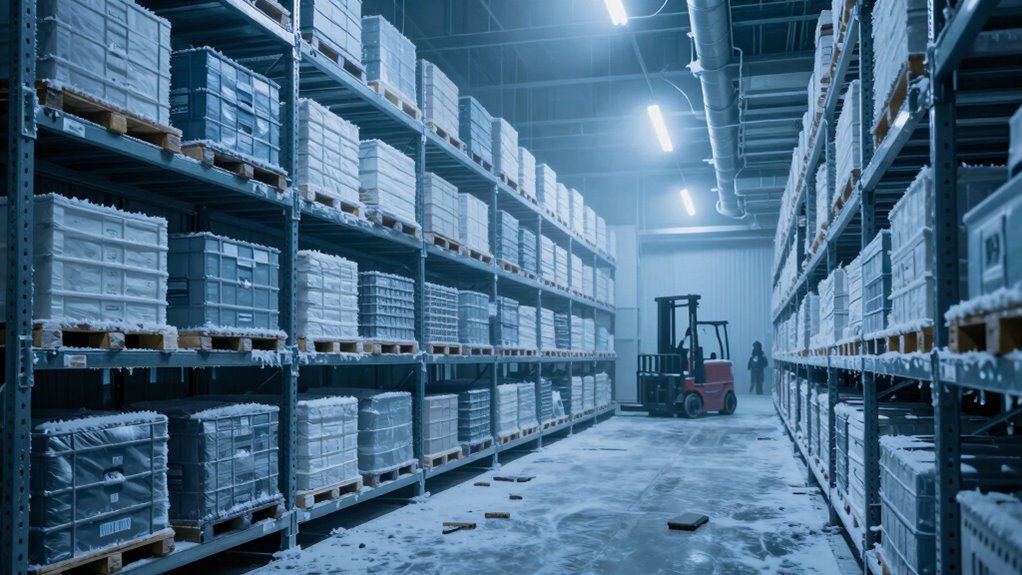
The climate impact of cold storage is a key aspect that warrants more nuanced discussion. You might assume that cold storage is an essential tool to reduce food waste and improve food security, but it comes with a significant carbon footprint. Traditional refrigeration systems consume vast amounts of energy, often derived from fossil fuels, contributing to greenhouse gas emissions. As global temperatures rise and climate concerns intensify, the environmental cost of maintaining extensive cold storage infrastructure becomes more apparent. This paradox highlights that cold storage, while beneficial for food preservation, can also exacerbate climate change if not managed responsibly. Recognizing this duality is essential for developing sustainable solutions.
Technological innovation plays a pivotal role in transforming cold storage’s landscape. Advances in refrigeration technology, such as energy-efficient compressors, smart cooling systems, and alternative cooling methods, are changing the game. These innovations offer opportunities to cut energy consumption, reduce emissions, and improve the overall sustainability of cold storage facilities. You should be aware that new materials, automation, and data-driven management systems are making cold storage smarter and more efficient. Rather than viewing cold storage as a static, outdated practice, understanding its ongoing technological evolution reveals a dynamic field aiming to balance preservation needs with environmental responsibility.
Furthermore, the narrative around cold storage often neglects the socio-economic dimensions. Developing countries, for example, face challenges in deploying advanced cold storage solutions due to cost and infrastructure limitations. This disparity underscores that cold storage isn’t just a technical issue; it’s also a matter of equity and access. Addressing these complexities requires a nuanced perspective that considers technological innovation’s potential to bridge gaps and reduce climate impact simultaneously.
energy-efficient cold storage refrigeration units
As an affiliate, we earn on qualifying purchases.
As an affiliate, we earn on qualifying purchases.
Frequently Asked Questions
How Do Cold Storage Costs Vary Across Different Industries?
You’ll find cold storage costs vary across industries due to industry-specific pricing and storage duration needs. For example, the pharmaceutical sector often pays higher rates for strict temperature controls, while the food industry might have more flexible pricing based on perishability. Longer storage durations generally increase costs, but the specific industry’s standards and product sensitivity influence final prices, making it essential to tailor storage solutions to each industry’s unique requirements.
What Are the Environmental Impacts of Cold Storage Facilities?
Cold storage facilities impact the environment primarily through energy consumption and refrigerant use. You should focus on improving energy efficiency to reduce carbon emissions and operational costs. Additionally, using environmentally friendly refrigerants minimizes the refrigerant impact on ozone depletion and global warming. By adopting sustainable practices, you help lessen the environmental footprint of cold storage, making the industry more eco-conscious and aligned with climate goals.
How Are Technological Advancements Changing Cold Storage Strategies?
Technological advancements are revolutionizing cold storage strategies by introducing automated refrigeration systems that optimize temperature control and reduce waste. These innovations enhance energy efficiency, cutting costs and lowering environmental impacts. You can now monitor and manage storage conditions remotely, ensuring consistent quality. As automation improves, cold storage facilities become more sustainable, allowing you to meet industry demands while minimizing their carbon footprint and boosting overall operational effectiveness.
What Are the Most Common Misconceptions About Cold Storage Security?
You might believe Cold storage myths, like thinking security is foolproof or that physical barriers alone keep data safe. These security misconceptions overlook the importance of layered protections, regular updates, and staff training. Cold storage security isn’t just about hardware; it involves continuous vigilance, encryption, and monitoring. Don’t fall for oversimplified ideas—true security requires a nuanced approach that adapts to evolving threats.
How Do Geopolitical Factors Influence Global Cold Storage Supply Chains?
Geopolitical factors act like stormy seas, rocking the stability of your cold storage supply chains. When geopolitical instability and trade tensions flare, they disrupt shipping routes, increase costs, and cause delays. You might find yourself steering unpredictable waters, needing to adapt quickly. Staying informed on political shifts and diversifying suppliers can help you steer through these turbulent times, ensuring your cold storage operations remain resilient despite global uncertainties.
smart cold storage management system
As an affiliate, we earn on qualifying purchases.
As an affiliate, we earn on qualifying purchases.
Conclusion
Just like a delicate balance on a tightrope, the cold storage narrative requires careful nuance. Jumping to conclusions or overgeneralizing can cause you to lose your footing. Instead, embrace the complexity, considering both the risks and opportunities. When you see the full picture, you’ll navigate the space more confidently, avoiding the pitfalls of oversimplification. Remember, in this landscape, clarity and context are your safety net—keeping you steady as you move forward.
solar-powered refrigeration for food storage
As an affiliate, we earn on qualifying purchases.
As an affiliate, we earn on qualifying purchases.
advanced cold storage technology
As an affiliate, we earn on qualifying purchases.
As an affiliate, we earn on qualifying purchases.