
TL;DR

Get smart everyday buys delivered free — and shop member deals
- Fast, free delivery on millions of items
- Access to Prime Big Deal Days deals on October 6–7
- Prime Video, Amazon Music and more included
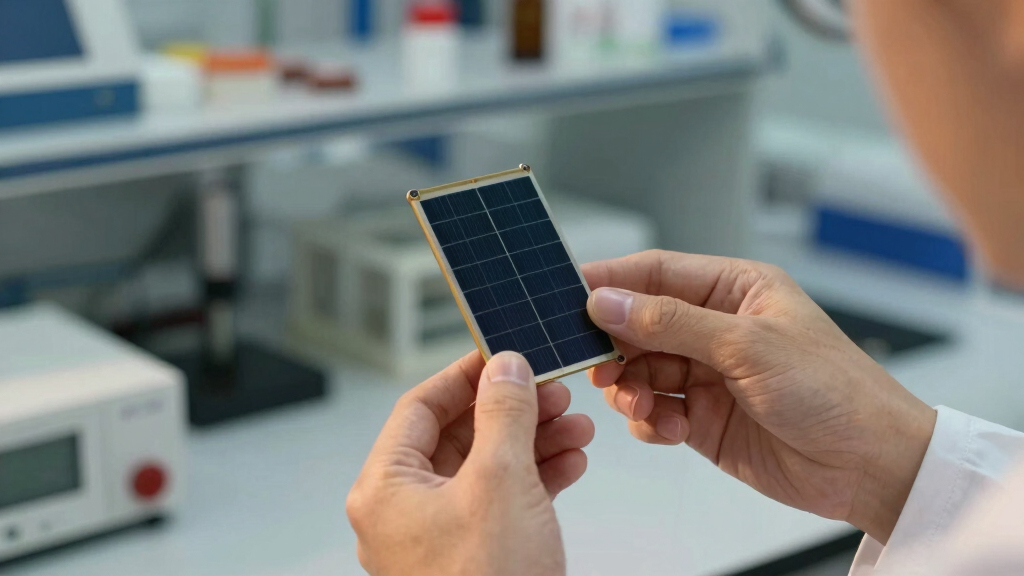
Researchers at HKUST have created an all-perovskite tandem solar cell without PEDOT:PSS, achieving a record efficiency of 29.1%. This development addresses stability issues linked to traditional materials, potentially advancing solar technology.
Researchers at the Hong Kong University of Science and Technology (HKUST) have developed a new all-perovskite tandem solar cell that achieves a record efficiency of 29.1%, without using the commonly employed hole transport layer PEDOT:PSS. This advancement could significantly improve the stability and performance of perovskite solar devices.
The team replaced PEDOT:PSS with a phenothiazine-functionalized phosphonic acid monolayer called 4PAPT, which promotes rapid, stable crystallization of perovskite films. This substitution resulted in higher-quality films with fewer defects and enhanced interfacial stability. The device architecture involves stacking a wide-bandgap perovskite bottom cell with a narrow-bandgap top cell, both utilizing the new molecular interface.
The all-perovskite tandem achieved a power conversion efficiency of 29.1%, the highest reported for PEDOT:PSS-free configurations, according to the researchers. Additionally, the encapsulated devices maintained 90% of their initial efficiency after over 800 hours under simulated sunlight at 40°C, indicating improved durability compared to traditional designs.
Impact of PEDOT:PSS Replacement on Solar Cell Stability and Efficiency
This development is significant because it addresses longstanding stability issues associated with PEDOT:PSS, which is hygroscopic and can degrade perovskite layers. By using a molecular monolayer, the researchers improved crystallization control and interfacial stability, leading to higher efficiency and longer-lasting devices. This could accelerate commercial adoption of perovskite tandem solar cells.
As an affiliate, we earn on qualifying purchases.
Advances in Perovskite Solar Cell Materials and Architecture
Traditional perovskite solar cells often rely on PEDOT:PSS as a hole transport layer, but its moisture sensitivity and acidity can cause device degradation. Recent research has focused on finding more stable alternatives. Previous efforts achieved efficiencies around 26-28%, but stability remained a challenge. The current study builds on these efforts by introducing a molecular interface that enhances crystallization and stability, pushing efficiency beyond 29%.
“Replacing PEDOT:PSS with a molecular monolayer enables faster, more stable crystallization, leading to higher efficiency and durability.”
— Fengzhu Li, HKUST
As an affiliate, we earn on qualifying purchases.
Remaining Questions About Long-Term Stability and Scalability
While initial results are promising, it is still unclear how these devices will perform under real-world conditions over extended periods. Further testing is needed to confirm long-term stability and scalability for commercial applications. Additionally, the manufacturing process’s compatibility with large-scale production remains to be evaluated.
solar panel with molecular interface
As an affiliate, we earn on qualifying purchases.
As an affiliate, we earn on qualifying purchases.
Next Steps Toward Commercial Application and Further Testing
The research team plans to conduct extended durability tests under various environmental conditions and explore scaling up the fabrication process. Collaborations with industry partners may follow to assess commercial viability. Further optimization of the molecular layers could also improve efficiency and stability even more.
durable all-perovskite solar module
As an affiliate, we earn on qualifying purchases.
As an affiliate, we earn on qualifying purchases.
Key Questions
How does replacing PEDOT:PSS improve device stability?
The molecular monolayer used as a replacement is less hygroscopic and more stable during processing, reducing degradation pathways that typically affect PEDOT:PSS-based devices.
Is this efficiency level suitable for commercial solar panels?
While 29.1% efficiency is promising, additional research is needed to ensure long-term stability and cost-effective manufacturing before commercial deployment.
What advantages does the all-perovskite tandem structure offer?
It allows for higher efficiencies than single-junction cells and can be lighter and potentially cheaper to produce, making it attractive for various applications.
Are there any drawbacks to using molecular monolayers instead of PEDOT:PSS?
Potential challenges include scaling the deposition process and ensuring uniformity across large areas, which are areas for further research.
When might this technology be available commercially?
It is still in the research stage; commercial availability depends on further validation, scaling, and industry adoption, likely several years away.
Source: PV Magazine
Halloween Picks
halloween
As an affiliate, we earn on qualifying purchases.