
TL;DR
Thorsten Meyer AI’s latest Memory Squeeze installment says the real cost of a 2026 local-inference rig depends on whether a chosen model fits in fast GPU memory. The report argues that used 24GB RTX 3090 cards can offer better value than newer GPUs for steady inference workloads, while warning that prices and benchmarks remain fast-moving.
Thorsten Meyer AI has published a new analysis of local-inference rig costs in 2026, arguing that the central buying question is not the newest GPU but whether an AI model fits entirely inside fast VRAM. The report matters because more developers, researchers and small businesses are weighing local hardware against rising cloud inference bills.
The report’s confirmed development is the publication of Part 7 of the site’s 10-part Memory Squeeze series. It frames local inference as the alternative to renting cloud GPUs and says the most important constraint is the VRAM cliff: models run quickly when weights fit in GPU memory, but slow sharply when they spill into system RAM.
According to the article, community benchmarks show an RTX 5090 running a 70B model fully in VRAM at about 40 to 50 tokens per second. The same card and model can fall to roughly 1 to 2 tokens per second if it spills into system RAM, figures the article attributes to community testing rather than a single lab-controlled benchmark.
The analysis says buyers should size hardware to the model class they actually run. At Q4 quantization, the report estimates 7B to 8B models need about 6GB to 8GB, 26B to 32B models need about 20GB, and a 70B model needs about 43GB. Larger 100B-plus and mixture-of-experts models can require 60GB to 130GB or more, depending on configuration and offload.
The real cost of a local-inference rig
Owning beats renting for steady AI work — so what does a local rig cost in 2026? The unintuitive, good news: the most expensive build is almost never the smartest one. It all comes down to one rule.
The difference is only whether the weights fit. LLM inference is memory-bandwidth-bound — VRAM capacity is the hard limit you build around. Compute specs are mostly noise.
The squeeze reframes the rig like everything else in this series: discipline beats maximalism. VRAM is exactly the memory under most pressure, so over-buying it is the 128GB-“to-be-safe” trap, only worse per gigabyte. Take the cheap, high-value step to 24GB (the gateway to the 30B class), reach for used 3090s and MoE models, and use quantization to climb a tier without buying silicon. Sized right, the rig pays for itself against the cloud’s ever-rising hidden bill. Next: Apple Silicon’s quiet memory advantage.
VRAM Sets The Real Bill
The report’s main finding is that local AI economics are being shaped less by peak compute and more by memory capacity per dollar. For users running steady workloads, that shifts the buying decision away from headline GPU launches and toward whether the rig can keep the intended model inside fast memory.
Thorsten Meyer AI argues that a used RTX 3090 with 24GB, priced in the report at roughly $600 to $850, can deliver about five times the VRAM-per-dollar of an RTX 5090 for inference. That claim is value analysis, not a guaranteed result, and the article flags its pricing as point-in-time data from late June 2026.
For readers, the practical point is cost control. A disciplined buyer may be able to run 30B-class models on a single 24GB card or reach 70B-class inference through dual GPUs, a 32GB card, or large unified memory systems. The report says overspending on unused VRAM can be as wasteful as underbuying and falling below the model’s memory requirement.

NVIDIA GeForce RTX 3090 Founders Edition Graphics Card (Renewed)
Item Package Dimension – 15.0L x 12.25W x 4.25H inches
As an affiliate, we earn on qualifying purchases.
As an affiliate, we earn on qualifying purchases.
Cloud Costs Frame Local Buying
The article follows an earlier installment that argued renting cloud inference can hide total cost for steady workloads. This new installment prices the alternative: buying and operating a local inference machine for privacy, predictable access and lower long-run cost in high-use cases.
The report’s hardware tiers are built around model size. It places 7B to 14B workloads in an entry tier using cards such as a 16GB RTX 5070 Ti, 26B to 32B workloads on single 24GB cards, and 70B workloads on an RTX 5090, dual RTX 3090s or large-memory Apple Silicon systems. For 100B-plus workloads, it points to multi-GPU systems or Macs with 128GB or more unified memory.
The analysis also says mixture-of-experts models can improve value because only part of the model activates per token. It cites Qwen3-style MoE behavior as a way to get near larger-model quality at smaller-model speed, though that remains dependent on the specific model, implementation and workload.
“The most expensive local-inference rig is almost never the smartest one.”
— Thorsten Meyer AI
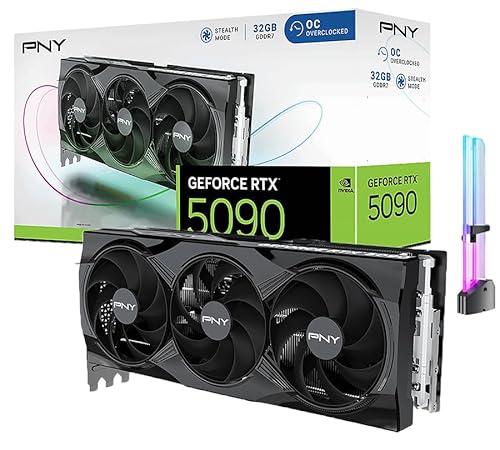
CyberGeek GeForce RTX 5090 Overclocked Triple Fan Graphics Card, 32GB GDDR7, 28 Gbps, 512-bit, 3352 AI Tops, DLSS 4, AI Content Creation, Local LLM Inference, DP 2.1b x3, HDMI 2.1b, with GPU Holder
[3352 AI TOPS, 5th Gen Tensor Cores, AI Content Creation] Accelerate AI-powered photo and video workflows like upscaling,…
As an affiliate, we earn on qualifying purchases.
As an affiliate, we earn on qualifying purchases.
Benchmarks Still Move Quickly
Several details remain unsettled. The article’s tokens-per-second figures are described as community benchmarks, which can vary by model file, quantization method, runtime, driver version, batch size and system setup. They are useful directional data, but not a universal performance guarantee.
Hardware pricing is also unstable. The report gives late June 2026 estimates for cards such as the used RTX 3090, but used-market supply, warranty risk, prior mining use and local availability can change the real cost for a buyer. Power, cooling, chassis, motherboard lanes and noise are also not fully captured by GPU sticker prices.
It is also not yet clear how quickly new model architectures, quantization methods and inference runtimes will alter the memory map. A rig sized well for today’s models may age differently if popular workloads shift toward larger context windows or heavier multimodal models.
2026 local AI inference rig components
As an affiliate, we earn on qualifying purchases.
As an affiliate, we earn on qualifying purchases.
Apple Memory Advantage Comes Next
The next installment in Thorsten Meyer AI’s series is set to examine Apple Silicon’s unified memory as an alternative path for local inference. That comparison matters because Apple systems can expose larger shared memory pools, while discrete GPUs still often lead on bandwidth and upgrade flexibility.
For readers pricing a local build now, the immediate next step is to map the intended workload to model size, quantization level and memory need before choosing hardware. The report’s bottom line is that local inference can compete with cloud rental for steady use, but only when the rig is sized to the actual model rather than built around the most expensive available card.
GPU with 43GB VRAM for large language models
As an affiliate, we earn on qualifying purchases.
As an affiliate, we earn on qualifying purchases.
Key Questions
What is the main news in this report?
Thorsten Meyer AI published a new analysis pricing local AI inference rigs in 2026. It says VRAM capacity, not raw GPU compute, is the main constraint for buyers running large language models locally.
Why does VRAM matter so much for local inference?
The report says models run quickly when their weights fit inside GPU video memory. If they spill into system RAM, performance can drop sharply, with cited community benchmarks falling from about 40 to 50 tokens per second to roughly 1 to 2 tokens per second.
Is a newer GPU always the best choice?
No, according to the report’s analysis. It argues that a used 24GB RTX 3090 can offer stronger VRAM-per-dollar for inference than newer cards, though used hardware carries risks such as limited warranty and uncertain prior use.
What kind of rig is needed for a 70B model?
The article estimates a 70B model at Q4 needs about 43GB of memory. It lists options such as an RTX 5090 32GB with compromises, dual 24GB GPUs, or large-memory Apple Silicon systems, depending on model and quantization.
Is this financial or buying advice?
No. The report’s figures are historical estimates from late June 2026 and are not financial, tax or legal advice. Actual costs depend on local prices, workload, power use and hardware risk.
Source: Thorsten Meyer AI