
Understanding fees in Bitcoin IRAs involves knowing about setup charges, trading fees, and ongoing management costs, which vary across providers. Some may charge a flat fee or a percentage for transactions, while others have monthly or annual charges. Minimum deposit requirements also impact your entry point. Balancing the fee structure with your trading habits can help you maximize your savings, and exploring the details further will give you a clearer picture of what to expect.
Key Takeaways
- Bitcoin IRA providers charge various fees including setup, trading, monthly maintenance, and custody costs, which impact overall investment expenses.
- Trading fees typically range from 0.25% to 2%, affecting how much you pay per buy, sell, or transfer transaction.
- Some providers have fixed fees or minimum deposit requirements, influencing accessibility and investment flexibility.
- Additional costs may include withdrawal, transfer, or account closure fees, which can add to total trading expenses.
- Comparing fee structures helps investors choose a provider aligning with their trading frequency and budget.
Types of Fees Associated With Bitcoin IRAS

Understanding the various fees associated with Bitcoin IRAs is essential before investing, as these costs can substantially impact your overall returns. First, there’s the set-up or deposit fee, charged when opening your account and sometimes on each deposit; for example, BitcoinIRA charges around 1.99%. Next, trading fees apply whenever you buy, sell, or transfer assets—these typically range from 1% to 2%, depending on the provider. Monthly or maintenance fees are ongoing costs, often around 0.08% or a flat rate like $20, covering account management and security. Some providers add per-trade fees, such as $10 per transaction. Finally, custody or storage fees cover secure offline storage and insurance, either bundled into overall costs or listed separately. Being aware of these fees helps you plan your investment wisely. Additionally, forsale 100 may influence your overall costs if you are considering resale or secondary market transactions related to your holdings.
Comparing Fee Structures Across Providers
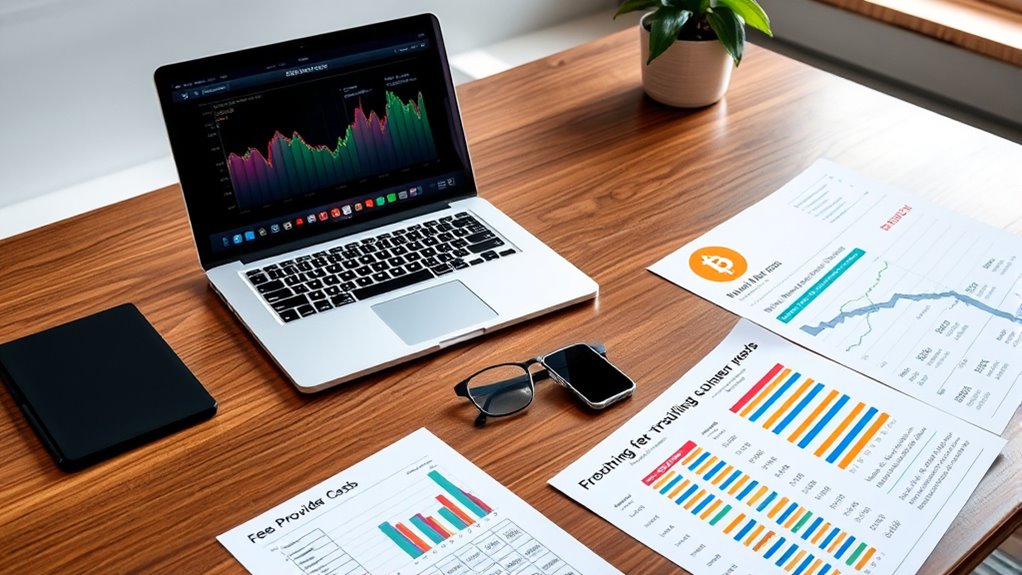
When comparing fee structures across Bitcoin IRA providers, it’s clear that costs can vary markedly depending on the platform you choose. Some platforms, like BitcoinIRA, charge a setup fee of 1.99% plus a 2% trading fee and a monthly maintenance fee of 0.08%. Others, such as iTrustCapital, offer a lower trading fee at 1% and no monthly fee, with a minimum deposit of $1,000. CoinIRA and BitIRA charge lower buy/sell fees but require higher minimum deposits. Swan Bitcoin has no minimum and charges a 0.25% annual fee plus a 0.99% trading fee. Comparing these structures helps you identify which provider aligns with your budget and trading frequency, ensuring you understand the true cost of managing your crypto IRA. Additionally, understanding expert advice on fees can help you make more informed decisions about your investments.
Services Included in Bitcoin IRA Fees
Bitcoin IRA fees typically cover a range of essential services to help you manage your digital assets securely and efficiently. These include account setup and management, which involves initial IRA registration, rollover assistance, and ongoing account oversight. Transaction processing is also included, ensuring your buy, sell, or transfer orders are executed smoothly within the platform. You benefit from secure storage solutions like multi-signature, cold storage wallets with military-grade encryption, protecting your assets from online threats. Custody insurance is often part of the package, providing coverage up to $250 million for digital assets held by the platform. Additionally, customer support is included to assist with account maintenance and questions, giving you peace of mind as you grow your crypto retirement portfolio. Many providers also offer storage security options that further safeguard your holdings from potential cyber threats.
Minimum Account Requirements and Additional Costs

Minimum account requirements vary considerably across Bitcoin IRA providers, impacting how much you need to invest upfront to get started. For example, BitcoinIRA requires a minimum deposit of $3,000, while iTrustCapital’s minimum is $1,000. CoinIRA and BitIRA set their minimums at $5,000, whereas Swan Bitcoin has no minimum deposit at all. These thresholds can influence your entry point and investment flexibility. Beyond initial deposits, additional costs might include withdrawal or distribution fees, which apply when you take funds out of the IRA, and account closure charges, though these are not always disclosed upfront. Some providers embed costs within spreads, and liquidity might be slower compared to retail exchanges. Always review each provider’s minimum requirements and potential extra costs before opening your Bitcoin IRA. Additionally, understanding sound design techniques can help you better evaluate the transparency and quality of provider offerings.
Pros and Cons of Fee Structures in Bitcoin IRAs

The fee structures in Bitcoin IRAs offer both advantages and drawbacks that can substantially impact your investment experience. On the plus side, clear fees like trading and setup costs help you understand expenses upfront, making budgeting easier. Some providers, like iTrustCapital, have low or no monthly fees, which benefits long-term investors. However, high fees at providers such as BitcoinIRA—like 1.99% setup and 2% trading—can eat into your returns. Additional charges like per-trade fees and minimum deposits can also limit flexibility. These costs can make small trades less economical and reduce overall profitability. While institutional-grade security and custody are valuable, the higher fees may outweigh these benefits if you’re seeking cost-efficient investing. Carefully compare fee structures to find what aligns with your investment goals. Additionally, understanding the specific water park amenities offered by hotels can significantly enhance your family vacation experience.
Frequently Asked Questions
Are There Any Hidden Fees in Bitcoin IRAS?
Yes, some Bitcoin IRAs have hidden fees, like spread costs embedded in buy-sell prices or account closure charges that aren’t clearly disclosed upfront. You might also encounter costs from withdrawals, transfers, or inactivity fees. Always read the fine print and ask providers about any potential extra charges beyond listed fees to avoid surprises and fully understand your total costs before investing.
How Do Fees Impact Overall Investment Returns?
Imagine your investment as a garden; fees are weeds that drain your growth. They chip away at your returns, reducing the amount of profit you keep. The higher the fees—like setup, trading, or monthly charges—the more they eat into your gains. To maximize your harvest, you need to carefully manage these costs, choosing providers with lower fees so your investment can flourish without unnecessary setbacks.
Can Fees Vary Based on Account Size or Trading Volume?
Yes, fees can vary based on your account size or trading volume. Some providers offer tiered fee structures, meaning you’ll pay lower percentages or flat fees as your investment grows or if you trade more frequently. For example, larger accounts might negotiate lower fees, and high-volume traders often benefit from reduced trading costs. Always check the provider’s fee schedule to see how your trading habits could impact your overall costs.
Are There Discounts for High-Net-Worth or Institutional Clients?
Think of fees for high-net-worth or institutional clients as a VIP lounge—some providers offer discounts or tailored rates. You might get reduced setup fees, lower trading costs, or custom maintenance charges based on your account size or trading volume. It’s worth negotiating or exploring providers that reward larger accounts, so you can keep more of your crypto gains rather than paying sky-high fees.
How Often Do Fee Structures Change in the Industry?
Fee structures in the Bitcoin IRA industry can change fairly frequently, often due to market shifts, new regulations, or provider updates. You should regularly review your provider’s fee disclosures and stay informed through their announcements or customer support. It’s wise to compare current fees across platforms before making decisions. Staying proactive helps you avoid unexpected costs and guarantees you’re getting the best value for your investments.
Conclusion
So, now that you’re armed with the knowledge of Bitcoin IRA fees, remember: maneuvering these costs is almost as exciting as watching your investment grow—if only. With a little savvy, you can avoid being nickeled and dimed by sneaky charges. Just don’t forget, in the world of crypto IRAs, the only thing more unpredictable than the market is trying to decipher whose fee structure is truly transparent. Happy investing!