
For an outdoor floodlight camera for a driveway, I’d start with the REOLINK Elite Pro PoE: its dual-lens 16MP system and 180-degree view make it the strongest fit here for covering a wide approach. The Wyze Floodlight Camera v2 stands out for its 2K video and 2,800-lumen lights, while the Reolink Solar-Powered Floodlight Camera is a useful alternative where running power is difficult. The main tradeoff is between broader coverage and a simpler installation, along with choices about wired power, lighting, video detail, and ongoing service needs. A driveway’s width, mounting position, and Wi-Fi or Ethernet access can change which model makes sense. Read on for the full comparison, buying advice, and recommendations by need.

Get smart everyday buys delivered free with Prime
- Fast, free delivery on millions of items
- Prime Video, Amazon Music and more included
- Member-only deals all year
Key Takeaways
- Wide driveway coverage: The REOLINK Elite Pro PoE is the standout for buyers prioritizing a broad field of view, combining dual lenses with a stated 180-degree view; its PoE setup calls for compatible cabling and network equipment.
- Bright lights are not the same as broad coverage: Meloght lists 3,500 lumens, while Wyze v2 and Tapo C720 list 2,800 lumens; placement and light direction still affect how much of a driveway is illuminated.
- Installation needs divide this lineup: Most picks are wired, the REOLINK Elite Pro uses PoE, and the Reolink solar model and Tapo C615F KIT offer alternatives when a conventional power connection is inconvenient.
- Resolution should match the viewing task: The lineup ranges from Blink’s 1080p video to models advertised at 2K, 3K, and 16MP; a higher resolution may help with detail, but it does not fix poor placement or a narrow view.
- Smart-home and camera features vary: Ring lists 6x zoom and two-way talk, while Tapo C615F KIT adds pan-and-tilt positioning; buyers should match these features to how they monitor the driveway rather than choosing by headline specs alone.
| REOLINK Elite Pro PoE Floodlight Security Camera, 16MP Dual Lens, 180° View |  | Best for Wide Driveway Coverage | Resolution: 16MP | Lens: Dual 8MP lenses | Field of view: 180° | VIEW ON AMAZON | See Our Full Breakdown |
| Wyze Floodlight Camera v2, 2K HD Outdoor Security Camera with 2800-Lumen Lights | 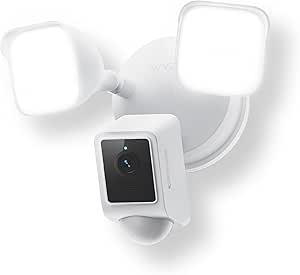 | Best for Customizable Driveway Lighting | Video resolution: 2K HD | Viewing angle: 160° | PIR motion detection: 270° | VIEW ON AMAZON | See Our Full Breakdown |
| Meloght 2K Wired Outdoor Floodlight Security Camera, 3500 Lumens |  | Best for Maximum Floodlight Brightness | Video resolution: 2K | Floodlight brightness: 3500 lumens | Light heads: Two, independently adjustable up to 330° | VIEW ON AMAZON | See Our Full Breakdown |
| Google Nest Cam with Floodlight – Outdoor Security Camera with Floodlight |  | Best for Google Home Households | Video resolution: 1080p HDR | Detection: People, animals, and vehicles | Night vision: Yes | VIEW ON AMAZON | See Our Full Breakdown |
| gdend Wired 3K UHD Floodlight Security Camera |  | Best for Included Local Storage | Listed resolution: 3K UHD; product information also lists 1296p | Light output: 2200 lumens | Light coverage: 270° adjustable | VIEW ON AMAZON | See Our Full Breakdown |
| Arlo Wired Floodlight Security Camera, 2K HDR, 1 Camera |  | Best for Smart Home Integration | Video resolution: 2K HDR | Floodlight brightness: 2,000 lumens | Field of view: Listed as 160° in specs and 130° in product description | VIEW ON AMAZON | See Our Full Breakdown |
| Floodlight Camera Wired, 3K UHD Outdoor Security Camera with Alexa Compatibility |  | Best for Wide Adjustable Coverage | Resolution: 3K UHD | Coverage: 270° adjustable | Night vision: Full-color | VIEW ON AMAZON | See Our Full Breakdown |
| Tapo 2K+ Outdoor Wired Floodlight Security Camera, C720, 2800LM |  | Best for AI Motion Filtering | Resolution: 2K QHD | Floodlight brightness: 2,800 lumens, adjustable | Field of view: 150° | VIEW ON AMAZON | See Our Full Breakdown |
| Ring Floodlight Cam 2K (2nd Gen), Wired Outdoor Security Camera with 6x Zoom, Two-Way Talk and Motion-Activated Floodlights |  | Best for Customizable Driveway Zones | Video resolution: 2K | Zoom: Up to 6x enhanced zoom | Floodlight brightness: 2,000 lumens | VIEW ON AMAZON | See Our Full Breakdown |
| Blink Wired Floodlight Camera with 1080p HD Video, 2600-Lumen Lights, Motion Detection and Siren |  | Best for Bright Lighting on a Simpler Camera | Resolution: 1080p HD | Field of view: 143° diagonal | Frame rate: Up to 30 fps | VIEW ON AMAZON | See Our Full Breakdown |
| Tapo 2K Outdoor Pan/Tilt Wireless Floodlight Security Camera, C615F KIT |  | Best Solar Pan-and-Tilt Coverage | Resolution: 2K | Floodlight brightness: 800 lumens | Pan/tilt range: 360° horizontal, 130° vertical | VIEW ON AMAZON | See Our Full Breakdown |
| Reolink Solar-Powered Outdoor Floodlight Security Camera, 2K 4MP |  | Best Solar Pick for a Wide, Fixed Driveway View | Resolution: 2K 4MP | Floodlight brightness: Up to 1,000 lumens | Field of view: 150° | VIEW ON AMAZON | See Our Full Breakdown |
| eufy Security Floodlight Camera E30, 2K |  | Best for Bright, Hardwired Driveway Coverage | Resolution: 2K | Coverage: 360° pan and tilt | AI features: Human and vehicle detection with auto-tracking | VIEW ON AMAZON | See Our Full Breakdown |
| outdoor floodlight camera for driveway | Connectivity | Floodlight brightness | Resolution | Power |
|---|---|---|---|---|
| REOLINK Elite Pro PoE Floodlig | Ethernet PoE; no Wi-Fi | — | 16MP | — |
| Wyze Floodlight Camera v2 | — | — | — | — |
| Meloght 2K Wired Outdoor Flood | Wi-Fi, 2.4 GHz and 5 GHz | 3500 lumens | — | Corded electric, 110 V, 35 W |
| Google Nest Cam with Floodligh | Wi-Fi | — | — | — |
| gdend Wired 3K UHD Floodlight | Wired; 2.4 GHz and 5 GHz Wi-Fi | — | — | — |
| Arlo Wired Floodlight Security | 2.4 GHz Wi-Fi | 2,000 lumens | — | Hardwired |
| Floodlight Camera Wired | — | 2,200 lumens, motion-activated | 3K UHD | 120V AC |
| Tapo 2K+ Outdoor Wired Floodli | 2.4GHz Wi-Fi | 2,800 lumens, adjustable | 2K QHD | Wired |
| Ring Floodlight Cam 2K | Single-band 2.4GHz Wi-Fi 4 | 2,000 lumens | — | Hardwired, 100–240 V |
| Blink Wired Floodlight Camera | — | — | 1080p HD | Hardwired; neutral wire required; 100–240 VAC, 50/60 Hz, 45 W |
| Tapo 2K Outdoor Pan/Tilt Wirel | — | 800 lumens | 2K | — |
| Reolink Solar-Powered Outdoor | Dual-band 2.4/5GHz Wi-Fi 6 | Up to 1,000 lumens | 2K 4MP | Rechargeable battery and solar panel |
| eufy Security Floodlight Camer | 2.4 GHz Wi-Fi | 2,000 lumens | 2K | — |
More Details on Our Top Picks
REOLINK Elite Pro PoE Floodlight Security Camera, 16MP Dual Lens, 180° View
For a broad driveway or a frontage with more than one approach, the dual-lens 180° view is the main reason to choose this Reolink. Its two 8MP lenses provide a wider panorama than the Wyze Floodlight Camera v2 at 160°, reducing the chance that a vehicle entering from the side falls outside the frame. The adjustable 2800-lumen floodlight, color and infrared night vision, and person, vehicle, and animal detection add useful layers for day-and-night monitoring. PoE Ethernet also supports 24/7 recording to a microSD card, NVR, FTP, or NAS. The tradeoff is installation: this is for a wired network setup, not a Wi-Fi retrofit, and the supplied details say it is not water resistant. It also requires separately sourced power and microSD accessories.
Pros:- 180° dual-lens view covers a wider approach than the Wyze Floodlight Camera v2’s 160° view
- Supports continuous recording to microSD, NVR, FTP, or NAS
- Human, vehicle, and animal detection plus two-way talk and a siren
- Adjustable 2800-lumen floodlight with color and infrared night vision
Cons:- Requires Ethernet PoE and does not support Wi-Fi
- MicroSD card and power adapter are not included
- Product details state that it is not water resistant
Best for: Homeowners with a wide driveway, an existing Ethernet/PoE setup, and a preference for continuous recording to local or network storage.
Not ideal for: Buyers who need Wi-Fi installation or verified weather resistance for an exposed mounting location.
- Resolution:16MP
- Lens:Dual 8MP lenses
- Field of view:180°
- Connectivity:Ethernet PoE; no Wi-Fi
- Floodlight:Adjustable, 2800 lumens
- Night vision:Color and infrared
- Detection:Human, vehicle, and animal
- Recording and storage:24/7 recording; microSD up to 512GB, NVR, FTP, or NAS
- Mounting:Wall or ceiling
Our verdict“Choose the Reolink if wide-angle driveway coverage and flexible continuous recording matter more than Wi-Fi convenience and clearly specified weather resistance.”
Wyze Floodlight Camera v2, 2K HD Outdoor Security Camera with 2800-Lumen Lights
The Wyze stands out for a driveway where the light needs to do more than switch on at full brightness. Its dimmable 2800-lumen lights, ambient-light mode, and dusk-to-dawn automation offer more control over illumination than the simpler motion-activated setup described for the Meloght 2K Wired Floodlight Camera. A 160° camera view and 270° PIR detection give it broad coverage for a typical approach, while customizable motion zones can help reduce alerts from nearby activity. Two-way audio, a 105 dB siren, and 24/7 microSD recording round out a practical wired setup. The Reolink Elite Pro reaches a wider 180° view and offers more storage destinations, but uses PoE rather than Wi-Fi. Wyze’s own tradeoffs are hardwiring, 2.4 GHz-only Wi-Fi, and a separately sold outdoor power adapter.
Pros:- Dimmable 2800-lumen lights with ambient and dusk-to-dawn modes
- 160° viewing angle and 270° PIR motion detection
- Customizable motion zones, two-way audio, and a 105 dB siren
- Supports 24/7 local microSD recording
Cons:- Requires hardwired installation
- Supports 2.4 GHz Wi-Fi only, not 5 GHz
- Outdoor power adapter is sold separately
Best for: Homeowners who want adjustable driveway lighting, motion-zone controls, and local recording over a 2.4 GHz Wi-Fi connection.
Not ideal for: Buyers without hardwired power, those relying on 5 GHz Wi-Fi, or anyone who wants a supplied outdoor power adapter.
- Video resolution:2K HD
- Viewing angle:160°
- PIR motion detection:270°
- Light output:2800 lumens, dimmable
- Siren:105 dB
- Wi-Fi:2.4 GHz; not compatible with 5 GHz
- Local recording:24/7 to microSD; up to 30 days of footage
- Weather resistance:IP65
- Installation:Hardwired, screw-in
Our verdict“Pick the Wyze for a hardwired driveway where adaptable lighting and motion controls matter more than the Reolink’s wider view or PoE storage flexibility.”
Meloght 2K Wired Outdoor Floodlight Security Camera, 3500 Lumens
When lighting a dark or especially wide driveway is the priority, the Meloght’s 3500-lumen output gives it a clear distinction from the 2800-lumen Wyze and Reolink options. Its two light heads can be adjusted independently through up to 330°, making it easier to aim light toward separate parts of an approach rather than relying on one fixed beam. The camera records 2K video with full-color night vision, and motion alerts, a siren, and two-way audio add active deterrence. Unlike the Reolink Elite Pro, it connects over Wi-Fi, including 5 GHz support, but does not list the same range of continuous-recording destinations. This is a hardwired wall-mount camera, and the junction box is not included, so installation planning matters before purchase.
Pros:- 3500-lumen output exceeds the 2800-lumen Reolink and Wyze models
- Two independently adjustable light heads with up to 330° adjustment
- 2K video with full-color night vision
- Supports 2.4 GHz and 5 GHz Wi-Fi, plus two-way audio and a siren
Cons:- Requires hardwired 110 V installation
- Junction box is not included
- The listed features do not specify continuous recording or storage options
Best for: Homeowners with a dark driveway who want high-output, aimable lighting and have hardwired power at a suitable wall location.
Not ideal for: Renters, buyers seeking a plug-in setup, or anyone who needs an included junction box or detailed continuous-recording options.
- Video resolution:2K
- Floodlight brightness:3500 lumens
- Light heads:Two, independently adjustable up to 330°
- Night vision:Full-color
- Connectivity:Wi-Fi, 2.4 GHz and 5 GHz
- Power:Corded electric, 110 V, 35 W
- Weather resistance:IP65
- Audio and deterrence:Two-way audio and siren
- Mounting:Wall mount
Our verdict“Choose the Meloght if maximum adjustable illumination is your priority and you can handle hardwired installation and a separately sourced junction box.”
Google Nest Cam with Floodlight – Outdoor Security Camera with Floodlight
For a driveway already managed through Google Home, the Nest Cam’s appeal is its person, animal, and vehicle detection paired with alerts in the same app. The floodlight can switch on when activity is detected, helping illuminate a visitor or vehicle without requiring a separate light-control routine. Compared with the Wyze Floodlight Camera v2, Nest’s stated strengths center more on Google Home integration and detection than on detailed local recording: it offers only up to three hours of local recording, while Wyze supports 24/7 microSD recording. Nest records 1080p HDR, a lower stated resolution than the 2K Wyze and Meloght models, and advanced features or cloud storage may involve a subscription. Buyers should also be comfortable using the Google Home app; it does not work with the Nest app.
Pros:- Detects people, animals, and vehicles
- Floodlight activates when activity is detected
- Works with the Google Home app and includes two-way audio
- 1080p HDR video with night vision
Cons:- Only up to three hours of local recording
- Cloud storage and advanced features may require a subscription
- Uses Google Home rather than the Nest app, and its 1080p resolution is below the 2K Wyze and Meloght models
Best for: Google Home households that want person, animal, and vehicle alerts and prefer app-based smart-home integration.
Not ideal for: Driveway owners prioritizing higher stated video resolution, extensive local recording, or an experience that does not depend on a subscription for advanced features.
- Video resolution:1080p HDR
- Detection:People, animals, and vehicles
- Night vision:Yes
- Lighting:Floodlight activates when activity is detected
- Connectivity:Wi-Fi
- App compatibility:Google Home app
- Local storage:Up to 3 hours of local recording
- Cloud storage:Available with subscription
- Audio:Two-way audio
Our verdict“Choose Nest if Google Home integration and smart alerts matter more to you than higher resolution or longer local driveway recordings.”
gdend Wired 3K UHD Floodlight Security Camera
The gdend is a practical fit for buyers who want a storage card in the box rather than shopping separately for one: it includes a 64 GB SD card for local recording without monthly fees. Its claimed 3K UHD video sits above the 2K Wyze and Meloght specifications, while color night vision, two-way audio, and a 105 dB siren suit routine driveway monitoring. The adjustable floodlights cover up to 270°, but their 2200-lumen output is lower than the 2800-lumen Wyze and Reolink lights and well below Meloght’s 3500 lumens. There is also a real specification caveat: product information conflicts, listing both 3K UHD and 1296p. I would choose it for included local storage, not on resolution claims alone. It requires wired power and a ceiling mount.
Pros:- Includes a 64 GB SD card for local storage without monthly fees
- Adjustable floodlights cover up to 270°
- Supports 2.4 GHz and 5 GHz Wi-Fi
- Color night vision, two-way audio, and a 105 dB siren
Cons:- Resolution listing conflicts between 3K UHD and 1296p
- 2200-lumen output is lower than the Wyze, Reolink, and Meloght options
- Requires wired power and is specified for ceiling mounting
Best for: Buyers who want a wired driveway camera with local storage included and are willing to accept uncertainty in the listed resolution.
Not ideal for: Anyone who needs verified resolution, a wall-mounted installation, or brighter illumination than 2200 lumens.
- Listed resolution:3K UHD; product information also lists 1296p
- Light output:2200 lumens
- Light coverage:270° adjustable
- Night vision:Full-color
- Connectivity:Wired; 2.4 GHz and 5 GHz Wi-Fi
- Storage:64 GB SD card included
- Siren:105 dB
- Weather resistance:IP65
- Power and mounting:120 V corded electric; ceiling mount
Our verdict“Pick the gdend for included local storage and broad adjustable light coverage, but skip it if confirmed video resolution or stronger illumination is essential.”
Arlo Wired Floodlight Security Camera, 2K HDR, 1 Camera
The Arlo suits driveway owners who want 2K HDR footage, color night vision, and broad smart-home compatibility in one hardwired unit. Alexa, Google Home, Apple Home, and SmartThings support give it a wider integration range than the Blink Wired Floodlight Camera, which is Alexa-focused. Its 2,000-lumen light is bright enough to illuminate an approach, while two-way audio and a siren add ways to respond to activity without going outside. The tradeoff is that hardwiring calls for a compatible junction box, and the listed field of view is inconsistent: the specs say 160°, while the description says 130°. Live streaming is available without a subscription, but cloud storage and some advanced features require a paid plan after the trial. Pick it for smart-home flexibility; skip it if you want predictable coverage figures or subscription-free cloud recording.
Pros:- 2K HDR video with color night vision can retain more detail after dark.
- 2,000-lumen floodlight illuminates a driveway approach.
- Hardwired power avoids routine battery recharging.
- Supports Alexa, Google Home, Apple Home, and SmartThings.
Cons:- Installation requires a compatible electrical junction box.
- Cloud storage and some advanced features require a paid plan after the trial.
- Field-of-view figures conflict between the listed specifications and product description.
Best for: Driveway owners with an existing junction box who want color night vision and integration with several smart-home platforms.
Not ideal for: Buyers who need a confirmed field-of-view angle or want cloud recording and advanced features without a paid plan.
- Video resolution:2K HDR
- Floodlight brightness:2,000 lumens
- Field of view:Listed as 160° in specs and 130° in product description
- Night vision:Color
- Power:Hardwired
- Connectivity:2.4 GHz Wi-Fi
- Audio:Two-way audio
- Zoom:12x
- Smart home compatibility:Amazon Alexa, Google Home, Apple Home, Samsung SmartThings
Our verdict“Choose the Arlo if smart-home compatibility and color night vision matter more than subscription-free cloud storage or an unambiguous viewing angle.”
Floodlight Camera Wired, 3K UHD Outdoor Security Camera with Alexa Compatibility
For a driveway where vehicles enter from more than one direction, this camera’s 270° adjustable coverage is its main advantage. The 3K UHD image and full-color night vision offer more detail than the Blink Wired Floodlight Camera’s 1080p view, while the included 64GB SD card gives it a stated local-storage option. A 2,200-lumen floodlight and 105dB siren add visible and audible deterrence, and the unit supports both 2.4GHz and 5GHz Wi-Fi. That coverage and storage make it a different proposition from the Arlo, which emphasizes smart-home integrations instead. The tradeoff is wired installation, so camera placement depends on existing power, and the product information does not spell out cloud-storage terms. Choose this for adjustable sightlines and local recording; skip it if you need a battery-powered installation or clear details about cloud service.
Pros:- 270° adjustable coverage can monitor a broader approach than a fixed-angle camera.
- 3K UHD video and full-color night vision provide detailed day-and-night footage.
- Included 64GB SD card provides local storage.
- 2.4GHz and 5GHz Wi-Fi support offers more band flexibility than 2.4GHz-only options.
Cons:- Requires a 120V AC wired power connection, limiting placement.
- Cloud-storage availability and subscription terms are not specified.
- The 2,200-lumen output is lower than the 2,800-lumen Tapo C720.
Best for: Homeowners with a wired mounting point who need adjustable coverage across a wide driveway entrance and want included local storage.
Not ideal for: Renters or buyers without outdoor power at the desired mounting point, and anyone who needs clearly documented cloud-storage terms.
- Resolution:3K UHD
- Coverage:270° adjustable
- Night vision:Full-color
- Floodlight brightness:2,200 lumens, motion-activated
- Siren:105dB
- Power:120V AC
- Wi-Fi:2.4GHz and 5GHz
- Storage:64GB SD card included
Our verdict“Choose this model for a wired driveway that needs adjustable wide coverage and included local storage, but look elsewhere if its unspecified cloud terms are a concern.”
Tapo 2K+ Outdoor Wired Floodlight Security Camera, C720, 2800LM
The Tapo C720 is a strong match for driveways where passing traffic or moving branches can trigger too many alerts. Its AI detection for people, pets, and vehicles can help distinguish relevant activity, while a 270° motion-detection zone watches beyond the camera’s 150° field of view. The 2,800-lumen adjustable light is brighter than the Arlo and Ring options in this group, giving it an advantage when driveway illumination is a priority. It also offers local recording, rather than making cloud storage the only stated route to saved footage. Compared with the 3K wired camera, the Tapo gives up some resolution but provides stated AI detection and adjustable brightness. It still needs wired power, works on 2.4GHz Wi-Fi only, and has no weather-resistance rating listed in the supplied specifications.
Pros:- AI detection identifies people, pets, and vehicles to help tailor driveway alerts.
- 2,800-lumen light has adjustable brightness for different driveway conditions.
- 270° motion-detection zone covers a wider area than its 150° camera field of view.
- Local recording is listed as a smart feature.
Cons:- Requires a wired power connection.
- Supports 2.4GHz Wi-Fi only.
- No weather-resistance rating is included in the supplied specifications.
Best for: Homeowners with a wired driveway camera location who want AI-based person, pet, and vehicle detection plus bright adjustable lighting.
Not ideal for: Buyers who need 5GHz Wi-Fi support, a stated weather rating, or the higher 3K resolution offered by the wired 3K model.
- Resolution:2K QHD
- Floodlight brightness:2,800 lumens, adjustable
- Field of view:150°
- Motion detection zone:270°
- Detection features:AI detection for people, pets, and vehicles
- Connectivity:2.4GHz Wi-Fi
- Power:Wired
- Recording:Local recording listed
Our verdict“Choose the Tapo C720 if reducing unwanted motion alerts and lighting a broad driveway are priorities, provided 2.4GHz Wi-Fi and wired installation suit your setup.”
Ring Floodlight Cam 2K (2nd Gen), Wired Outdoor Security Camera with 6x Zoom, Two-Way Talk and Motion-Activated Floodlights
Ring’s strength for a driveway is customizable motion zones: they let owners focus alerts on the driveway approach instead of every movement at the edge of the camera’s view. The 2K video and up to 6x enhanced zoom add a way to inspect activity, while two-way talk and a remote-activated siren support a quick response. Its 2,000-lumen lights match the Arlo’s listed output, but Ring pairs them with a stated color temperature of 3000 K. Compared with the Tapo C720, Ring gives more explicit motion-zone controls, while Tapo lists AI detection for people, pets, and vehicles and a brighter 2,800-lumen floodlight. Ring requires hardwired power and single-band 2.4GHz Wi-Fi; some recording and alert features also need a paid Ring Protect Plan. Choose it if zone control fits your driveway layout, not if you want subscription-free access to all features.
Pros:- Customizable motion zones help focus alerts on a driveway or vehicle entrance.
- 2K video with up to 6x enhanced zoom supports closer inspection of activity.
- Two-way talk and a remote-activated siren provide response options.
- 2,000-lumen motion-activated floodlights add illumination when movement is detected.
Cons:- Requires hardwired power and a single-band 2.4GHz Wi-Fi connection.
- Some recording and alert features require a separately sold Ring Protect Plan.
- Listed video quality can vary with internet bandwidth and device temperature.
Best for: Ring users with existing outdoor wiring who want to limit alerts to specific driveway areas and use two-way talk or a remote siren.
Not ideal for: Buyers seeking 5GHz Wi-Fi, wireless installation, or access to all recording and alert features without a Ring Protect Plan.
- Video resolution:2K
- Zoom:Up to 6x enhanced zoom
- Floodlight brightness:2,000 lumens
- Color temperature:3000 K
- Power:Hardwired, 100–240 V
- Connectivity:Single-band 2.4GHz Wi-Fi 4
- Audio:Two-way talk with noise cancellation
- Operating temperature:-4°F to 122°F (-20°C to 50°C)
- Weather resistance:Weather resistant
Our verdict“Choose Ring if customizable driveway zones and its talk-and-siren tools matter more than 5GHz Wi-Fi or plan-free access to every feature.”
Blink Wired Floodlight Camera with 1080p HD Video, 2600-Lumen Lights, Motion Detection and Siren
The Blink is the practical pick when bright driveway lighting and basic live monitoring matter more than higher-resolution footage. Its 2,600-lumen lights outshine the 2,000-lumen Arlo and Ring models, and the 105dB siren, two-way audio, and customizable motion zones give owners useful ways to respond to activity. The tradeoff is 1080p video, which offers less image detail than the 2K Arlo and Ring or the 3K wired camera. Blink also needs hardwired power with a neutral wire, and its person detection and cloud storage require an optional plan. A Sync Module and local-storage media are sold separately, so the stated compatibility with Blink Sync Modules does not mean local recording is ready out of the box. Choose Blink for strong illumination and Alexa compatibility; skip it if image detail or included local storage is your priority.
Pros:- 2,600-lumen lights are brighter than the listed Arlo and Ring floodlights.
- Customizable motion zones help tailor alerts around a driveway.
- Built-in 105dB siren and two-way audio offer ways to respond to activity.
- Color night view and Alexa compatibility add useful monitoring options.
Cons:- 1080p resolution provides less detail than the 2K and 3K options in this group.
- Installation requires existing wiring and a neutral wire.
- Person detection and cloud storage require a subscription, while the Sync Module and local-storage media are sold separately.
Best for: Alexa households with an existing neutral-wire outdoor connection that prioritize bright driveway lighting, a siren, and basic two-way communication.
Not ideal for: Buyers who want 2K-or-better footage, person detection without a plan, or included local-storage hardware.
- Resolution:1080p HD
- Field of view:143° diagonal
- Frame rate:Up to 30 fps
- Lighting:2,600 lumens, 5000 K
- Siren:105dB
- Audio:Two-way audio
- Power:Hardwired; neutral wire required; 100–240 VAC, 50/60 Hz, 45 W
- Wi-Fi:2.4 GHz 802.11b/g/n
- Compatibility:Alexa and Blink Sync Modules
Our verdict“Choose Blink if strong lighting and Alexa-linked monitoring take priority over sharper footage and ready-to-use local storage.”
Tapo 2K Outdoor Pan/Tilt Wireless Floodlight Security Camera, C615F KIT
For a driveway where parked cars or passing activity can fall outside a fixed camera’s view, the Tapo C615F KIT offers 360° horizontal pan and 130° vertical tilt with AI tracking. That movable view can cover more of the approach than the fixed 150° view on the Reolink Solar-Powered Outdoor Floodlight Camera, though repositioning is different from seeing every direction at once. Its 2K video and 800-lumen light suit monitoring and modestly lighting an entry, but the Reolink’s stated output reaches 1,000 lumens. Solar power helps avoid wiring and routine charging when the panel gets suitable sun, and AI detection is subscription-free. The tradeoffs are its 2.4 GHz Wi-Fi limit and separate microSD purchase; shade can also reduce solar charging, so this is a weaker fit for a covered or tree-lined driveway.
Pros:- 360° horizontal pan and 130° vertical tilt can adjust the view across a broad driveway.
- 2K video provides more detail than basic HD monitoring.
- Solar charging reduces dependence on nearby wired power when the panel receives adequate sunlight.
- Subscription-free AI detection and tracking can help distinguish relevant activity.
Cons:- Optimal solar charging depends on direct sunlight, limiting placement in shade.
- microSD storage is not included, adding a separate purchase for local recording.
- Supports 2.4 GHz Wi-Fi only.
Best for: Driveway owners who want a wire-free camera that can pan to follow activity and have a sunny spot for its solar panel.
Not ideal for: Owners with shaded mounting locations, 5 GHz-only networks, or a need for a very bright floodlight; its 800-lumen output is below the Reolink Solar camera’s stated maximum.
- Resolution:2K
- Floodlight brightness:800 lumens
- Pan/tilt range:360° horizontal, 130° vertical
- Battery life:Up to 140 days
- Solar charging:Yes
- Wi-Fi:2.4 GHz
- Storage:microSD up to 512GB; card sold separately
Our verdict“Choose the Tapo C615F KIT if flexible, solar-powered coverage matters more than maximum floodlight brightness or shaded placement.”
Reolink Solar-Powered Outdoor Floodlight Security Camera, 2K 4MP
The Reolink is a practical fit when the driveway can be covered from one mounting point and avoiding a power cable is a priority. Its 150° field of view captures a broad fixed scene, while 2K 4MP video and color night vision support monitoring after dark. The Tapo C615F KIT can turn its lens to follow activity, but this Reolink pairs its fixed view with a brighter stated output of up to 1,000 lumens and a 110dB siren. AI alerts cover people, vehicles, and animals, and dual-band Wi-Fi 6 offers more network flexibility than the Tapo’s 2.4 GHz-only connection. Solar charging still depends on sunlight, and local recording needs a separately supplied microSD card or compatible Reolink equipment. Choose another option if you need continuous hardwired recording or moving pan-and-tilt coverage.
Pros:- 150° field of view covers a broad area from a single mounting point.
- 2K 4MP video and color night vision support nighttime monitoring.
- Up to 1,000-lumen motion-activated lighting is brighter on paper than the Tapo C615F KIT’s 800 lumens.
- Dual-band Wi-Fi 6, two-way audio, and a 110dB siren add connectivity and response options.
Cons:- Solar charging depends on available sunlight.
- microSD card is not included, and alternative local storage requires compatible Reolink equipment.
- Fixed 150° framing cannot pan to follow activity like the Tapo C615F KIT.
Best for: Driveway owners who want a broad fixed view, solar-assisted power, color night vision, and alerts for people, vehicles, and animals.
Not ideal for: Buyers who need the camera to pan and track across a changing view, or who cannot mount a solar panel where it receives adequate sunlight.
- Resolution:2K 4MP
- Floodlight brightness:Up to 1,000 lumens
- Field of view:150°
- Solar panel:3W SolarEase
- Connectivity:Dual-band 2.4/5GHz Wi-Fi 6
- Local storage:microSD up to 512GB, Reolink Home Hub Series, or Reolink NVR
- Siren:110dB
- Power:Rechargeable battery and solar panel
Our verdict“Pick the Reolink if a wide fixed driveway view and flexible Wi-Fi matter more than pan-and-tilt tracking or wired continuous recording.”
eufy Security Floodlight Camera E30, 2K
For a driveway with existing wiring, the eufy E30 prioritizes dependable power, bright illumination, and a camera that can patrol a wide area. Its 2,000-lumen lights are a stronger stated output than either solar model here, while 360° pan-and-tilt with human and vehicle tracking can help follow movement beyond one fixed frame. Unlike the Tapo C615F KIT and Reolink Solar camera, this model is hardwired; that connection supports 24/7 recording rather than relying on a battery and available sun. That makes it a better match for owners who want continuous capture, but a poor fit where wiring is difficult or unwanted. It also uses 2.4 GHz Wi-Fi only. The E30 offers a brighter, always-powered approach than the solar picks, at the cost of installation flexibility.
Pros:- 2,000-lumen motion-activated lights outshine the stated outputs of the Tapo and Reolink solar models.
- 360° pan-and-tilt coverage with automatic patrol options can monitor changing activity across the driveway.
- Human and vehicle detection with auto-tracking helps direct attention to relevant movement.
- Hardwired power supports 24/7 recording without relying on sunlight or battery charging.
Cons:- Hardwired installation limits placement and may require existing wiring or electrical work.
- 2.4 GHz Wi-Fi only; no 5 GHz support is listed.
- The 4-pound unit and its mounting dimensions may be less convenient to install than a compact camera.
Best for: Homeowners with an existing outdoor electrical connection who want bright driveway lighting, pan-and-tilt tracking, and 24/7 recording.
Not ideal for: Renters or owners who want a wire-free installation, or households that rely on a 5 GHz-only Wi-Fi network.
- Resolution:2K
- Coverage:360° pan and tilt
- AI features:Human and vehicle detection with auto-tracking
- Floodlight brightness:2,000 lumens
- Recording:24/7 recording
- Connectivity:2.4 GHz Wi-Fi
- Power source:Corded electric, hardwired
- Dimensions and weight:10.94 x 7.4 x 6.57 inches; 4 pounds
- Weather resistance:IP65
Our verdict“Choose the eufy E30 when you can hardwire it and want brighter lighting and continuous recording rather than solar flexibility.”

How We Picked
I ranked these cameras for the particular demands of driveway monitoring: covering a wide approach, providing useful light after dark, and delivering footage that can help a homeowner identify activity. I weighed the stated field of view, resolution, lighting output, camera movement, and features such as zoom and two-way talk. I also considered the practical installation differences between standard wired models, PoE, and solar-powered or wireless options, since power and network access often determine what can be installed at a driveway entrance.
The ranking favors a strong balance of coverage, image detail, lighting, and practical fit over any one impressive number. That puts the REOLINK Elite Pro PoE first for its wide view and high-resolution dual-lens setup, while models such as Wyze v2 and Tapo C720 offer more straightforward combinations of wired power, 2K-class video, and floodlights. Solar and pan-tilt picks rank for specific installation or monitoring needs rather than as universal replacements for fixed wired coverage. Since subscription terms, compatibility, and installation requirements can differ, I’d check the current manufacturer details before choosing.
Factors to Consider When Choosing Outdoor Floodlight Camera For Driveway
Choosing a driveway camera is less about collecting the biggest specs and more about matching the device to the approach, mounting point, and power available. I’d settle the physical layout first, then compare video, lighting, control, and storage around that plan.
Measure the driveway before comparing camera views
Start by noting the driveway’s width, length, and the likely mounting location, including the height and angle available. A camera with a broad view can cover more of a wide approach from one position, but an oblique mounting angle may still leave blind areas near the house or street. For long driveways, a camera aimed at the entrance may capture vehicles but miss activity close to a garage door. Pan-and-tilt can help reposition a view, though it may not provide the same simultaneous coverage as a fixed wide-angle image. Sketching the scene or checking the manufacturer’s field-of-view diagrams can expose gaps before installation. Avoid assuming that zoom, high resolution, or motion tracking can compensate for a poorly chosen mounting point.
Treat light output and camera visibility as separate jobs
Lumens describe the amount of light a fixture produces, not how evenly it lights a driveway or how clearly a camera records every area. A bright beam pointed toward the street may leave the garage-side edge dark, while a nearby wall or reflective surface can create glare. Check whether the lights can be aimed independently and whether the camera’s night recording depends on visible floodlights or another low-light mode. Think about neighbors, bedroom windows, and vehicle headlights before choosing a mounting angle or motion-light sensitivity. A lower-output fixture with good placement can be more useful than a brighter one aimed poorly. If the driveway is long, consider whether one camera and light can cover it at all rather than expecting more lumens to solve a distance problem.
Choose wired, PoE, or solar based on the installation you can support
Standard wired floodlights make the most sense when a suitable electrical connection already exists at the mounting point, but installation may require electrical work if it does not. PoE can carry power and data over Ethernet, which may help with a stable connection, but it depends on running compatible cable and using supporting network equipment. Solar models reduce reliance on fixed wiring, yet their placement needs enough sun and a workable route for charging and connectivity. Before buying, check whether the camera’s power arrangement suits the exact location rather than just the general property. Also confirm Wi-Fi reach at the mounting point; a powered camera with a weak network link can still produce an unreliable experience. When wiring or signal is uncertain, resolve that constraint before comparing extra camera features.
Match resolution and lens features to the distance you need to identify
Higher stated resolution can preserve more detail, but the practical result depends on lens design, lighting, compression, and how far away a person or vehicle is. A wide view may capture more of the driveway while making distant subjects appear smaller than they would in a tighter frame. Zoom can help inspect a particular area, but it is not the same as having more detail across the entire scene. Decide whether you mainly need to see the whole approach, check activity near a door, or inspect a vehicle at the street end. Then look for sample footage and field-of-view information from the manufacturer, especially for night conditions. Do not choose by resolution label alone if the camera cannot frame the part of the driveway that matters.
Check recording, alerts, and smart-home requirements before purchase
Camera features only help if you can retrieve footage and receive useful alerts when something happens. Check how each model stores recordings, whether local storage is available, and whether cloud features require a recurring plan or account. Review compatibility with your existing smart-home platform, phone, and household accounts rather than assuming that a broad compatibility label covers every function. Motion zones and sensitivity controls can reduce alerts from passing traffic, but not every camera offers the same level of control. Two-way talk, sirens, and zoom are useful only if they fit how you intend to respond to activity. Read current product documentation for storage limits, service terms, and feature availability before making the final choice.
Plan for maintenance, weather exposure, and future access
A driveway camera is mounted outdoors, so check its stated weather resistance and the exposure at the intended location, including wind-driven rain, snow, and direct sun. Floodlights can attract insects, and dust or cobwebs near the lens may reduce image quality, so choose a spot that can be reached for cleaning. Solar panels also need occasional inspection and a location that is not shaded by eaves, trees, or seasonal growth. Consider whether you can safely access the camera for resets, adjustments, or wiring checks without specialized equipment. Leave enough room to aim the lights and camera after installation rather than fixing them permanently toward the first available angle. A good fit is one that remains practical to maintain, not just one that works on installation day.
Frequently Asked Questions
Is a wide-angle camera or a pan-and-tilt model better for a long driveway?
For a driveway where you want to see the entrance and nearby parking area at the same time, a fixed wide-angle camera is often the more predictable choice. Pan-and-tilt can redirect the view toward activity, but the camera may not show every direction simultaneously. A long, narrow driveway can also exceed the useful detail of a single wide shot, particularly when the subject is far from the camera. Check the field of view and sample footage at distances similar to your property. If the entrance and garage are far apart, a second camera may provide more dependable coverage than relying on movement or digital zoom.
Can I install a wired floodlight camera where there is no existing outdoor light?
Possibly, but a wired floodlight camera needs an appropriate power connection and installation method for the specific model. If there is no existing fixture, adding power may call for an electrician and may involve local electrical requirements. A PoE camera can avoid a conventional power lead at the camera, but it still needs Ethernet cabling and compatible network equipment. Solar-powered options can reduce wiring demands, though sunlight and Wi-Fi coverage become part of the installation plan. Compare the full setup, not just the camera, before deciding which route is simplest for your home.
Will a 2K camera show a license plate clearly from the end of my driveway?
Resolution alone cannot promise readable plates because distance, angle, shutter behavior, headlight glare, and motion all affect captured detail. A camera pointed across the driveway at a sharp angle may record a vehicle without capturing a clear plate, even if its resolution is higher than 1080p. Check the camera’s lens view and, where available, manufacturer sample footage under similar lighting conditions. For plate capture, the camera generally needs a suitable position and a frame that gives the vehicle enough size, rather than a very wide view of the entire property. If plate identification is a priority, treat it as a specific placement and camera-selection problem, not an automatic benefit of a resolution label.
Do I need a cloud subscription to use a driveway floodlight camera?
It depends on the model and on whether you want live viewing, event alerts, playback, or long-term recording. Some cameras may offer local storage or basic functions without a subscription, while certain cloud history or advanced features can require a paid service. Check the manufacturer’s current plan details and storage limits before purchasing, since terms can change and vary by product. Also think about what happens if the camera loses internet access or the account is unavailable. If avoiding recurring service is a priority, confirm that local recording supports the playback and alert functions you expect.
Should I choose solar if I cannot run power to the driveway?
Solar is a strong candidate when fixed wiring is impractical, but it works best where the panel receives enough direct sunlight and the camera can maintain a reliable network connection. Heavy shade, short winter days, or a panel mounted far from the camera can affect charging and placement flexibility. A battery-powered setup may also need more attention than a wired fixture, depending on recording activity and environmental conditions. Compare the solar kit’s panel arrangement, cable reach, and charging guidance with the exact mounting location. If the site is shaded or far from Wi-Fi, resolving those issues may matter more than the convenience of avoiding a power connection.
Conclusion
For most buyers seeking driveway coverage, I’d choose the REOLINK Elite Pro PoE as the best overall pick when a broad view and detailed image are the priorities and PoE installation is practical. The Wyze Floodlight Camera v2 is my best value-style choice for a more straightforward wired setup with 2K video and bright lights, while the Ring Floodlight Cam 2K is the best premium-leaning option for buyers who value its listed zoom and two-way talk features. For beginners, I’d start with a conventional wired model such as Tapo C720 if the mounting point already has power and the buyer’s network and app needs match. Choose the Reolink Solar-Powered Floodlight Camera for locations where wiring is the main obstacle, or the Tapo C615F KIT when pan-and-tilt positioning better suits the scene. Before ordering, match the camera’s power method, view, and storage requirements to the actual driveway; those practical fit checks matter more than choosing the longest feature list.
Fall Picks
fall essentials
As an affiliate, we earn on qualifying purchases.