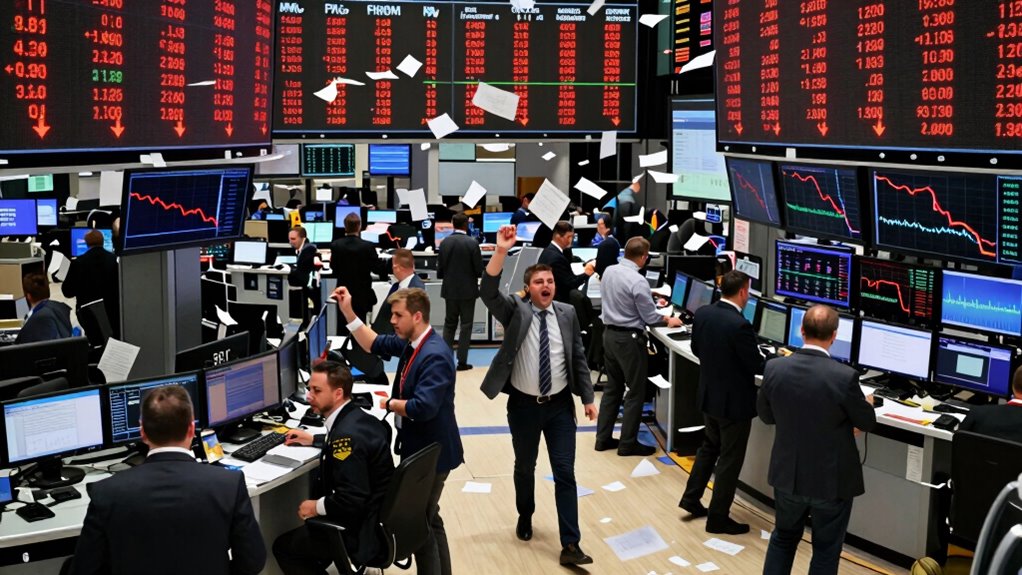

When liquidity leaves the market quickly, you’ll see prices become very volatile, with sharp jumps or drops. It becomes harder to buy or sell assets without affecting the price markedly, raising your trading costs and risking unexpected losses. Market activity slows down as participants withdraw, making it tougher to execute trades at desired prices. Staying aware of these shifts is essential—there’s more to understand about how to navigate such turbulent times effectively.

Get smart everyday buys delivered free with Prime
- Fast, free delivery on millions of items
- Prime Video, Amazon Music and more included
- Member-only deals all year
Key Takeaways
- Market prices become more volatile with sharp swings due to fewer active traders and wider bid-ask spreads.
- Difficulty executing trades at desired prices increases as liquidity rapidly diminishes.
- Larger spreads and higher transaction costs emerge, reducing overall trading efficiency.
- Market participants may withdraw, deepening volatility and risking disorderly price movements.
- Rapid liquidity exits can trigger panic selling or exuberant buying, destabilizing the market further.

As liquidity begins to exit the market, investors often find it harder to buy or sell assets without causing significant price shifts. When there’s less liquidity, the market becomes more sensitive, and even small trades can lead to sharp price swings. This increased market volatility makes it difficult to execute trades at desired prices and can catch you off guard if you’re not careful. Fewer buyers and sellers mean trading volume drops, which amplifies these price movements. You might notice that during these times, prices jump unexpectedly or plummet without clear reasons, creating a more unpredictable environment for trading.
With reduced liquidity, the gap between bid and ask prices widens. This spread expansion makes it more costly for you to enter or exit positions because you’re likely to pay a higher premium or accept a lower sale price. When trading volume diminishes, it becomes harder to find counterparties willing to transact at your preferred price levels. As a result, you might have to accept less favorable terms, increasing your transaction costs and possibly eroding your profit margins. This scenario is particularly problematic for short-term traders or those executing large orders, as sudden price jumps can lead to unfavorable fills or missed opportunities.
Market participants often react to declining liquidity by pulling back from trading altogether, further reducing market activity and deepening volatility. As fewer trades occur, prices can become disconnected from the underlying fundamentals, making it tough to gauge true value. This disconnection can lead to panic selling or exuberant buying, both of which drive prices away from realistic levels. If you’re caught in this environment, you risk facing quick losses or missing out on better entry points when the market eventually stabilizes.
In periods of rapid liquidity exit, the overall market structure can change, causing a chain reaction of uncertainty. You may find that liquidity providers withdraw, leaving fewer options to trade without impacting the market. This scarcity of available counterparties can cause liquidity crunches, where even modest trades trigger outsized reactions. The heightened market volatility and lower trading volume create a challenging atmosphere for making informed decisions or executing strategies effectively. Recognizing that market sensitivity increases during these times can help you adapt your strategies accordingly. Additionally, understanding the importance of liquidity levels can guide you in timing your trades more effectively. Being aware of market depth can help you better assess potential risks and avoid unfavorable trades during these turbulent periods.
As an affiliate, we earn on qualifying purchases.
Frequently Asked Questions
How Quickly Can Liquidity Vanish During a Market Crash?
During a market crash, liquidity can vanish within minutes or hours as market volatility spikes and investor panic spreads. You might see bid-ask spreads widen dramatically, making it harder to buy or sell assets quickly. In such moments, traders and investors often withdraw their funds rapidly, intensifying the decline. This swift liquidity drain can deepen the market downturn, leaving little time for you to react or execute trades at desired prices.
What Are the Signs That Liquidity Is Leaving a Specific Asset?
Ever notice sudden gaps or quick price swings? That’s a sign liquidity is leaving an asset. You’ll see market depth thinning out, meaning fewer buy and sell orders at various prices. This leads to increased price volatility, with prices jumping or dropping sharply. When liquidity diminishes, it becomes harder to execute trades smoothly. Keep an eye on these signs—sharp spreads and shallow order books are clear indicators that liquidity is leaving.
Can Liquidity Droughts Cause Long-Term Market Damage?
Yes, liquidity droughts can cause long-term market damage. When liquidity dries up, market confidence drops, making investors hesitant and increasing volatility. This can lead to liquidity contagion, spreading panic across sectors and assets. Over time, this erosion of confidence can weaken market stability, reduce trading volumes, and hamper recovery, leaving lasting scars that make markets more vulnerable to future shocks.
How Do Regulators Respond to Rapid Liquidity Withdrawals?
When liquidity withdrawals happen quickly, regulators respond by increasing oversight to prevent market manipulation and maintain stability. They may implement emergency measures, such as halting trading or imposing trading restrictions. Managing these situations presents regulatory challenges, as authorities must act swiftly without disrupting markets further. Your goal is to restore confidence, guarantee transparency, and prevent panic selling, all while managing the risks posed by sudden liquidity shocks.
What Role Do High-Frequency Traders Play in Liquidity Shifts?
Think of high-frequency traders as lightning bolts, striking swiftly across the market sky. They use algorithmic trading to rapidly enter and exit trades, which can cause sudden shifts in market depth. This swift movement can drain liquidity in an instant, amplifying volatility. Your actions, influenced by their rapid trades, can turn a calm market into a storm, highlighting their powerful role in accelerating liquidity shifts and shaping market dynamics.
As an affiliate, we earn on qualifying purchases.
Conclusion
When liquidity leaves the market fast, you’ll find it harder to buy or sell assets without causing big price swings. Prices can become volatile, and you might get caught in a whirlwind of uncertainty. It’s a stark reminder that when the tide goes out, you see who’s been swimming naked. Stay alert, manage your risks, and remember that in markets, as in life, slow and steady often wins the race.
As an affiliate, we earn on qualifying purchases.
As an affiliate, we earn on qualifying purchases.
Halloween Picks
halloween
As an affiliate, we earn on qualifying purchases.