
This guide walks you through selecting, reading, and — most importantly — applying financial planning books written for beginners. By the end, you will have read two to three foundational personal finance books, extracted their core rules into a personal action list, and put at least three changes into practice in your own money life. This guide is for people with little to no formal financial education who want a structured reading plan rather than a random book recommendation list. Expect the reading itself to take a few months at a relaxed pace; the payoff comes from the actions you take alongside the reading, not from finishing pages.

Get smart everyday buys delivered free with Prime
- Fast, free delivery on millions of items
- Prime Video, Amazon Music and more included
- Member-only deals all year
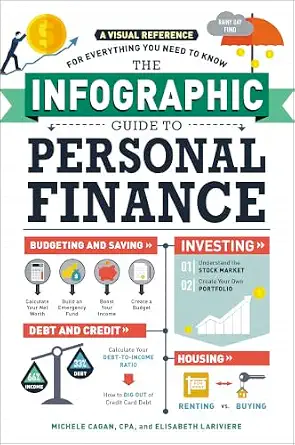
The Infographic Guide to Personal Finance: A Visual Reference for Everything You Need to Know
- ✔ Format: Print paperback
- ✔ Series: Infographic Guide Series
- ✔ Approach: Visual/infographic reference

Personal Finance For Dummies
- ✔ Format: Print paperback
- ✔ Series: For Dummies
- ✔ Approach: Comprehensive instructional reference

Financial Literacy for Young Adults Simplified
- ✔ Format: Paperback / digital editions
- ✔ Series: Standalone title
- ✔ Approach: Life-stage-focused beginner guide
Difficulty: Beginner | Time: 2-3 months of reading and applying (30-60 minutes per week)
What You’ll Need
Tools & Materials:
- A library card or a book-buying budget of roughly $30-60 (most titles are available used or as e-books)
- A notebook, notes app, or document for capturing rules and action items
- 30-60 minutes per week of uninterrupted reading time
- Access to your current financial statements (bank, credit card, loan balances) for the application steps
Knowledge:
- No prior finance knowledge is required
- Basic comfort with arithmetic (percentages, interest) helps but is not mandatory
Check your public library before buying anything. Nearly all widely recommended beginner finance titles are available through libraries, often as e-books or audiobooks through apps like Libby or Hoopla. Also confirm any book you choose was published or revised within the last 10 years — older editions may reference outdated tax rules, retirement account limits, or obsolete financial products.
The Infographic Guide to Personal Finance: A Visual Reference for Everything You Need to Know
Most personal finance books fail beginners not on content but on density — walls of text that make a simple subject feel like homework. This is where The Infographic Guide to Personal Finance earns its place in our lineup. By translating core concepts like budgeting, credit, debt, and investing into charts and visual layouts, it removes the intimidation factor that stops many people from ever starting.Compared with Personal Finance For Dummies, this guide covers less ground and goes shallower on each topic. That is not a flaw so much as a design choice: it functions as a visual reference you can dip into, rather than a curriculum you work through cover to cover. Readers who want to understand, say, how compound interest actually behaves over decades will find the visual treatment genuinely clarifying in a way paragraphs of prose are not.The honest tradeoff is staying power. Once you have internalized the visuals, the book’s usefulness as a deep reference fades, and complex topics — tax strategy, retirement account rules, estate basics — are treated lightly or skipped entirely. Compared with Financial Literacy for Young Adults Simplified, it is also less tailored to a specific reader; it speaks to everyone, which means it speaks to no one quite directly. Still, for the person who has bounced off traditional finance books before, this pick makes the most sense as an on-ramp rather than a destination.
Pros:
- Visual format makes abstract concepts like compound interest and debt payoff immediately clear
- Low intimidation factor — well suited to complete beginners with no financial background
- Works well as a quick reference you can revisit rather than a book you read once
- Fast to get through, which increases the odds a beginner actually finishes it
Cons:
- Noticeably shallower than comprehensive references like Personal Finance For Dummies
- Complex topics such as tax planning and retirement account rules get minimal treatment
- Less useful once you move beyond beginner fundamentals
Best for: Visual learners, busy readers, and anyone who has struggled to finish text-heavy finance books
Not ideal for: Readers who want deep, comprehensive coverage of retirement planning, taxes, or investing strategy
Bottom line: The best first step for visual learners who need concepts shown, not explained at length — just plan to graduate to a deeper book later.
“The best first step for visual learners who need concepts shown, not explained at length — just plan to graduate to a deeper book later.”
Personal Finance For Dummies
There is a reason the For Dummies franchise became synonymous with beginner learning, and this title shows why: it takes an enormous subject and walks through it in plain language, in a sensible order, without assuming the reader knows anything in advance. For a beginner who wants a single book to carry them from their first budget all the way to retirement considerations, this is the strongest option in our comparison.Where The Infographic Guide to Personal Finance shows you concepts, this book explains them — with more context, more nuance, and more coverage of the topics visual guides tend to gloss over, such as insurance, taxes, and long-horizon investing. Compared with Financial Literacy for Young Adults Simplified, it is more thorough but less personally addressed; it speaks to a general adult reader, which means a 22-year-old will wade through material on mortgages and life insurance before reaching the parts most relevant to them.The tradeoff is commitment. This is a text-first, comprehensive reference, and its length can feel like exactly the homework-style barrier that pushes beginners away from the genre. It rewards readers who work through it steadily but punishes those who want quick wins in a weekend. This pick makes the most sense for the beginner who wants to actually understand financial planning — not just skim the headlines — and is willing to put in the reading time to get there.
Pros:
- Comprehensive coverage spanning budgeting, debt, investing, insurance, and retirement
- Written in accessible, jargon-free language that assumes zero prior knowledge
- Structured progression that builds concepts logically from basics to advanced topics
- Long track record as a trusted, widely used beginner reference
Cons:
- Text-heavy format can feel like a slog for readers who prefer visual or narrative styles
- General-audience framing means younger readers must filter out less relevant chapters
- Some chapters cover US-specific products and rules that limit usefulness elsewhere
Best for: Beginners who want one comprehensive, plain-English book covering the full span of personal financial planning
Not ideal for: Impatient readers or visual learners who want a fast, graphics-driven introduction
Bottom line: The most complete and reliable single book for a beginner serious about learning financial planning properly.
“The most complete and reliable single book for a beginner serious about learning financial planning properly.”
Financial Literacy for Young Adults Simplified
Most beginner finance books are written for a generic adult, which means a 19-year-old opening them finds chapters on mortgages and estate planning before anything about their actual situation. Financial Literacy for Young Adults Simplified flips that script: it is built around the specific challenges of starting out — managing a first paycheck, building savings habits, and making early investments — with the explicit goal of a secure, independent financial future.Its advantage over both competitors is relevance. Where Personal Finance For Dummies offers breadth, this book offers focus, and for a young reader that focus is worth more than coverage of topics a decade away. It sits between the two other picks in format: more narrative and explanatory than the Infographic Guide, but lighter and more approachable than the Dummies reference.The flip side of that focus is a hard ceiling. Readers past the early-career stage will find it outgrows quickly, with little on the mid-life financial questions — home buying decisions, college savings, retirement drawdown — that dominate later planning. The simplified framing that makes it approachable also means nuance is sacrificed in places, particularly around investing. This pick makes the most sense for a young adult buying their first (or gifting someone’s first) finance book, and less sense for anyone who already has a 401(k) and a credit history.
Pros:
- Directly addresses the financial realities of young adults rather than a generic audience
- Covers the core trio of money management, saving, and investing in one accessible package
- Simplified framing lowers the barrier for readers with zero financial background
- Good gift choice for graduates or young adults starting their first job
Cons:
- Narrow life-stage focus makes it less useful as a long-term reference
- Simplification means investing and tax topics lack depth and nuance
- Less established track record compared with long-running reference series
Best for: Teenagers, college students, and early-career adults building money habits from scratch
Not ideal for: Mid-career readers or anyone with established finances needing advanced planning guidance
Bottom line: The right first finance book for a young reader, provided they graduate to something more comprehensive within a few years.
“The right first finance book for a young reader, provided they graduate to something more comprehensive within a few years.”
As an Amazon Associate we earn from qualifying purchases.
Before You Start
Decide now what you want the reading to accomplish. ‘Learn about money’ is too vague to act on; ‘build a budget, understand investing basics, and set up an emergency fund’ gives you a way to judge whether each book helped. Write down one or two specific goals before you pick your first title.
Be aware of one trap: many bestselling personal finance books are written by authors selling a philosophy, a course, or a subscription. A book with a strong opinion is fine — even useful — but treat any book that pushes you toward the author’s paid products, a specific investment the author profits from, or ‘one weird trick’ claims with skepticism. Solid beginner books teach principles; they do not sell shortcuts.
Step-by-Step Instructions
Step 1: Write down your starting point and reading goal
Grab your notes app or notebook and answer three questions in writing: What is your current financial situation (income, debt, savings)? What is your biggest money problem right now? What do you want to be able to do in six months that you cannot do today? Keep the answers short — five lines total is enough. These answers determine which books fit you.
Tip: If your biggest problem is debt or overspending, choose a budgeting-and-debt book first. If you are debt-light and want to grow money, start with an investing basics book. Reading in the wrong order is the most common reason beginners quit.
Check: You have written a sentence like: ‘My problem is X; in six months I want to Y.’
Step 2: Assemble a shortlist of three beginner-appropriate books
Build a shortlist of three books that match these criteria: written explicitly for beginners, at least three years old (long enough for reviews to be honest), revised recently, and widely available from your library. Search for titles covering foundational ground — budgeting, saving, debt, insurance, and basic investing — rather than narrow topics like day trading, real estate syndication, or options. Open the table of contents in the library listing or an online preview before adding each book to your shortlist.
Tip: Cross-check each candidate against a second source: a library staff pick list, a syllabus from a personal finance course at a community college, or a review from a fee-only financial educator. Avoid picking books solely from bestseller lists or influencer recommendations.
Check: You have written down three titles, each verified as beginner-level, recently revised, and available to you.
Step 3: Choose your first book and schedule your reading sessions
Select one book from the shortlist — the one that most directly addresses your written problem from Step 1. Do not start two books at once. Open your calendar and create two or three recurring reading blocks per week, 20-30 minutes each. Decide the format now: paperback, e-book, or audiobook. Audiobooks work for commutes but make note-taking harder, so pair them with a notes capture habit.
Tip: Set a realistic finish date. Most beginner finance books run 250-350 pages; at 60 pages a week, that is five to six weeks per book. Do not plan to finish faster unless you genuinely have the time.
Check: One book is in your hands (or on your device) and three calendar blocks exist per week for the next six weeks.
Step 4: Read actively and capture rules, not highlights
Open your notebook next to the book and read each chapter, writing down only two things as you go: (1) any rule or formula the author presents — for example, a savings percentage, a debt payoff method, or an account type recommendation — and (2) any action you could personally take this month. Limit yourself to three entries per chapter. Copying entire paragraphs defeats the purpose; the goal is a distilled list you will actually use.
Tip: After finishing each chapter, close the book and write one sentence from memory summarizing it. If you cannot, reread only the headings. This five-minute habit dramatically improves retention.
Check: After each reading session, your notebook contains at least one rule and one possible action written in your own words.
Step 5: Convert your notes into a ranked action list
Review all your captured entries after finishing the book, and turn them into a single numbered action list of five to seven items maximum. Rank the items by impact on your written goal from Step 1. Delete anything that duplicates what you already do. Assign each action a deadline within the next 60 days. An example list might read: calculate total debt (this week), open a high-yield savings account (next week), automate a $100 monthly transfer (by month two).
Tip: Write each action so it starts with a verb and is completable in under an hour, or break it into sub-steps. ‘Understand investing’ is not an action; ‘open a Roth IRA account page and read the fee schedule’ is.
Check: You have written one ranked list, each item with a deadline, on a single page.
Step 6: Complete the top three actions before reading the next book
Execute the first three items on your action list before starting book two. This is the step most readers skip, and it is the difference between reading about financial planning and doing it. Block time for each action as you would a reading session. Log the completion date next to each item as you finish it.
Tip: If an action requires information you do not have — for example, your exact loan interest rates — gather that information during a dedicated 30-minute session rather than letting the action stall indefinitely.
Check: Three dated, completed actions exist in your notes, and at least one produced a visible change (a new account, an automated transfer, a written budget).
Repeat the reading and note-taking process with your second and third books. Add a third column to your notes this time: where this author disagrees with the previous one. Most beginner finance books agree on the fundamentals — spend less than you earn, keep an emergency fund, avoid high-interest debt, invest cheaply and diversely for the long term. Disagreements usually concern methods, not principles, and noticing them helps you see what is actually settled knowledge versus one author’s preference.
Tip: When two authors contradict each other, default to the more conservative, widely repeated recommendation unless one presents a specific reason tied to your situation.
Check: You have written a short ‘points of disagreement’ list and can state the fundamentals all three books share.
Step 8: Write your personal financial rules and schedule a review date
Distill everything into a one-page personal financial plan: write down your current numbers (income, expenses, debt, savings), list three to five rules you will follow for the next year, and carry over the top three remaining actions from your lists that you have not yet completed. Set a calendar reminder to review this page in six months. This document is the actual deliverable of the entire reading project.
Tip: Keep the rules short and behavioral — ‘save 10% of every paycheck automatically’ — rather than aspirational, like ‘become financially free.’
Check: A one-page plan exists, is dated, and a six-month review reminder is scheduled.
Common Mistakes to Avoid
- Buying five or more books at once and reading none of them — Acquire one book at a time and finish it, including its action list, before getting the next. The library makes this rule painless to follow.
- Reading in the wrong order — investing books before getting debt or spending under control — Match the first book to your most urgent written problem. Investment returns cannot outrun 24% credit card interest.
- Highlighting without acting — finishing books with beautiful notes and zero changes to your finances — Enforce the rule from Step 6: no second book until three actions from the first book are completed and dated.
- Following advice from outdated US editions or advice written for a different country’s tax system — Check the copyright and revision date, and confirm the book’s advice maps to your country’s retirement accounts and tax rules before acting on specifics.
Troubleshooting
Problem: The book you chose is dry or confusing and you keep stalling
Solution: Switch formats first — the audiobook or a different author covering the same ground often fixes it. If the material is still impenetrable, swap for a more elementary title from your shortlist; there is no prize for finishing a hard book.
Problem: Two of your books give contradictory advice about debt payoff or investing
Solution: Return to your written goal and pick the method easier for you to sustain. For debt, both avalanche (highest interest first) and snowball (smallest balance first) work; consistency matters more than the method.
Problem: A book pushes you toward the author’s paid course, app, or investment product
Solution: Take the general principles, skip the funnel. If a chapter is mostly a sales pitch, skim it and move on. Never buy financial products solely because a book author profits from selling them.
Problem: Life interrupts your reading schedule and you fall weeks behind
Solution: Do not restart the book. Reread only your own notes to re-enter, then continue from where you stopped. Your notes are the durable artifact, not your memory of the prose.
What Success Looks Like
You have completed this task when all of the following are true: you have finished two or three beginner-level financial planning books over roughly two to three months; your notebook contains a distilled list of rules in your own words; at least three actions from those lists are completed and dated, with at least one producing a visible change such as a new account, an automated transfer, or a written budget; and you have a one-page personal financial plan scheduled for review in six months. If you can explain to a friend, in two minutes, how you now budget, save, and think about debt, the reading worked.
Next Steps
After your six-month review, choose one intermediate book on the specific area that now matters most to you — investing, taxes, retirement planning, or insurance — and repeat the same read-capture-act cycle. Consider supplementing books with a fee-only financial advisor session (many offer one-time flat-fee consultations) once your situation includes complexity like self-employment income, stock compensation, or family obligations. Revisit your one-page plan annually and after any major life change such as a new job, a move, marriage, or children.
Frequently Asked Questions
How many financial planning books should a beginner actually read?
Two or three well-chosen books cover the shared fundamentals: budgeting, emergency savings, debt management, and basic investing. Beyond that, returns diminish sharply unless you move to topic-specific intermediate books tied to a current need, such as retirement planning or taxes.
Are audiobooks acceptable, or do I need to read physical books?
Audiobooks are fine for absorbing concepts, but they make capture harder. If you listen, pause and dictate or write down each rule and action immediately, or keep the physical or e-book version alongside for note-taking. The notes and actions matter more than the format.
What should I do if the books are written for the US but I live elsewhere?
Principles transfer — spend less than you earn, automate savings, avoid high-interest debt, diversify cheaply. Specifics do not: retirement account names, tax treatments, and rules differ by country. Search for a respected personal finance book from your own country for the account- and tax-specific actions, and use the US titles for the behavioral framework.
Can books replace a financial advisor?
For basic budgeting, saving, and simple investing, a good beginner book plus your own execution is usually enough. Consider a fee-only advisor when your situation includes complicated taxes, large windfalls, business income, or estate planning. One-time flat-fee consultations cost a few hundred dollars and pair well with self-education.
How long until I see results from following the books?
Behavioral results — a working budget, an automated transfer, a debt payoff schedule — appear within the first month or two of executing your action list. Numerical results like a growing emergency fund or shrinking debt take longer; check progress at your six-month review rather than weekly.
Halloween Picks
halloween
As an affiliate, we earn on qualifying purchases.