Gold prices typically move inversely to interest rates and real yields. When real interest rates rise, gold becomes less attractive because you lose opportunities elsewhere, so prices tend to fall. Conversely, when real yields drop or turn negative, gold’s appeal grows as a safe haven, pushing prices higher. Changes in central bank policies and inflation expectations also influence this relationship. Keep exploring to understand how these factors interplay and impact gold’s value over time.

Get smart everyday buys delivered free — and shop member deals
- Fast, free delivery on millions of items
- Access to Prime Big Deal Days deals on October 6–7
- Prime Video, Amazon Music and more included
Key Takeaways
- Gold prices typically move inversely to real interest rates; when real yields fall, gold becomes more attractive.
- Rising interest rates increase opportunity costs of holding gold, often causing its price to decline.
- Central bank rate adjustments influence real yields, thereby impacting gold demand and valuation.
- During economic crises, lower or negative real yields boost gold’s safe-haven appeal and price.
- Currency fluctuations, especially a weakening dollar, can raise gold prices, linking interest rates to foreign demand.
As an affiliate, we earn on qualifying purchases.
The Fundamentals of Gold as an Investment
Gold has long been regarded as a reliable investment because it retains value during economic downturns and inflationary periods. You see, unlike stocks or bonds, gold isn’t tied to any company or government, so it’s less vulnerable during financial crises. Its scarcity adds to its appeal, making it a safe haven when markets are unstable. Investors often turn to gold to protect their wealth from inflation, since it tends to hold or increase its value when prices rise. Gold doesn’t pay interest or dividends, but it offers liquidity and portability, allowing you to buy or sell quickly worldwide. Over centuries, gold has preserved its worth, making it a fundamental part of diversified investment portfolios. This stability makes gold a strategic choice for safeguarding your financial future. Additionally, AI-driven market analysis is increasingly used to predict gold price trends, helping investors make more informed decisions.
As an affiliate, we earn on qualifying purchases.
The Inverse Correlation Between Gold and Real Yields
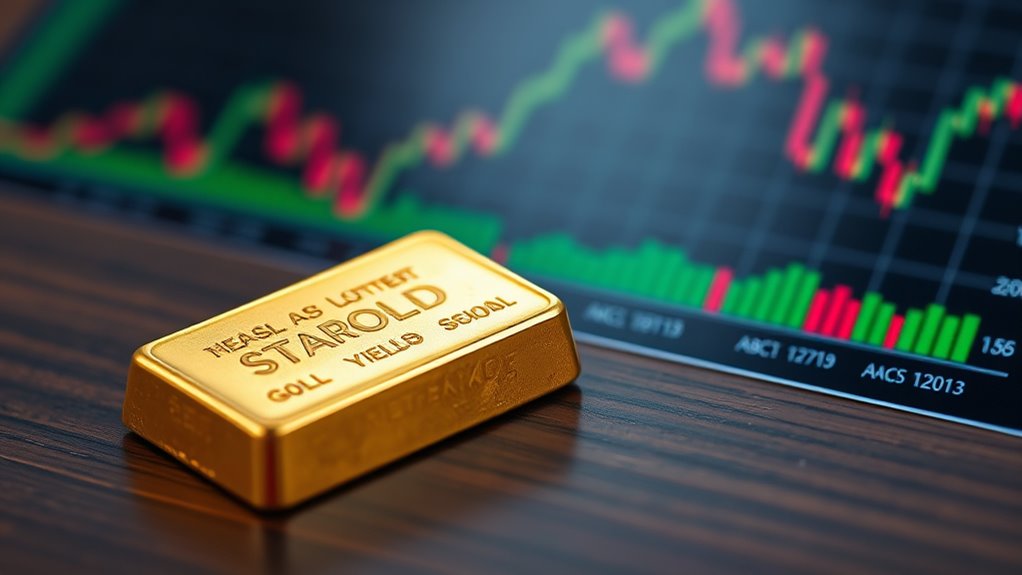
Since real yields reflect the true return on investments after inflation, they have a powerful influence on gold prices. When real yields rise, holding gold becomes less attractive because you miss out on higher yields elsewhere. Conversely, falling or negative real yields make gold more appealing as a safe haven and inflation hedge. This inverse relationship explains why gold prices often spike during periods of negative real yields. To understand this better, consider the following:
| Real Yields | Gold Prices | Investor Behavior |
|---|---|---|
| Rising | Falling | Seek higher-yield assets |
| Falling | Rising | Turn to gold for safety |
| Negative | Spiking | Invest in non-yielding assets |
Additionally, interest rates set by central banks can influence real yields and thus impact gold prices.
As an affiliate, we earn on qualifying purchases.
How Real Interest Rates Influence Gold Prices
Real interest rates directly shape how attractive gold investments are by reflecting the true cost of holding non-yielding assets. When real rates are high, the opportunity cost of holding gold increases because you forego yields from other investments like bonds or savings accounts. As a result, investors tend to sell gold to pursue higher returns elsewhere, causing prices to fall. Conversely, when real interest rates are low or negative, the opportunity cost diminishes, making gold more appealing as a safe haven or inflation hedge. Negative real rates often lead to rising gold prices, as investors seek assets that preserve value without earning interest. This inverse relationship underscores how fluctuations in real interest rates influence demand and, ultimately, gold’s market value. Additionally, understanding the impact of AI on financial analysis can enhance predictions of gold price movements based on interest rate trends.
As an affiliate, we earn on qualifying purchases.
The Impact of Federal Funds Rate Adjustments on Gold
When the Federal Funds Rate increases, it often raises the opportunity cost of holding non-yielding assets like gold, which can push prices down. Conversely, rate cuts can make gold more attractive by lowering this cost, potentially boosting demand. Adjusting the rate for inflation provides a clearer picture of how these changes truly influence gold’s value. Additionally, understanding the broader concept of financial market impacts can help investors better anticipate gold price movements in response to rate adjustments.
Rate Hikes and Gold
Rate hikes by the Federal Reserve directly influence gold prices by increasing the opportunity cost of holding non-yielding assets like gold. When interest rates rise, investing in assets that offer higher returns becomes more attractive, prompting investors to shift away from gold. This reduced demand often causes gold prices to fall. Conversely, when rates are stable or low, gold becomes a more appealing safe-haven, especially during economic uncertainty. Rate hikes can also signal tightening monetary policy, which can strengthen the dollar and further pressure gold prices. However, the relationship isn’t always straightforward; market expectations and broader economic conditions can modulate the impact. Overall, rate hikes generally exert downward pressure on gold, as the increased opportunity cost makes holding gold less attractive.
Inflation Adjustment Effects
Adjustments to the Federal Funds Rate can substantially influence gold prices, especially when you consider their impact on inflation expectations. When rates rise, they often signal efforts to curb inflation, which can lower gold prices as real yields increase. Conversely, rate cuts tend to boost gold by raising inflation concerns and lowering real interest rates. However, the effect becomes clearer when you adjust the rate for inflation, revealing the real cost or benefit of holding gold. If the Federal Funds Rate remains low or negative after inflation adjustment, gold becomes more attractive as a hedge against rising prices. This dynamic explains why gold prices often surge during periods of low or negative real interest rates, even when nominal rates are stable or declining. Understanding the influence of economic indicators can further clarify these relationships.
Central Bank Policies and Their Effect on Gold Markets
Central bank policies play a pivotal role in shaping gold markets, as their actions can influence both the supply and demand dynamics of the precious metal. When central banks buy gold, they can support or boost prices by reducing available supply and signaling confidence in gold’s value. Conversely, policies like raising interest rates or reducing monetary stimulus can depress gold prices by increasing opportunity costs and strengthening currencies. Quantitative easing, on the other hand, often leads to higher gold prices as it injects liquidity into the economy and raises concerns about currency debasement. Central banks’ management of foreign reserves, combined with monetary policies, impacts investor perceptions and market sentiment, ultimately influencing gold’s role as a safe-haven asset and its price movements. Additionally, market sentiment can shift rapidly based on central bank announcements, further affecting gold prices.
Historical Trends and Key Events Shaping Gold Prices
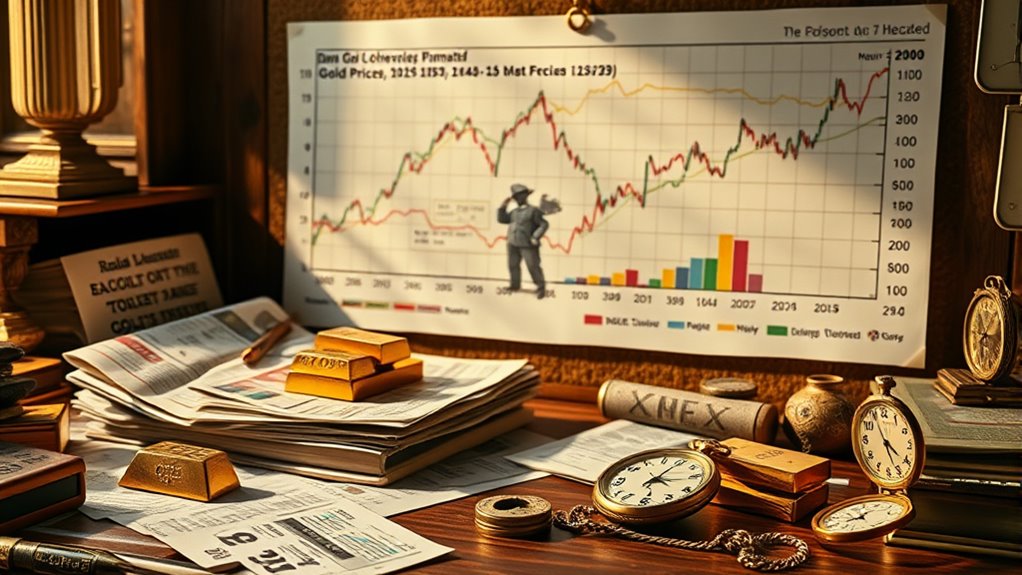
You’ve likely noticed that gold prices have hit notable milestones during major economic events. Crises like the Global Financial Crisis caused prices to surge as investors sought safety, while periods of high interest rates, such as the Volcker era, saw declines. These key moments have shaped gold’s role as a hedge and store of value over time. Additionally, retail hours and the timing of market activity can influence investor behavior and market volatility.
Gold Price Milestones
Gold prices have reached several historic milestones driven by economic uncertainty, geopolitical tensions, and shifts in monetary policy. Significantly, gold hit an all-time high of over $2,000 per ounce in August 2020 during the COVID-19 pandemic, reflecting investor fear and liquidity concerns. The 1980 peak of around $850 was driven by high inflation and geopolitical instability, such as the Iran hostage crisis. During the 2008 financial crisis, gold surged past $1,000, signaling a flight to safety. Conversely, the early 1980s saw gold prices decline as interest rates soared under Paul Volcker’s policies. These milestones mark how gold’s value reacts sharply to economic shocks, inflation fears, and policy changes, cementing its role as a key indicator of financial stability and investor sentiment. Additionally, fluctuations in interest rates influence gold prices, as higher rates often make non-yielding assets like gold less attractive to investors.
Impact of Economic Crises
Economic crises have consistently triggered sharp shifts in gold prices, serving as a barometer of financial instability. During these times, investors flock to gold as a safe haven, driving prices higher. Key events like the 2008 financial meltdown and the COVID-19 pandemic caused significant surges in gold value. These crises often lead to low or zero interest rates, increasing gold’s appeal. Additionally, central bank interventions, currency devaluations, and inflation fears intensify demand. As uncertainty grows, gold’s role as a store of value becomes more prominent. High refresh rates enhance the perception of real-time market reactions, influencing investor sentiment during turbulent periods.
Factors That Drive Gold Price Volatility
Gold price volatility is driven by a variety of interrelated factors that can cause sudden and significant price swings. Market sentiment plays a pivotal role; investor fears, geopolitical tensions, and economic uncertainty can quickly boost demand for gold as a safe haven. Supply and demand fluctuations also contribute, with mining output, central bank sales, and jewelry demand shifting unexpectedly. Currency movements, especially a weakening U.S. dollar, tend to push gold prices higher, while a stronger dollar can suppress them. Additionally, speculative trading and momentum-driven investments can amplify short-term swings. External shocks, such as political upheaval or sudden changes in monetary policy, can trigger rapid price movements. Recognizing these factors helps you understand why gold prices can be so unpredictable in the short term, especially when considering the risk assessment for merchant services that businesses must evaluate in volatile markets.
The Role of Inflation Expectations in Gold Valuations
Inflation expectations play a significant role in determining gold’s value, influencing investor behavior and market dynamics. When you expect higher inflation, you’re more likely to see gold as a safe haven, boosting its demand. Conversely, if inflation is expected to stay low, gold may lose some of its appeal.
Consider these factors:
- Rising inflation expectations often lead to higher gold prices.
- Gold acts as a hedge against inflation, attracting investors during inflationary periods.
- When inflation fears grow, demand for gold typically increases.
- Stable or declining inflation expectations can weaken gold’s appeal.
- Market sentiment shifts based on forecasts of future inflation, affecting gold’s short-term and long-term value.
Understanding these expectations helps you grasp why gold prices fluctuate in response to inflation outlooks.
Navigating the Relationship Between Currency Strength and Gold

The strength of a currency, particularly the U.S. dollar, plays a crucial role in shaping gold prices. When the dollar gains strength, gold becomes more expensive for investors holding other currencies, often leading to decreased demand and lower prices. Conversely, a weaker dollar makes gold cheaper internationally, boosting demand and pushing prices higher. This inverse relationship occurs because gold is priced in dollars globally, so currency fluctuations directly impact its affordability. You should monitor dollar movements alongside geopolitical and economic factors, as a declining dollar can signal potential gold price increases. Keep in mind that currency strength isn’t the only driver; inflation, interest rates, and market sentiment also influence gold’s response to currency fluctuations. Understanding this relationship helps you anticipate gold price trends more accurately.
Frequently Asked Questions
How Do Geopolitical Tensions Influence Gold Prices Independently of Interest Rates?
When geopolitical tensions rise, you’ll likely see gold prices increase, even if interest rates stay the same. These tensions create economic uncertainty and risk, prompting investors to seek safe-haven assets like gold. As a result, demand for gold goes up, pushing its price higher. You won’t rely solely on interest rates; geopolitical issues directly influence gold’s appeal as a secure investment during turbulent times.
What Role Does Investor Sentiment Play in Short-Term Gold Price Fluctuations?
You find that investor sentiment greatly influences short-term gold price fluctuations. When optimism grows, you might see investors shifting away from gold into riskier assets, causing prices to drop. Conversely, fear or uncertainty can quickly boost demand for gold as a safe haven, pushing prices higher. Your perception of economic stability or instability drives buying or selling decisions, making sentiment a key driver of gold’s short-term movements.
How Do Central Bank Gold Reserves Impact Global Gold Prices?
Imagine central banks as gold’s silent guardians shaping its destiny. When they increase reserves, it signals confidence and can stabilize or boost prices, acting like a lighthouse guiding investor sentiment. Conversely, selling reserves might decrease prices, reflecting economic shifts. Your awareness of these reserve changes helps you understand gold’s global price movements, as central banks’ actions serve as a powerful tide influencing supply, demand, and ultimately, gold’s value worldwide.
Can Gold Prices Rise During High Real Interest Rates?
Yes, gold prices can rise during high real interest rates, especially if investors expect inflation to increase or if geopolitical tensions escalate. While higher real rates typically decrease gold’s appeal, other factors like economic uncertainty or currency debasement can boost demand. You should watch for shifts in market sentiment or central bank actions that might counteract the usual inverse relationship, leading to potential price increases even in a high real interest rate environment.
How Does Technological Demand Affect Gold’s Market Value?
Technological demand can substantially boost gold’s market value, catching you off guard with its hidden influence. As new tech applications emerge—like electronics or blockchain—your gold investment can surge unexpectedly. This demand creates a sense of urgency, pushing prices higher. You might not realize it, but technological advancements often drive gold’s appeal beyond traditional factors, making it a dynamic asset that reacts swiftly to innovation and industry needs.
Conclusion
Understanding the link between gold prices and interest rates helps you make smarter investment choices. Did you know that during periods of rising real yields, gold often drops, highlighting their inverse relationship? Keep an eye on Federal Reserve moves and inflation expectations, as they can sway gold’s value. By staying informed, you can better navigate the volatile gold market and capitalize on opportunities when interest rates shift.
Halloween Picks
halloween
As an affiliate, we earn on qualifying purchases.