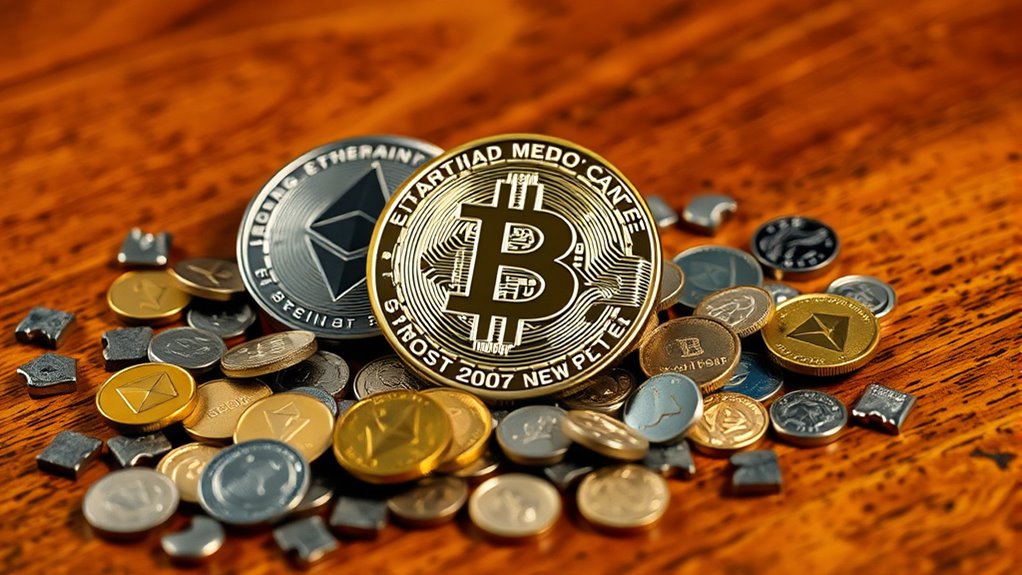

A blue-chip altcoin stands out with its large market cap, high liquidity, and strong project fundamentals, which build trust and stability. It’s widely recognized, has mainstream adoption, and is supported by reputable partnerships and infrastructure. These factors make it more resilient during market swings and less volatile. If you want to see what else sets them apart from speculative coins and how to identify them, there’s more to learn ahead.
Key Takeaways
- Blue-chip altcoins have large market caps, high liquidity, and stable trading environments, unlike speculative coins with lower caps and volatility.
- They possess strong fundamentals, established use cases, and a robust ecosystem, whereas speculative tokens often lack clear utility or development support.
- Recognizable brand presence, widespread adoption, and regulatory backing distinguish blue chips from lesser-known, high-risk altcoins.
- Blue chips tend to be more stable, resilient, and recover faster during market downturns compared to volatile, speculative coins.
- They offer real-world applications, industry support, and regulatory endorsements that reinforce their long-term credibility over speculative alternatives.
Market Capitalization and Liquidity

Market capitalization and liquidity are key indicators distinguishing blue chip altcoins from their speculative counterparts. When you look at a blue chip, you’ll notice it has a massive market cap, often in the billions, reflecting widespread investor confidence and established value. High liquidity means you can buy or sell large amounts without considerably impacting the price, making trading smoother and less risky. This liquidity also ensures that these coins are easily accessible on major exchanges, giving you quick entry and exit options. In addition, high refresh rates contribute to more stable trading environments by reducing volatility during transactions. In contrast, speculative altcoins often have smaller market caps and lower trading volumes, which can lead to sharp price swings and difficulty executing trades. These characteristics help define stability and reliability, making blue chips more suitable for long-term investment.
Project Fundamentals and Ecosystem Support

Strong project fundamentals and ecosystem support are essential indicators of a blue chip altcoin’s long-term viability. You want a project with innovative technology, clear use cases, and a robust development team that’s committed to ongoing improvements. A healthy ecosystem means multiple applications, integrations, and active developer participation. Look for assets with:
- A proven track record of consistent updates and upgrades
- Broad ecosystem support, including partnerships and collaborations
- Clear utility within the blockchain network or industry
- Strong community engagement driving development and adoption
- Commitment to aligning with vibrational energy principles that foster positive growth and resilience
These elements show that the project isn’t just a fleeting idea but a sustainable force with real-world applications. They also contribute to stability, resilience, and long-term growth potential, distinguishing blue chips from more speculative options.
Brand Recognition and Mainstream Adoption

Have you ever wondered why some altcoins attract more attention than others? It all comes down to brand recognition and mainstream adoption. When an altcoin becomes widely recognized, it gains trust and credibility among investors and the public. Major media coverage, endorsements from well-known figures, and integration into popular platforms boost visibility. As mainstream adoption grows, more exchanges list the coin, increasing accessibility and trading volume. This widespread acceptance creates a positive feedback loop, attracting institutional investors and retail traders alike. In contrast, lesser-known speculative coins struggle to gain recognition, remaining confined to niche communities. Strong brand recognition signals stability and reliability, making blue chip altcoins the preferred choice for those seeking long-term, trusted investments.
Stability and Market Cycle Resilience

Because blue chip altcoins are backed by solid fundamentals and widespread adoption, they tend to be more stable during market fluctuations. Their resilience comes from strong project support, consistent utility, and established investor confidence. You’ll notice they recover faster from downturns and maintain steadier prices compared to speculative coins. This stability helps them withstand external market shocks better. To understand their resilience:
Blue chip altcoins are more stable, resilient, and better at weathering market swings due to strong fundamentals and widespread support.
- They have lower volatility and smaller price swings
- They bounce back quickly after drops
- They’re less affected by external factors like market news
- They hold their value better over the long term
These qualities make blue chips a safer choice for those seeking steady growth and reduced risk during turbulent market cycles.
Historical Track Record and Investor Confidence

The long-term stability of blue chip altcoins heavily depends on their proven track record, which reassures investors of their reliability. You can trust these coins because they’ve demonstrated resilience through market ups and downs, building confidence over time. Their history of consistent performance and adoption by institutions highlights their credibility. Unlike newer or speculative coins, blue chips have established a reputation that signals stability and longevity. This track record helps you feel more secure, knowing the coin has weathered previous market crashes and recovered. It’s this history that fuels investor confidence, making blue chips attractive for long-term holdings. Additionally, AI’s role in cybersecurity and other sectors underscores the importance of technological robustness and trustworthiness, which are key qualities of blue-chip altcoins. By contrast, many speculative altcoins lack this proven history, which often leaves investors uncertain about their future viability.
Community Engagement and Ecosystem Development

Ever wondered what sets blue chip altcoins apart regarding community and ecosystem strength? It’s their large, active communities that drive ongoing engagement and support. These communities regularly participate in discussions, contribute ideas, and promote the project, strengthening its presence. The ecosystem around blue chips is diverse, with multiple use cases, applications, and integrations that expand their utility. You’ll also find numerous partnerships with other projects and organizations, which boost credibility and growth. Additionally, institutional support helps legitimize the ecosystem, attracting more users and developers. Brewing techniques Key points include:
Blue chip altcoins thrive on active communities, diverse ecosystems, strong partnerships, and institutional support.
- Large, active, and engaged communities
- Diverse ecosystem with multiple use cases
- Strong partnerships and integrations
- Institutional backing and support
Security Measures and Development Teams

Strong security measures and experienced development teams are fundamental to the stability of blue chip altcoins. These projects prioritize robust protocols, regular audits, and transparent updates to safeguard assets and maintain user trust. Their development teams usually consist of industry veterans with proven track records, ensuring continuous innovation and quick response to vulnerabilities. The table below highlights key differences:
| Aspect | Blue Chip Altcoins | Speculative Altcoins |
|---|---|---|
| Security Measures | Regular audits, bug bounties, strong protocols | Limited audits, less mature security systems |
| Development Teams | Experienced, long-term visionaries | Often new, less established teams |
| Update Frequency | Consistent, transparent releases | Irregular, sometimes opaque updates |
This combination of security and expertise makes blue chips more resilient and trustworthy.
Additionally, blockchain transparency is crucial in building user confidence and verifying the integrity of the project.
Institutional Backing and Market Support

Institutional investment trends play a key role in shaping market support for altcoins, especially blue chips with proven stability. When exchanges list these assets reliably, it boosts confidence and encourages further institutional participation. Additionally, regulatory endorsements can legitimize these coins, making them more attractive to large investors seeking safety and compliance. Furthermore, market dynamics influence the perception of an altcoin’s stability and potential for long-term growth.
Institutional Investment Trends
Institutional investment in blue chip altcoins has been steadily increasing as more financial entities recognize their stability and long-term potential. This growth is driven by their proven track record, liquidity, and broad ecosystem support. You’ll notice that institutions favor these assets for their lower volatility and reliable performance during market downturns. They often see blue chips as a way to diversify portfolios, hedge against inflation, and maintain long-term value. Additionally, the market volatility of these assets remains relatively lower compared to speculative altcoins, making them attractive for institutional portfolios.
- Large-scale investments from banks and hedge funds
- Institutional custody solutions and regulatory compliance
- Integration into mainstream financial products
- Increased trading volume on major exchanges
This trend boosts market confidence, further solidifying blue chip altcoins’ position as stable, long-term assets favored by major players.
Exchange Listing Stability
As blue chip altcoins gain more institutional backing, their stability on major exchanges becomes increasingly evident. These coins are consistently listed on top-tier platforms, ensuring high liquidity and seamless trading. Their widespread acceptance by leading exchanges signals confidence from market operators and reduces the risk of sudden delistings. This stability attracts institutional investors, who prefer assets they can reliably access and trade without disruption. You’ll notice that blue chips often have dedicated trading pairs and are supported across multiple platforms, reinforcing their market presence. Their robust exchange support also means lower slippage and better price discovery, which further stabilizes their market value. Overall, this strong exchange listing stability underpins their reputation as reliable, long-term investments.
Regulatory Endorsements
Regulatory endorsements play an essential role in strengthening the market support for blue chip altcoins. When authorities or well-known institutions back a coin, it boosts investor confidence and signals legitimacy. This support often leads to increased adoption, accessibility, and credibility for the asset. Such endorsements can include government approvals, partnerships with financial institutions, or regulatory clarity that assures investors of legal compliance. These factors make blue chip altcoins more attractive for long-term investors and institutional portfolios. Additionally, transparent disclosure of affiliate relationships fosters trust and demonstrates compliance with regulations.
Use Cases and Utility Within the Ecosystem

Use cases and utility within the ecosystem are key factors that distinguish blue chip altcoins from their speculative counterparts. These coins offer tangible value through real-world applications, making them more reliable investments. Blue chips typically support advanced functionalities like smart contracts, decentralized finance, and enterprise integrations, broadening their ecosystem’s reach. In contrast, speculative altcoins often lack clear use cases, driven mainly by hype. Here’s a quick comparison:
| Feature | Blue Chip Altcoins | Speculative Altcoins |
|---|---|---|
| Use Cases | Established, broad utility | Limited or unclear |
| Ecosystem Support | Extensive, integrated | Minimal |
| Practical Applications | Widely adopted in industry | Rare or experimental |
This utility provides long-term stability and growth potential, setting blue chips apart. Supporting infrastructure is also crucial in ensuring these coins remain functional and relevant within their ecosystems.
Volatility and Recovery Patterns

Blue chip altcoins tend to exhibit lower volatility compared to their speculative counterparts, making their price movements more predictable over time. This stability allows you to better anticipate market trends and reduces the risk of sudden losses. When market downturns occur, blue chips generally recover faster due to their strong fundamentals. Their resilience is supported by broad adoption and institutional backing, helping them withstand external shocks. You’ll notice that:
- Price swings are less extreme, providing more stability.
- Recovery from dips happens quicker, restoring confidence.
- External market factors have less impact on their prices.
- Long-term holding tends to be more rewarding with fewer surprises.
This pattern makes blue chips attractive for investors seeking steady growth and reliable performance, especially during volatile market cycles.
Frequently Asked Questions
How Does Market Capitalization Influence a Coin’s Blue-Chip Status?
Market capitalization plays a vital role in determining a coin’s blue-chip status because it reflects the overall size and stability of the asset. When you see a high market cap in the billions, it indicates widespread adoption, strong fundamentals, and investor confidence. This makes the coin more reliable and less prone to drastic price swings, positioning it as a stable, long-term investment compared to smaller, more volatile speculative altcoins.
What Role Does Community Support Play in Establishing a Blue-Chip Altcoin?
Community support plays a vital role in establishing a blue-chip altcoin. Your active engagement helps build a large, loyal user base, which boosts the coin’s credibility and adoption. A strong community fosters ecosystem growth, encourages partnerships, and maintains project momentum. When you support and promote the coin, you contribute to its stability and mainstream recognition, reinforcing its status as a reliable, long-term investment in the crypto space.
How Do Security Features Differentiate Blue Chips From Speculative Coins?
You can tell blue chip altcoins apart by their security features. They have robust security frameworks, including advanced cryptographic protocols, regular security audits, and strong development teams. These elements help protect assets and maintain trust. Speculative coins often lack such thorough security measures, making them more vulnerable to hacks or exploits. So, a blue chip’s solid security setup ensures stability and confidence for long-term investors.
Why Do Institutional Investors Prefer Blue-Chip Altcoins?
Institutional investors see blue-chip altcoins as the steady ship in turbulent waters. They prefer these coins because of their large market caps, high liquidity, and proven track records, which reduce risk. You get stability, strong fundamentals, and broad adoption, making them reliable for long-term investments. With institutional support, these coins act like safe harbors, offering confidence and security amid market volatility.
How Does Ecosystem Development Impact Long-Term Stability?
Ecosystem development considerably impacts long-term stability because it strengthens the project’s utility, broadens adoption, and attracts more users and partners. When you see a thriving ecosystem with multiple use cases and active development, it indicates a solid foundation that can withstand market fluctuations. This ongoing growth boosts confidence, reduces volatility, and helps maintain the coin’s value over time, making it a more reliable investment for the long haul.
Conclusion
So, what truly sets a blue-chip altcoin apart from a risky, speculative one? It’s not just about market cap or hype—it’s about resilience, trust, and the strength of its ecosystem. But beware: even the most established coins face unpredictable challenges. Will they maintain their dominance or fall into obscurity? The answer lies in what’s yet to unfold. Stay tuned, because the next chapter could redefine what you thought you knew about these digital giants.