Diversifying with silver and other metals beyond gold boosts your portfolio’s resilience by adding assets with unique industrial and market drivers. Silver offers high growth potential due to rising demand in green energy, electronics, and medical tech, while platinum benefits from industrial strength. These metals also help manage risks through low correlation with stocks and bonds. To optimize your strategy, consider proper allocation and rebalancing. Keep exploring to discover how these metals can fit into your overall plan.
Key Takeaways
- Incorporate silver for diversification due to its low correlation with stocks and bonds, enhancing portfolio resilience.
- Invest in industrial metals like platinum and palladium to capitalize on market demand and cyclical growth trends.
- Use a mix of physical metals and ETFs to balance liquidity, security, and exposure to different asset classes.
- Allocate 5% to 15% of your portfolio to metals, adjusting based on risk tolerance and market conditions.
- Monitor supply chain constraints and technological demand to identify opportunities and manage price volatility effectively.
The Role of Silver in Diversified Investment Portfolios

Have you considered how silver can enhance the diversity and resilience of your investment portfolio? Silver offers unique benefits during financial stress and inflation, thanks to its low correlation with stocks and bonds. It’s a more affordable alternative to gold, making it accessible for investors seeking inflation hedges at lower entry points around $50 per ounce. Allocating 5% to 15% of your portfolio to silver can balance growth potential with risk management, especially as it complements traditional assets. However, remember that silver is more volatile than gold, with frequent large price swings. Including silver strategically can reduce overall portfolio risk, especially considering its industrial demand and market dynamics. Proper allocation and rebalancing are key to maximizing its benefits without overexposure.
Comparing Performance: Silver, Gold, and Platinum in 2025

In 2025, silver and platinum have outperformed gold considerably, with silver prices rising approximately 27% year-to-date compared to gold’s 25% gain. Silver’s higher volatility—about 10 points above US equities—means it experiences sharper, more frequent swings, yet it also offers greater growth potential. Meanwhile, platinum has surged roughly 30%, reflecting strong industrial demand and cyclical strength. Gold remains the steady safe-haven asset, with more stable, smoother price movements, gaining around 25%. Silver’s price movements are closely tied to industrial demand and geopolitical factors, making it more cyclical. Platinum’s performance highlights its dual role as both a precious and industrial metal. Overall, silver and platinum’s stronger gains signal shifting investor sentiment and a broader diversification trend within precious metals portfolios. Incorporating market trends and indicators can help investors better navigate these fluctuations and optimize their metal investments.
Industrial Demand and Economic Factors Supporting Silver

Silver’s unique position as both an industrial and a precious metal means that its demand is closely tied to economic activity and technological advancements. As industries grow, especially in green energy and electronics, silver’s role becomes more essential. Its use in solar panels, medical devices, and consumer electronics drives consistent industrial demand. Supply constraints, such as mining deficits, further tighten the market, supporting prices. This dual demand creates a dynamic not as prominent with gold, reinforcing silver’s market resilience. Additionally, increasing recycling efforts help meet demand and influence market stability.
How to Strategically Allocate Silver and Other Metals
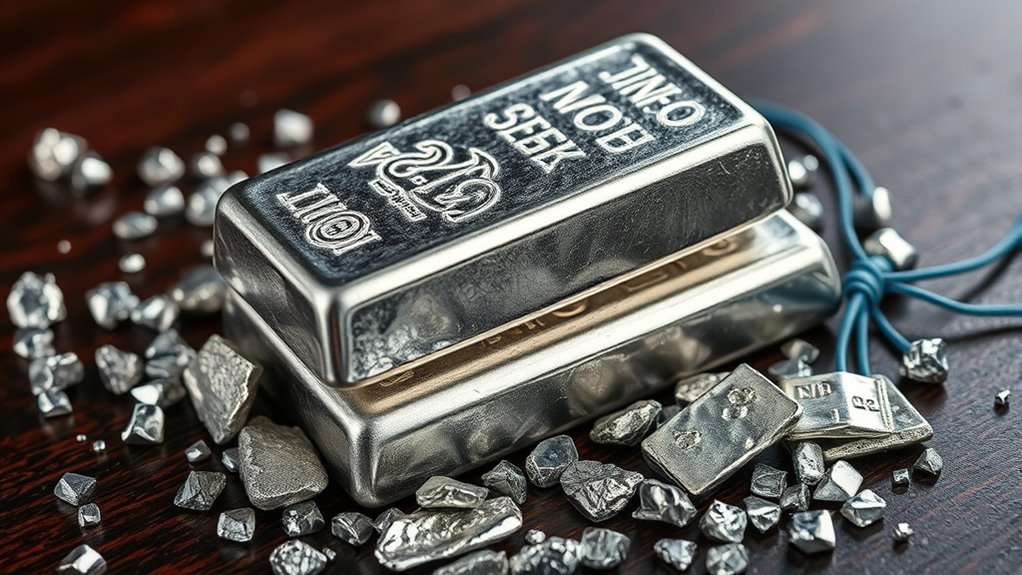
To effectively incorporate silver and other metals into your investment strategy, you need to contemplate their distinct roles within a diversified portfolio. Start by determining your risk tolerance and investment horizon. Silver, with its higher volatility, is best suited as a tactical asset, constituting about 5% to 10% of your holdings, especially for growth and hedging. Use ETFs or physical silver for liquidity and security, but keep storage costs in mind. Balance this with more stable assets like gold or bonds to manage overall risk. Avoid overallocating to metals, as their price swings can impact your portfolio’s stability. Regular rebalancing ensures your allocation remains aligned with your goals and market conditions, helping you capitalize on metals’ potential while controlling downside risks.
Diversification Benefits of Silver Versus Other Precious Metals

While both silver and other precious metals like gold and platinum offer diversification advantages, their unique market dynamics shape how they contribute to a portfolio. Silver’s strong link to industrial demand makes it more sensitive to economic cycles, leading to sharper price swings compared to gold’s safe-haven stability. Platinum, meanwhile, often outperforms gold during industrial booms but faces volatility from supply and demand shifts. Here’s a comparison:
| Metal | Key Driver | Typical Volatility |
|---|---|---|
| Silver | Industrial demand, inflation | High |
| Gold | Monetary, safe-haven | Low to moderate |
| Platinum | Industrial demand, supply issues | Very high |
Understanding these differences helps you tailor your diversification strategy, balancing risk and growth potential effectively. Additionally, the holistic approach to asset management emphasizes considering market conditions and individual asset characteristics for optimal portfolio performance.
Navigating Risks and Volatility in Silver Investments

Silver’s price can swing sharply due to its industrial demand and market speculation, making it more volatile than gold. You need to stay aware of potential deep drawdowns and how geopolitical or monetary shifts can impact prices quickly. Proper risk management and sizing your investment carefully are essential to avoid overexposure during these fluctuations. Additionally, understanding potential pitfalls in adopting new payment technologies can help you better manage risks in your overall investment strategy.
Price Swings and Fluctuations
Understanding the risks and volatility associated with silver investments requires a clear understanding of its price behavior. Silver is known for frequent, sharp swings driven by industrial demand, geopolitical factors, and speculative trading. Its price can drop more than 30% in a quarter, unlike gold’s steadier movement. These fluctuations stem from changes in supply and demand, monetary policies, and investor sentiment. You should expect higher volatility compared to other assets, which can lead to significant gains or losses. To help visualize, here’s a comparison:
| Factor | Impact on Silver Price |
|---|---|
| Industrial Demand | Causes price spikes or dips |
| Geopolitical Risks | Triggers rapid declines |
| Interest Rate Changes | Influences investment flows |
| Supply Disruptions | Creates price gaps |
| Investor Speculation | Amplifies swings |
Managing these swings requires awareness and strategic positioning. Additionally, understanding market sentiment can help investors better anticipate sudden price movements.
Managing Investment Risks
Managing the risks associated with silver investments requires a proactive approach to handling its inherent volatility. Silver’s price swings can be sharp and frequent, driven by industrial demand, geopolitical events, and market speculation. To navigate these risks, diversify your holdings and avoid putting too much into a single position. Use stop-loss orders to limit potential losses, and consider investing through ETFs for liquidity and ease of rebalancing. Keep an eye on global economic indicators, monetary policy changes, and supply-demand shifts that influence prices. Be prepared for periods of downturn, remembering that silver’s higher volatility means larger drawdowns compared to gold. Properly sizing your investment, maintaining discipline, and staying informed can help you manage risks and capitalize on silver’s growth potential without overexposure. Additionally, understanding the impact of AI in cybersecurity and other sectors can help you stay aware of broader market influences that may affect commodity prices.
Emerging Trends in Metal Demand and Market Dynamics
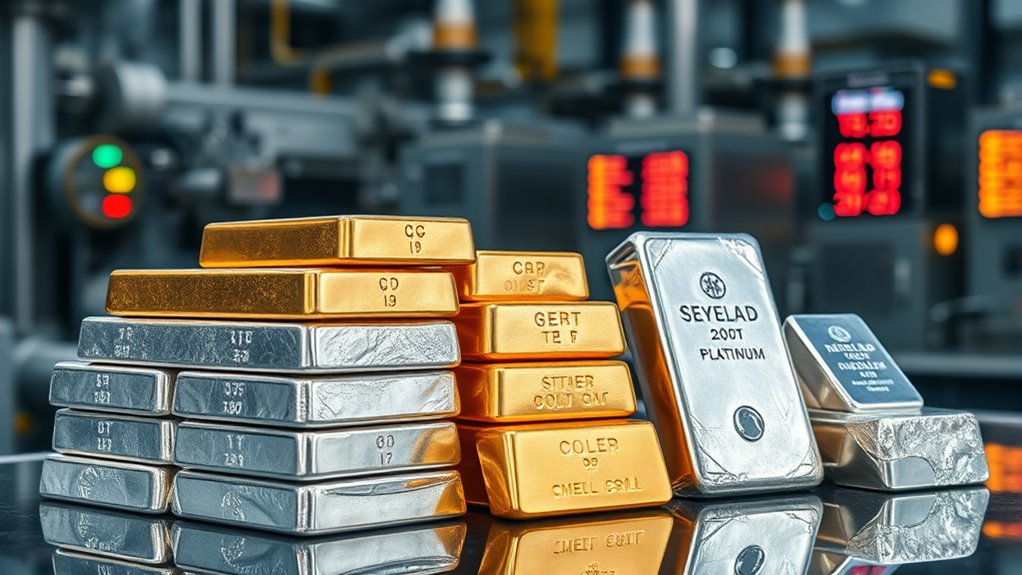
You should pay attention to rising industrial demand, especially as green technologies like solar panels and electronics need more silver. Supply chain constraints are tightening, making silver scarcer and potentially more valuable over time. These factors are reshaping market dynamics and creating new opportunities for investors willing to act early. Additionally, increased metal demand from emerging industries further emphasizes silver’s growing importance in the global market.
Industrial Demand Growth
Emerging trends in industrial demand are substantially boosting the growth prospects for metals like silver. You should recognize that rising industrial applications are driving this surge, especially in sectors like renewable energy, electronics, and medical devices. Here are four key factors fueling this growth:
- Increased adoption of solar panels, where silver’s high conductivity enhances efficiency.
- Growing demand for electronics, smartphones, and semiconductors requiring silver’s unique properties.
- Expansion in medical technology, including advanced diagnostic equipment.
- Supply constraints from mining, creating scarcity and supporting higher prices.
- The superior conductivity of silver makes it a critical component in many high-tech and industrial applications.
These trends suggest that industrial demand will continue to reinforce silver’s value, making it a strategic asset for investors seeking diversification beyond traditional assets like gold.
Green Technology Impact
Green technology is rapidly transforming the demand landscape for metals like silver, as its unique electrical and thermal properties make it essential for renewable energy solutions. Silver’s high conductivity boosts solar panel efficiency and supports energy storage innovations. As green initiatives accelerate worldwide, industrial demand for silver surges, influencing market dynamics. This shift creates a dual demand—investment and industrial—driving prices higher. Here’s a snapshot of how green tech impacts metal markets:
| Application | Impact on Silver Demand |
|---|---|
| Solar energy | Major growth in photovoltaic use |
| Electronics | Increased use in circuits |
| Medical devices | Rising demand for sterilization |
| Energy storage | Enhanced battery technology |
| Green infrastructure | Expansion of eco-friendly projects |
This trend underscores silver’s crucial role in building a sustainable future. Additionally, AI security technologies play a vital role in safeguarding critical infrastructure supporting green energy projects.
Supply Chain Constraints
Supply chain constraints are increasingly shaping the landscape for metals like silver, adding a layer of complexity to market dynamics driven by rising industrial and investment demand. Limited mining output, geopolitical tensions, and transportation disruptions have tightened supply, pushing prices higher. These constraints can cause delays in delivery and increased costs, impacting investors and industries relying on silver. Additionally, implementing fraud detection techniques can help mitigate risks associated with supply chain fraud and theft.
Frequently Asked Questions
How Does Silver’s Industrial Demand Impact Its Long-Term Price Stability?
You should know that silver’s industrial demand can make its long-term price less stable compared to gold. As industrial activity fluctuates, so does silver’s price, leading to sharper swings. While this demand supports higher prices during growth periods, economic downturns or reduced industrial output can cause significant declines. Consequently, your investment in silver needs careful timing and risk management, given its sensitivity to industrial cycles.
What Are the Best Ways to Store Physical Silver Securely?
You should store physical silver securely by choosing a safe, a safe deposit box, or a secure vault. You can opt for a home safe that’s fireproof, waterproof, and discreet, or rent a safety deposit box at a bank for added protection. Insure your silver against theft and damage, keep records of your holdings, and consider splitting storage between locations to minimize risks and guarantee easy access when needed.
How Does Silver’s Volatility Compare to Other Alternative Assets?
You’ll find that silver’s volatility is higher than many alternative assets, including stocks and bonds. It experiences more frequent and larger price swings due to industrial demand and market speculation. While gold tends to be more stable, silver can offer greater growth potential but comes with increased risk. If you’re comfortable with short-term fluctuations, silver can diversify your portfolio, but you should size your investment carefully to manage the higher volatility.
What Factors Influence Silver’s Price During Geopolitical Crises?
During geopolitical crises, silver’s price is influenced by increased safe-haven demand, which can drive up its value. Also, supply disruptions, trade tensions, and inflation concerns heighten volatility. As investors seek security, they often turn to silver as a strategic asset, boosting its price. However, industrial demand may weaken if economic activity slows, adding complexity. Overall, geopolitical issues tend to create both upward pressure and unpredictability in silver’s market.
Is Silver a Suitable Hedge Against Inflation in Volatile Markets?
Yes, silver can be a suitable hedge against inflation in volatile markets because it tends to perform well when inflation rises, thanks to its industrial demand and scarcity. You should consider including around 5% to 15% of silver in your portfolio, as it offers diversification benefits. Keep in mind, silver’s higher volatility means you need to manage risk carefully, but it can help protect your purchasing power during uncertain times.
Conclusion
As you explore diversifying with silver and other metals, remember how market shifts and technological advances often align unexpectedly. When you balance your portfolio with these assets, you could find opportunities emerging just when you least expect them, like a spark in a quiet market. Embrace the potential of metals beyond gold, and stay adaptable—because sometimes, the right move strikes just as the world spins into new economic patterns.