

To protect your purchasing power in a low-confidence economy, diversify your assets beyond cash into inflation-resistant options like gold, stocks, or real estate. Holding foreign currencies can also shield your savings from domestic devaluation. Stay alert to inflation trends and economic policies, and consider locking in long-term rates when conditions tighten. Employing these strategies can help preserve your wealth; explore more ways to strengthen your financial resilience.

Get smart everyday buys delivered free with Prime
- Fast, free delivery on millions of items
- Prime Video, Amazon Music and more included
- Member-only deals all year
Key Takeaways
- Diversify assets into gold, stocks, and real estate to maintain value during currency devaluation.
- Hold foreign currencies in stable economies to hedge against domestic inflation.
- Invest in inflation-resistant assets like commodities or dividend-paying stocks.
- Monitor inflation trends and economic policies to adjust investments proactively.
- Limit cash holdings and excessive debt to reduce vulnerability to currency devaluation impacts.
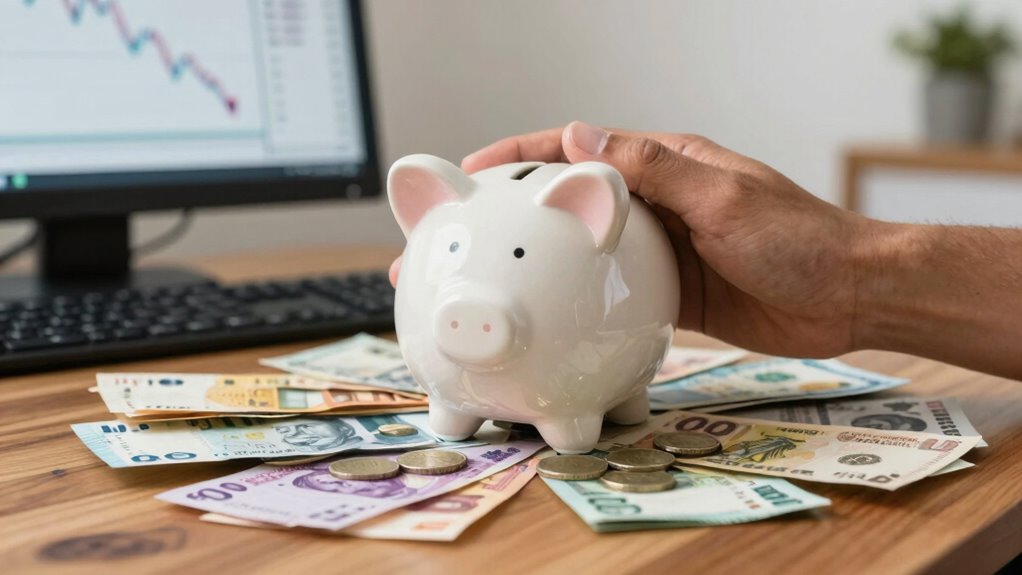
Have you ever wondered why your money seems to buy less over time? The answer often lies in the economy’s health, particularly when confidence is low. In such times, currency devaluation becomes a real threat, diminishing the value of your cash holdings and making everyday purchases more expensive. When a government or central bank devalues its currency, it fundamentally reduces the currency’s worth relative to others, which can lead to higher prices for imported goods and inflation. This erosion of purchasing power can catch you off guard, especially if you’re relying solely on cash savings.
To combat this, you need to think about inflation hedging—strategies that protect your wealth from the corrosive effects of rising prices. One effective approach is diversifying your assets beyond cash. Assets like precious metals, stocks, or real estate often retain or increase their value even when currency devaluation occurs. Gold, in particular, is renowned for its ability to serve as a hedge against inflation because its value tends to rise when fiat currencies weaken. By allocating part of your investments into such assets, you can help preserve your purchasing power, even amid economic turbulence.
Diversify your assets with gold, stocks, or real estate to protect your wealth during economic turbulence.
Another way to shield yourself is by considering foreign currencies or international investments. When your domestic currency faces devaluation, holding assets in more stable foreign currencies can act as a safeguard. This approach not only diversifies your holdings but also reduces the risk that inflation will erode your savings. Additionally, investing in assets that generate income—like dividend-paying stocks or rental properties—can help offset the impact of inflation, as these income streams tend to grow over time. Yarn weight and stitch type in particular, can influence the value and durability of knitted items, somewhat analogous to how diverse asset types can influence your financial resilience. Understanding the effects of currency devaluation can further assist you in making well-informed decisions to protect your wealth.
It’s also wise to keep an eye on inflation trends and economic policies. Staying informed allows you to make timely adjustments, whether that means shifting your investments or adjusting your spending habits. For example, if you anticipate a period of high inflation, you might accelerate large purchases or lock in long-term rates to avoid future price hikes. Budgeting carefully and avoiding excessive debt can further protect you from the adverse effects of a declining currency value. Understanding how inflation impacts purchasing power can help you develop more comprehensive protective strategies. Recognizing the importance of currency devaluation in economic stability can also lead you to more resilient investment choices.
Ultimately, protecting your purchasing power in a low-confidence economy requires proactive strategies. By understanding the risks of currency devaluation and employing inflation hedging techniques, you can better safeguard your financial stability. Diversifying assets, investing in inflation-resistant instruments, and staying informed empower you to navigate economic uncertainties with confidence, ensuring your money retains its value regardless of broader monetary challenges. Recognizing the importance of currency devaluation and how it impacts the economy can help you develop more effective protective measures.
Products Worth Considering

Logitech MX Vertical Wireless Ergonomic Mouse – Graphite

Apple MacBook Pro 14.2-inch with M5 Pro, 15-core CPU, 16-core GPU, 48GB Memory, 1TB SSD, Silver

Trezor Safe 5 Crypto Hardware Wallet with Color Touchscreen, Black Graphite
As an affiliate, we earn on qualifying purchases.
Frequently Asked Questions
How Does Inflation Specifically Erode Purchasing Power?
Inflation erodes your purchasing power by causing prices to rise, which means your money buys less over time. When monetary inflation occurs, more money chases the same goods, leading to price erosion. As prices increase, your savings and income lose value, making it harder to afford the same products. This decline in buying capacity impacts your finances, forcing you to spend more just to maintain your current lifestyle.
What Investments Are Safest During Economic Downturns?
During economic downturns, safe investment options include government bonds, high-quality municipal bonds, and money market funds, which offer stability and liquidity. You should also implement diversification strategies by spreading your investments across different asset classes to minimize risk. This approach helps protect your capital from market volatility and preserves purchasing power, ensuring you’re less vulnerable to potential losses during uncertain economic times.
How Can I Adjust My Budget Effectively in a Low-Confidence Economy?
You should adjust your budget by reallocating funds towards essential expenses and cutting non-essentials. Focus on expense prioritization, ensuring your spending aligns with your most critical needs. Review your budget allocation regularly, and consider increasing savings where possible to build a financial cushion. Staying disciplined helps you navigate economic uncertainty and protects your purchasing power, so remain flexible and vigilant in managing your finances effectively during a low-confidence economy.
Are There Specific Sectors More Resilient to Economic Declines?
In a stormy economy, some sectors act like sturdy ships, weathering the waves better than others. Consumer staples, such as food, household items, and healthcare, tend to be more resilient during economic declines. By diversifying your investments across these steady sectors, you can protect your purchasing power. Sector diversification helps cushion the impact of downturns, ensuring you’re better prepared for the unpredictable financial seas ahead.
How Does Currency Devaluation Impact Everyday Purchasing Power?
Currency devaluation decreases your purchasing power because it makes foreign exchange goods more expensive. When a country’s currency loses value, you’ll find that imported products cost more, reducing your ability to buy as much. This often prompts governments to adjust monetary policy, which can further influence exchange rates. As a result, you might face higher prices for everyday items, making it essential to stay informed about currency trends and policy changes to protect your finances.
Conclusion
Remember, safeguarding your purchasing power is like steering a steady ship through murky waters. Keep a watchful eye on inflation’s tide and diversify your investments like a seasoned sailor spreading sails to catch every gust. By staying informed and adaptable, you’ll navigate the stormy economy with confidence, ensuring your financial ship remains afloat and your buying power remains resilient amid the swirling currents around you.