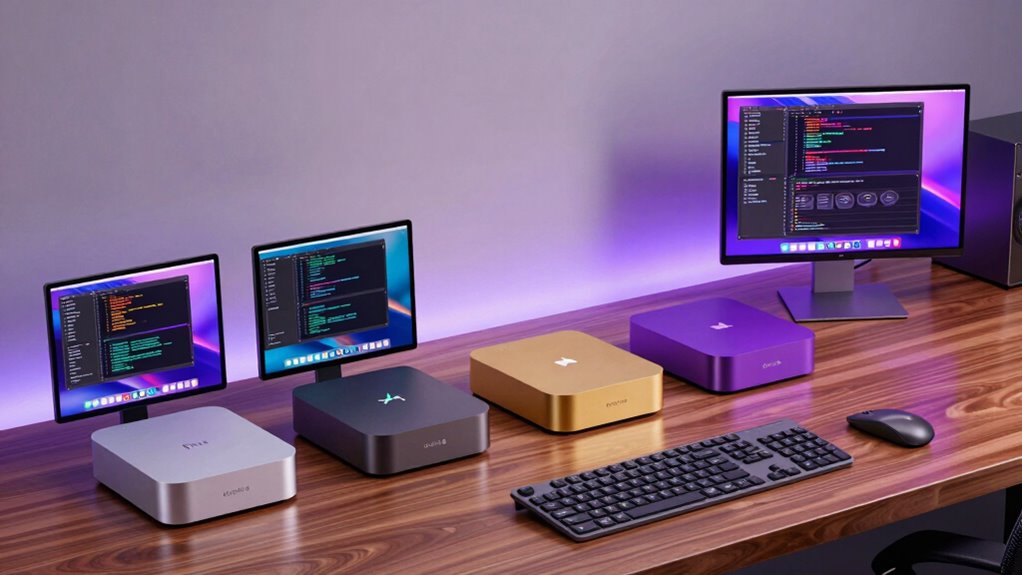

If you’re looking for the best Mac Minis for software development in 2026, I recommend models with the latest M4 Pro chip, like the 2024 Mac mini with 12-core CPU and 16-core GPU, for top performance. The M4 with 24GB RAM is great for multitasking, while the 16GB RAM and 512GB SSD version offers a good balance of speed and storage. If you want to learn more about these options, you’ll find plenty of helpful details ahead.
Key Takeaways
- Top models feature M4 Pro and M4 chips with 10-12 cores for high multitasking and fast processing.
- 24GB to 32GB RAM options support large projects, multitasking, and resource-intensive tasks.
- Multiple Thunderbolt, USB-C, HDMI, and Ethernet ports ensure extensive connectivity and future-proofing.
- Models emphasize energy efficiency, sustainability, and eco-friendly manufacturing aligning with environmental commitments.
- Compact size with high-performance specs, advanced connectivity, and workspace efficiency makes them ideal for developers.
| Apple 2024 Mac mini with M4 Pro Chip |  | Powerhouse Performance | Size: Compact 5×5 inches | Processor: M4 Pro (12-core CPU) | Memory: 24GB unified memory | VIEW LATEST PRICE | See Our Full Breakdown |
| Apple 2024 Mac mini with M4 Chip and 24GB Memory | | Balanced Power & Memory | Size: Compact 5×5 inches | Processor: M4 (10-core CPU) | Memory: 24GB unified memory | VIEW LATEST PRICE | See Our Full Breakdown |
| Apple 2024 Mac mini with M4 16GB 512GB SSD | | Versatile Expert | Size: Compact 5×5 inches | Processor: M4 (10-core CPU, 4 performance + 6 efficiency cores) | Memory: 16GB unified (configurable to 24GB/32GB) | VIEW LATEST PRICE | See Our Full Breakdown |
| Apple Mac mini M4 with 16GB 256GB SSD | | Compact & Efficient | Size: Compact 5×5 inches | Processor: M4 (10-core CPU, 4 performance + 6 efficiency cores) | Memory: 16GB unified (configurable to 24GB/32GB) | VIEW LATEST PRICE | See Our Full Breakdown |
More Details on Our Top Picks
Apple 2024 Mac mini with M4 Pro Chip
If you’re looking for a powerful yet compact machine for software development, the Apple 2024 Mac mini with M4 Pro chip is hard to beat. Its five-by-five-inch design makes it easy to fit anywhere, yet it packs a punch with a 12-core CPU and 16-core GPU. With 24GB of unified memory and a 512GB SSD, it handles demanding tasks like large code compilations and complex scene work smoothly. The Mac mini offers seamless connectivity, including Thunderbolt, HDMI, and USB-C ports. Plus, it integrates effortlessly with your Apple ecosystem, boosting productivity while maintaining strong privacy protections. It’s an ideal choice for versatile, high-performance development setups.
- Size:Compact 5×5 inches
- Processor:M4 Pro (12-core CPU)
- Memory:24GB unified memory
- Storage:512GB SSD
- Connectivity:Thunderbolt, HDMI, Ethernet, USB-C, headphone
- Ecosystem Integration:Seamless with iPhone/iPad, Apple Intelligence
- Additional Feature:Built for Apple Intelligence
- Additional Feature:Supports iPhone Mirroring
- Additional Feature:Carbon-neutral product
Apple 2024 Mac mini with M4 Chip and 24GB Memory
The Apple 2024 Mac mini with M4 chip and 24GB of memory stands out as an excellent choice for software developers seeking compact power. Its small, five-by-five-inch design fits easily into any workspace, yet it packs a punch with a 10-core CPU and GPU. The 24GB of unified memory ensures smooth multitasking, while the 512GB SSD delivers quick data access. With versatile ports like Thunderbolt, HDMI, and USB-C, connectivity is seamless. Built around Apple silicon, it runs all popular development tools effortlessly, integrates smoothly with other Apple devices, and supports productivity features that make coding, testing, and multitasking efficient in a tiny, powerful package.
- Size:Compact 5×5 inches
- Processor:M4 (10-core CPU)
- Memory:24GB unified memory
- Storage:512GB SSD
- Connectivity:Thunderbolt, HDMI, Ethernet, USB-C, headphone
- Ecosystem Integration:Seamless with iPhone/iPad, Apple Intelligence
- Additional Feature:Supports up to 3 displays
- Additional Feature:Seamless device ecosystem integration
- Additional Feature:Supports multiple app types
Apple 2024 Mac mini with M4 16GB 512GB SSD
For developers seeking a compact yet powerful machine, the Apple 2024 Mac mini with M4, 16GB of RAM, and 512GB SSD offers an ideal balance of performance and size. Its sleek five-by-five-inch design fits easily on a desk or next to a monitor, yet it packs a 10-core M4 chip, a 10-core GPU, and a 16-core Neural Engine for fast, efficient multitasking. With support for multiple high-resolution displays, fast connectivity options, and environmental responsibility, it’s perfect for coding, testing, and running demanding applications. This Mac mini combines portability, power, and versatility, making it a strong choice for development work in 2026.
- Size:Compact 5×5 inches
- Processor:M4 (10-core CPU, 4 performance + 6 efficiency cores)
- Memory:16GB unified (configurable to 24GB/32GB)
- Storage:512GB SSD (upgradeable to 1TB/2TB)
- Connectivity:Thunderbolt, HDMI, Ethernet, USB-C, headphone
- Ecosystem Integration:Seamless with iPhone/iPad, Apple Intelligence
- Additional Feature:Hardware-accelerated ray tracing
- Additional Feature:120GB/s memory bandwidth
- Additional Feature:Supports up to 6K displays
Apple Mac mini M4 with 16GB 256GB SSD
The Apple Mac mini M4 with 16GB of RAM and 256GB SSD stands out as an excellent choice for developers needing a compact yet powerful machine. Its M4 chip delivers fast, smooth performance for coding, testing, and multitasking, supporting apps like Microsoft 365 and Adobe Creative Cloud effortlessly. With a sleek, lightweight design, it fits easily on a desk or next to a monitor. The device offers versatile connectivity options, including Thunderbolt 4, HDMI, and multiple USB-C ports, plus support for three displays. Its integration with the Apple ecosystem and enhanced privacy features make it a reliable, efficient tool for software development in a small footprint.
- Size:Compact 5×5 inches
- Processor:M4 (10-core CPU, 4 performance + 6 efficiency cores)
- Memory:16GB unified (configurable to 24GB/32GB)
- Storage:256GB SSD (upgradeable to higher capacities)
- Connectivity:Thunderbolt, HDMI, Ethernet, USB-C, headphone
- Ecosystem Integration:Seamless with iPhone/iPad, Apple Intelligence
- Additional Feature:Media engines for ProRes/AV1
- Additional Feature:Supports Dolby Vision HDR
- Additional Feature:First available October 29, 2024
Factors to Consider When Choosing a Mac Mini for Software Development
When selecting a Mac Mini for software development, I consider processing power, memory, and storage to meet my workload demands. I also look at connectivity options and how well it integrates with my existing ecosystem. Understanding these factors helps me choose a model that’s both efficient and future-proof.
Processing Power Needs
Choosing the right processing power is vital for smooth software development on a Mac Mini, especially when compiling code or running resource-intensive applications. A multi-core processor with 10 or more cores can markedly improve multitasking and parallel processing, reducing build times and increasing productivity. Higher clock speeds further enhance responsiveness during intensive coding sessions. Additionally, hardware acceleration features like Neural Engines or ray tracing can boost performance for specialized tasks such as machine learning or graphics development. It’s important to ensure the Mac Mini has enough processing power to handle your development tools and software without lag or delays. Investing in a more powerful CPU now can streamline your workflow and prevent bottlenecks, making your development environment more efficient and enjoyable.
Memory Capacity Options
Choosing adequate memory capacity is crucial to guarantee your Mac Mini can meet the requirements of software development. Larger memory options like 24GB or 32GB enable smoother multitasking and better handling of large codebases, virtual machines, and development tools. Most models range from 16GB to 32GB, with some supporting upgrades at purchase. Having enough RAM is essential for running multiple applications, containers, and emulators simultaneously without slowdown. Higher memory capacity also boosts performance when compiling large projects or working with high-resolution media. The right amount of RAM depends on your workflow, including the number of tools and dataset sizes you typically manage. Investing in sufficient memory ensures your Mac Mini remains responsive and efficient, even during resource-intensive tasks.
Storage Solutions
Selecting the right storage solution is vital for keeping your development environment efficient and responsive. I recommend opting for at least 512GB of SSD storage to accommodate large files and applications comfortably. Fast SSDs are essential because they drastically cut load times and boost system responsiveness during intense development tasks. Upgradable storage options are a smart choice, offering flexibility as your needs evolve without replacing the entire device. External drives, like Thunderbolt or USB-C, can further expand capacity and simplify backups. Additionally, prioritizing higher storage bandwidth enhances data transfer speeds, which is especially beneficial when working with large datasets or multimedia projects. Overall, balancing capacity, speed, and upgradeability ensures your Mac Mini stays optimized for demanding development workflows.
Connectivity Features
Connectivity features are essential for creating an efficient and flexible development environment on your Mac Mini. Multiple USB-C or Thunderbolt ports are crucial for connecting external monitors, drives, and peripherals without clutter. An HDMI port supports high-resolution displays, vital for managing multi-monitor setups needed in software development. Reliable wired internet via Gigabit Ethernet or higher ensures fast, stable connections for large file transfers and cloud workflows. Front-facing ports provide easy access to peripherals, keeping your workspace organized. Additionally, support for Wi-Fi 6E and Bluetooth 5.3 allows seamless connection to wireless accessories and networks. These connectivity options collectively enhance productivity, streamline your workflow, and ensure your Mac Mini adapts to evolving development needs. Prioritizing these features helps you build a versatile, future-proof setup.
Ecosystem Compatibility
Integrating your Mac Mini into the Apple ecosystem can greatly boost your productivity as a software developer. It enables seamless interaction with iPhone, iPad, and other Apple devices, making workflows more efficient. Features like iPhone Mirroring, message sharing, and FaceTime calls become easily accessible from your Mac, streamlining communication. macOS optimization for Apple Silicon guarantees your apps run smoothly, enhancing development speed and stability. Cross-device synchronization of files, clipboard, and notifications helps maintain continuity across devices, reducing disruptions. Additionally, ecosystem compatibility supports Universal Control and Sidecar, allowing you to extend your display and control multiple Apple devices effortlessly. This interconnected environment simplifies multitasking and keeps everything synchronized, making your development process more integrated, efficient, and enjoyable.
Port Selection
When choosing a Mac Mini for software development, considering the available ports is essential to make sure your workspace remains efficient and adaptable. I look for models with multiple USB-C or Thunderbolt ports to connect monitors, keyboards, and external drives easily. HDMI ports are necessary if I plan to expand my workspace with high-resolution displays. A Gigabit Ethernet port or higher guarantees stable wired internet, critical for large data transfers and collaboration. I also check for front-facing ports for quick access to frequently used devices like USB-C drives or headphones. Finally, I assess the total number of ports to support future device additions without needing extra hubs or adapters, keeping my setup clean, simple, and ready for growth.
Environmental Commitments
Considering the environmental impact of your tech choices is increasingly important, especially when selecting a Mac Mini for software development. Choosing an environmentally committed model aligns with sustainability goals, like carbon-neutral manufacturing and eco-friendly materials. Macs with Apple’s environmental certifications often incorporate recycled content and reduce greenhouse gas emissions during production. Supporting these models helps Apple move toward its 2030 goal of becoming fully carbon neutral across all products and supply chains. Additionally, environmentally conscious Mac Minis promote responsible recycling, reducing electronic waste. These devices also prioritize energy efficiency, sustainable packaging, and minimal use of hazardous substances, which collectively lessen their ecological footprint. By selecting a Mac Mini with strong environmental commitments, you not only contribute to a healthier planet but also support responsible innovation.
Frequently Asked Questions
How Does the Latest Mac Mini Compare to Other Apple Silicon Models?
The latest Mac Mini with Apple Silicon outperforms earlier models thanks to its improved M2 chip, offering faster processing and better efficiency. It’s more powerful than the M1 Mac Mini, making it ideal for demanding software development tasks. Compared to other Apple Silicon devices like the MacBook Pro, it’s compact and budget-friendly, but still delivers impressive performance. Overall, I find it a versatile choice for developers needing a reliable, high-performing machine.
Can the Mac Mini Support Multiple Monitors for Development Workflows?
Absolutely, the Mac Mini can support multiple monitors, making my development workflow seamless. With the M2 or M2 Pro chip, I connect two or even three displays effortlessly, transforming my workspace into a vibrant hub of code and creativity. Picture a sprawling desktop, each screen alive with lines of code, debugging tools, and design apps — all powered smoothly, helping me stay productive and inspired throughout my day.
What Are the Upgrade Options for RAM and Storage in the Mac Mini?
Upgrading the RAM and storage in a Mac Mini can substantially boost your development workflow. I recommend choosing a model with at least 16GB of RAM, as some newer versions allow for RAM upgrades, but many are soldered. For storage, opt for a larger SSD, since it’s usually soldered, and consider external drives for extra space. Always check the specific model’s upgrade options before purchasing to guarantee flexibility.
Is the M4 Pro Chip Significantly Better for Software Development?
Yes, the M4 Pro chip is a game-changer for software development. It’s faster, more efficient, and handles multitasking with ease, making complex tasks smoother. I’ve seen it cut compile times substantially, and its improved GPU boosts performance in graphics-heavy work. If you’re serious about productivity, the M4 Pro elevates your experience, providing power and speed that truly make a difference in your workflow.
How Future-Proof Is the Mac Mini for Upcoming Software Development Tools?
I believe the Mac Mini will stay relatively future-proof for upcoming software development tools, thanks to Apple’s ongoing hardware updates. While I can’t predict every new development, the new chips, like the M4 Pro, are designed to handle future software demands. I’d recommend staying updated with Apple’s announcements, but overall, I feel confident the Mac Mini can support your growth in software development for years to come.
Conclusion
Choosing the right Mac mini for software development is like picking the perfect tool for a craft—each option has its own strengths. Whether you need raw power or a balanced setup, these choices can handle your projects with ease. Remember, the best Mac mini for you is the one that fits your needs like a glove. Invest wisely, and you’ll be building great things, just like a master craftsman honing their skills.